The Worst Time to Find Out It Won’t Start
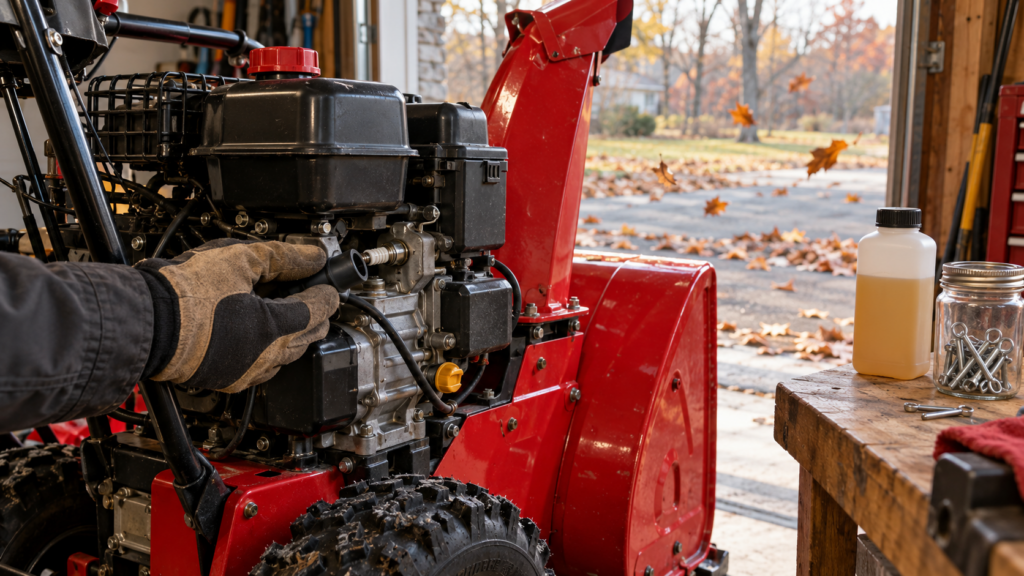
Every winter, hardware stores and repair shops get slammed the day after the first big snowfall, when people discover that the snow blower that worked fine last February now refuses to start. A little preparation in November, while there’s still time and the weather is mild, usually prevents that scramble. Most of what a snow blower needs is simple, and much of it you can do yourself.
Start With the Fuel
Fuel problems are the most common reason a snow blower fails to start after months in storage. Gasoline can break down over time, and ethanol-blended fuel can attract moisture and leave gummy deposits that clog the carburetor. If last season’s fuel has been sitting in the tank since spring, the safest approach is to drain it and refill with fresh gasoline.
Adding a fuel stabilizer to new gasoline helps it stay fresh for longer, and some owners use ethanol-free fuel when it’s available. Don’t mix old fuel with new, and store spare gas in an approved container, away from heat sources and out of living spaces.
Check the Spark Plug
A worn or fouled spark plug can cause hard starting and rough running. Removing it and inspecting the tip is simple, and replacement plugs are inexpensive. Check your owner’s manual for the correct type and for the proper gap, and make sure the engine is off and cool before you start.
Inspect the Parts That Contact the Snow
The auger and impeller do the actual work, and the components that protect them need to be intact. Many models use shear pins, small breakaway bolts that are designed to snap when the auger hits something hard, like a rock or a chunk of ice, preventing damage to the gearbox. Check that the pins are in place and that you have spares on hand, since they’re often easy to lose and the right size matters.
Look at the scraper bar and skid shoes along the bottom of the machine, which wear down over time and control how close the blades come to the pavement. Replace them if they’re worn or damaged. Also check the belts for cracks or fraying, and look over the auger and chute for dents or damage.
Change the Oil and Check Fluids
Engine oil should be changed according to the manufacturer’s schedule, which for many machines means at least once a season. Fresh oil of the type recommended for cold weather helps the engine start and run smoothly when temperatures drop. Also check the tire pressure on wheeled models, and lubricate the controls and moving parts as the manual directs, so cables and levers don’t stick when it’s cold.
Run It Before You Need It
Don’t wait for the storm to see whether the machine works. Start it up in the garage doorway or outside, let it run for a few minutes, and engage the auger and drive to confirm everything functions. Never run it in a closed garage, since the exhaust contains carbon monoxide.
If it’s an electric or battery model, charge the battery fully, check the cord for damage, and make sure the machine runs and the controls respond correctly.
Prepare the Area and Practice Safe Habits
Walk the areas you’ll be clearing and pick up objects that could be hidden under snow, such as toys, hoses, newspapers, and doormats, since they can damage the machine or be thrown dangerously. Mark the edges of the driveway and any obstacles with stakes so they’re visible when buried.
Safety around a snow blower matters as much as maintenance. Never put your hands in the chute or auger area, even if the machine is off, since stored energy can release. Use the clearing tool that comes with the machine, shut the engine off completely before clearing a jam, and wait for all moving parts to stop. Wear sturdy footwear, keep children and pets well away, and avoid loose clothing that could get caught.
Don’t Forget the Basics
While you’re at it, check the rest of your winter gear. Make sure your snow shovel is sturdy, that the handle isn’t cracked, and that you have enough ice melt and sand on hand. Consider an ergonomic shovel for smaller jobs, and keep a spare tank of fuel and an extra set of shear pins in a convenient spot.
A Little Work Now Saves Frustration Later
A snow blower that’s ready to go makes the first heavy snowfall much less of a chore, and the preparation takes an hour or two at most. Doing it now, before the rush and before the cold sets in, means the machine will be waiting when you need it.