A Seasonal Annoyance With a Clear Cause
As cold weather settles in and heating systems start running, many people notice more frequent nosebleeds, crusty nasal passages, or a stuffy, irritated feeling inside the nose. This isn’t a coincidence. The shift to cold, dry outdoor air, combined with the dry heat indoors, takes a measurable toll on the delicate tissue lining the nose, and understanding how it happens makes prevention much easier.
What the Nose Does All Day
The nose is more than an air passage. Its lining, called the mucosa, warms and humidifies every breath before it reaches the lungs and traps dust and particles in a thin film of mucus. This lining is rich in tiny, fragile blood vessels, particularly near the front of the nasal septum, the wall that separates the two nostrils. These vessels sit close to the surface, which makes them efficient at warming air but also vulnerable to injury.
How Dry Air Causes Trouble
When the air is very dry, the nose has to work harder to add moisture, and the mucus layer can dry out. Dry, cracked tissue is more easily irritated, and the blood vessels beneath it become exposed to injury from sneezing, nose blowing, or even just breathing. In winter, cold outdoor air holds little moisture, and indoor heating drops humidity further, often to levels well below the roughly 30 to 50 percent range considered comfortable. Together, these conditions create the perfect setting for nasal dryness.
Other Factors That Add to the Risk
Several common habits and conditions compound the effects of dry air. Frequent nose blowing, especially during a winter cold, irritates the lining. Nose picking can damage the same fragile vessels. Allergies, nasal sprays used too often, and certain medications that thin the blood or dry the nasal passages can all raise the chance of bleeding. Children and older adults tend to be more prone to nosebleeds, and dry weather often makes the problem worse for them.
Ways to Prevent Them
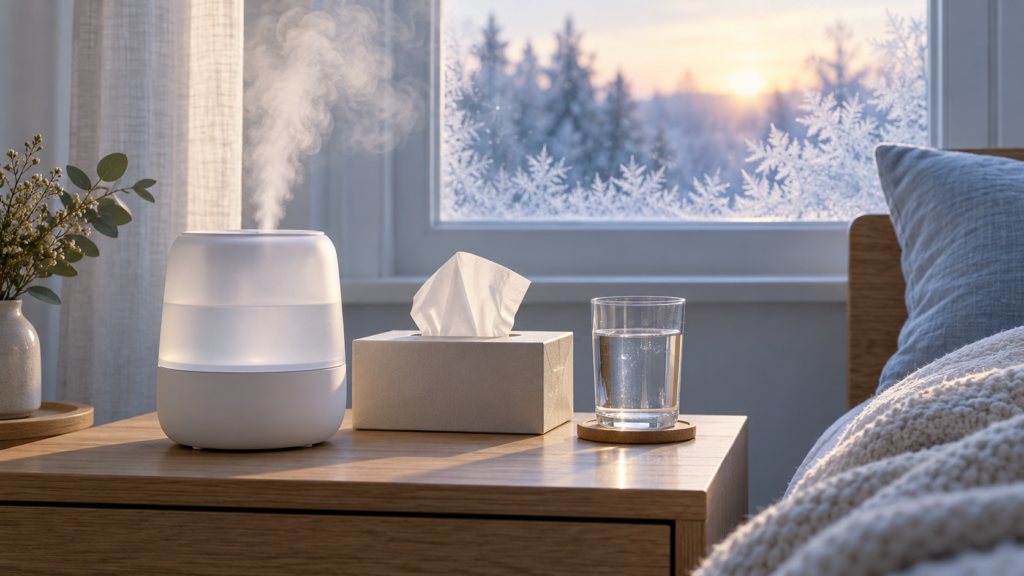
The most effective strategy is to keep the nasal lining moist. Running a humidifier, particularly in the bedroom at night, helps maintain healthier indoor humidity, and it’s worth cleaning the unit regularly so it doesn’t spread mold or bacteria. Saline nasal sprays or gels can add moisture to the lining throughout the day, and a thin layer of petroleum jelly or a saline-based gel applied just inside the nostrils can help hold moisture in.
Staying hydrated, avoiding picking the nose, and blowing gently rather than forcefully are simple habits that reduce irritation. Trimming a child’s fingernails may also help prevent accidental scratching.
What to Do When a Nosebleed Starts
Most nosebleeds are harmless and stop on their own. The recommended approach is to sit upright and lean slightly forward, which keeps blood from running down the throat, rather than tilting the head back. Pinch the soft part of the nose, just below the bony bridge, firmly closed with the thumb and forefinger and hold for a full ten to fifteen minutes without letting go to check. Breathing through the mouth during this time is fine. A cold compress on the bridge of the nose may help.
Once the bleeding stops, avoid blowing the nose, bending down, or lifting heavy objects for several hours, since this can restart the bleeding.
When to Seek Medical Care
Most nosebleeds don’t need a trip to the doctor, but some do. Seek medical attention if bleeding doesn’t stop after 20 minutes of steady pressure, if the bleeding is heavy or follows a head injury, if you feel faint or dizzy, or if you have trouble breathing. Frequent or recurring nosebleeds are also worth discussing with a healthcare provider, particularly for people taking blood thinners or who have a bleeding disorder, since they can sometimes signal an underlying problem.
A Small Thing Worth Staying Ahead Of
Dry winter air makes nosebleeds a predictable seasonal nuisance, but a little prevention goes a long way. Keeping the air moist, protecting the nasal lining, and knowing how to respond when bleeding starts can turn a messy and alarming episode into a minor inconvenience, and make the colder months considerably more comfortable.