The Time to Prepare Your Cooling Systems Is Before You Need Them
Every summer, the same scenario plays out across the country: temperatures spike into the 90s on the first genuinely hot week of the year, and homeowners discover their air conditioning isn’t working properly — a refrigerant leak, a clogged filter, a capacitor that failed over winter. HVAC technicians are immediately overwhelmed with emergency calls, wait times stretch to days, and families swelter through a heat wave waiting for a repair that would have been a routine maintenance visit six weeks earlier.
Late April is the ideal window to avoid that scenario. The weather is mild enough that you don’t need air conditioning yet, which means an AC system that needs service can be down for a day or two without consequence. HVAC companies aren’t yet busy with summer emergency calls. And identifying a problem now gives you time to source parts, schedule contractors, and make decisions without the pressure of a heat wave bearing down.
A few hours of attention to your home’s cooling systems now pays dividends every hot day between May and September.
Central Air Conditioning: The Annual Checkup
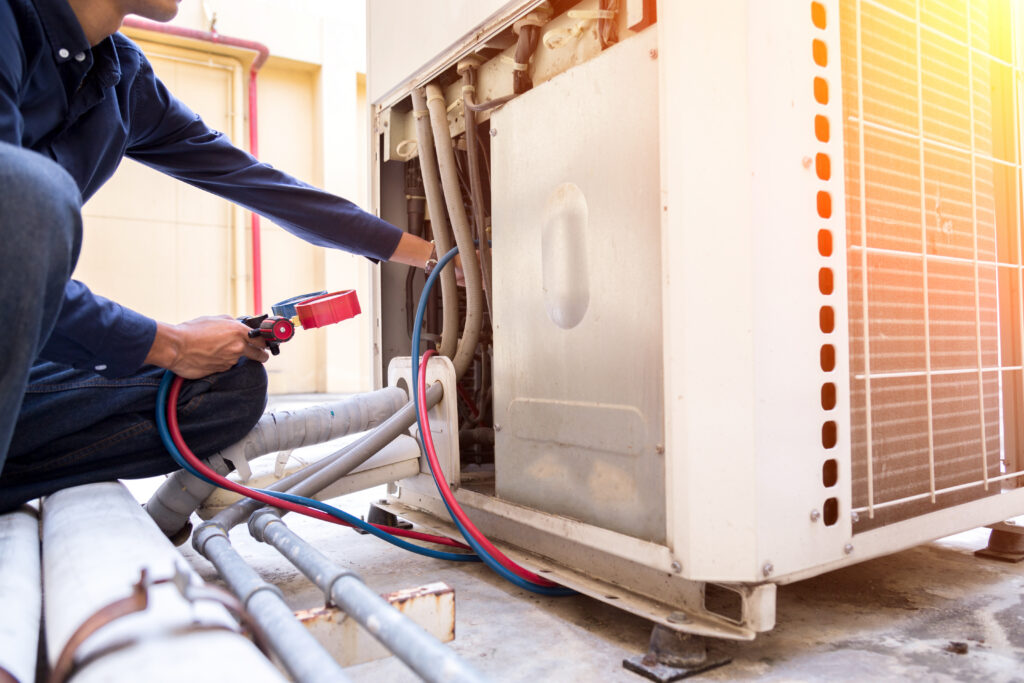
If you have central air conditioning, a professional tune-up before the cooling season begins is the single most valuable cooling system investment you can make. A qualified HVAC technician will check refrigerant levels, inspect electrical connections and capacitors, clean the evaporator and condenser coils, lubricate moving parts, and test system performance — catching small issues before they become expensive failures at the worst possible time.
Schedule this now. Most HVAC companies offer spring tune-up specials in April and May, and availability is good. By June, the same technician will be doing emergency calls and may not be available for routine maintenance for weeks.
Between professional visits, several DIY tasks maintain system efficiency. Replace the air filter if you haven’t already — a clogged filter is the single most common cause of reduced AC efficiency and the easiest fix. Most systems need filter replacement every one to three months during active use; a system that ran all last summer may have a filter that’s been in place since October.
The outdoor condenser unit — the large, boxy component that sits outside the house — needs clear space to function properly. Remove any debris, dead leaves, or vegetation that accumulated over winter within two feet of the unit on all sides. Check that the unit is level; frost heaving can shift the pad it sits on, and an unlevel condenser runs less efficiently and wears faster. Gently rinse the condenser fins with a garden hose to remove dust and debris — be gentle, as the aluminum fins bend easily.
Window Air Conditioners: Reinstallation and Inspection
If you use window air conditioning units stored through winter, inspect them before reinstalling. Check the filter — most window unit filters are washable and simply need rinsing and drying before reinstallation. Look at the coils for visible damage or heavy dirt accumulation. Check the power cord for any cracking or damage that occurred in storage.
Reinstall units before temperatures make it urgent, and test them immediately to confirm they’re working. A window unit that fails on its first use of the season is far better discovered in April than during the first heat wave.
Pay attention to the seal between the unit and the window frame. Air gaps around poorly sealed units allow hot outdoor air to infiltrate and significantly reduce cooling efficiency — and in spring, they allow insects an entry point. Foam weatherstripping around the unit perimeter, available at hardware stores in standard widths, seals gaps quickly and cheaply.
Ceiling Fans: Direction Matters More Than You Think
Ceiling fans have a small switch on the motor housing that reverses blade rotation direction, and the direction matters significantly for energy efficiency across seasons.
In summer mode, blades should rotate counterclockwise when viewed from below — this pushes air directly downward, creating the wind chill effect that makes a room feel cooler without actually lowering temperature. This allows you to raise the thermostat setting by several degrees while maintaining the same comfort level, meaningfully reducing cooling costs.
In winter mode, blades rotate clockwise, pulling air upward and pushing the warm air that accumulates near the ceiling down along the walls — useful for heating efficiency but the wrong direction for cooling.
Most ceiling fans have been running in winter mode since October. Switch them to summer mode now, before the season demands them. Check every fan in the house — bedroom fans running in the wrong direction on a warm night provide no cooling benefit and waste electricity.
Whole-House Fans: Spring’s Best Cooling Tool
Whole-house fans — large fans installed in the ceiling that pull air through open windows and exhaust it into the attic — are one of the most energy-efficient cooling tools available and are underutilized in many homes that have them. They work best in spring and early summer, when outdoor temperatures drop significantly at night, and in climates where nighttime lows are reliably 20 or more degrees cooler than daytime highs.
The strategy is simple: during the day, keep windows closed and use shading to keep the house cool. As outdoor temperatures drop in the evening — which in late April and May happens reliably by 7 or 8 p.m. across most of the country — open windows and run the whole-house fan. It pulls cool night air through the house, flushes the accumulated heat of the day into the attic, and can cool a home by 5 to 10 degrees in less than an hour.
If you have a whole-house fan, test it now and make sure it’s operational before the cooling season. Check that the attic has adequate ventilation — a whole-house fan moves large volumes of air into the attic, and without sufficient attic venting, it will be less effective and can create pressure problems.
Window and Door Sealing: Where Cooling Efficiency Is Lost
Air conditioning works by removing heat from indoor air. Every gap that allows hot outdoor air to infiltrate the conditioned space makes the system work harder and longer to maintain the set temperature. The spring home maintenance inspection covered sealing as a post-winter task; the cooling-specific version focuses on the areas that most affect summer performance.
Check weatherstripping around all exterior doors for gaps or deterioration. Weatherstripping compresses over time and eventually fails to seal properly — you can test it by closing a door on a piece of paper and pulling; if the paper slides out easily, the seal is inadequate. Replacing door weatherstripping is a simple DIY task that costs under $20 per door and meaningfully reduces cooling load.
Inspect window seals and locks. Windows that don’t close fully or lock tightly leave gaps that allow hot air infiltration. A window that rattles in the frame or has visible daylight around its edges when closed is a significant cooling efficiency problem.
Check attic hatch insulation and sealing. Attic spaces in summer reach temperatures of 130°F or higher, and an inadequately insulated or sealed attic hatch allows that heat to radiate into the living space below. Attic hatch insulation covers — insulated boxes that sit over the hatch opening — are inexpensive and dramatically reduce this heat transfer.
Window Coverings: Passive Cooling That Costs Nothing to Run
Solar heat gain through windows is responsible for a significant fraction of summer cooling load — the heat that enters through south and west-facing windows on summer afternoons can raise indoor temperatures by 10 to 15 degrees in rooms with inadequate shading. Addressing this passively, before the season begins, reduces the work your air conditioning has to do.
Exterior shading — awnings, pergolas, or deciduous trees that leaf out in spring — is the most effective approach because it blocks solar radiation before it enters the glass. Interior window coverings are significantly less effective because the heat has already entered the room, but they’re better than nothing. Cellular shades provide both insulation and solar blocking. Reflective window film applied to south and west-facing windows can reduce solar heat gain by 40 to 50 percent and is a reasonable investment for rooms that overheat in summer.
If you’ve been meaning to plant a deciduous tree on the south or west side of your house, late April is a good planting window. A fast-growing shade tree won’t provide meaningful shading for several years, but it will eventually reduce cooling costs and outdoor comfort dramatically — and planting now means it gets the benefit of a full spring and summer growing season to establish its root system.
The Investment That Pays All Summer
Spending a few hours on cooling system preparation in late April costs almost nothing compared to the alternative: an emergency HVAC repair call during a heat wave, a summer of inefficient cooling driving up utility bills, or the discomfort of a poorly functioning system during the hottest weeks of the year. The checklist is manageable, the timing is ideal, and the payoff extends across every warm day between now and October.
Summer is coming. Late April is the right time to make sure your home is ready for it.