The Most Evocative Sense of the Season Has a Scientific Explanation
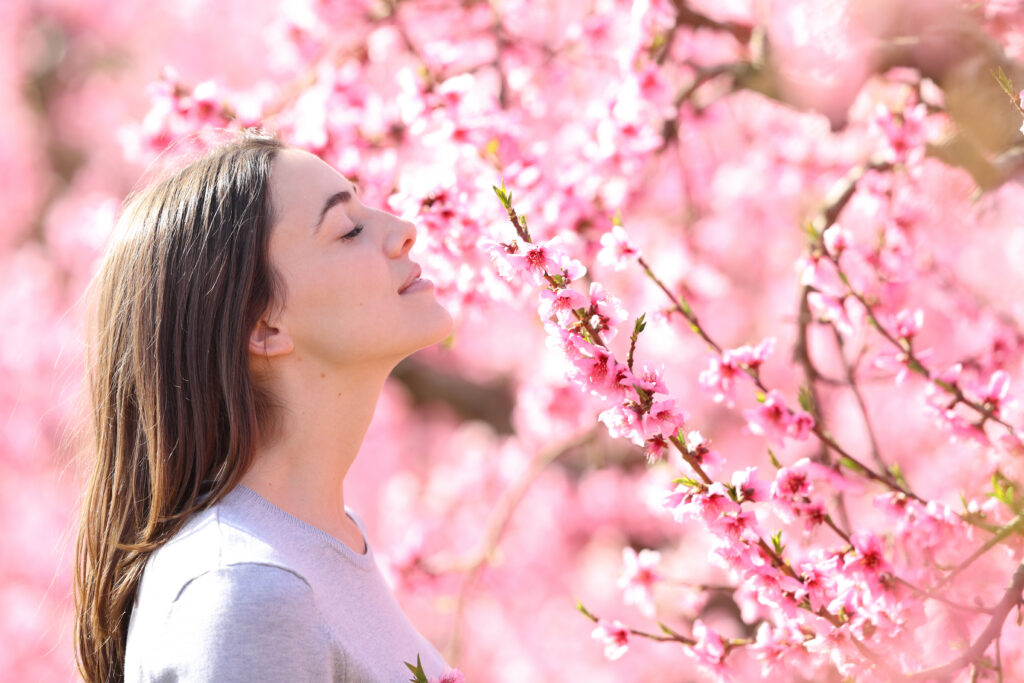
There is a specific quality to spring air that is almost impossible to describe and immediately recognizable — a freshness, a green aliveness, a complexity that winter’s cold, dry air entirely lacks. Step outside on a warm April morning after overnight rain and the sensory experience is immediate and specific: something earthy and alive, something green and sharp, something clean and electric. It smells like spring in a way that triggers memories and emotions with an immediacy that few other sensory experiences can match.
The reason smell is so powerful at triggering memory and emotion is neurological — the olfactory system connects more directly to the brain’s limbic system, which governs emotion and memory, than any other sense. But the reason spring air smells the way it does is atmospheric chemistry: a specific combination of volatile compounds released by soil, plants, rain, and the atmosphere itself that is unique to the season and changes as spring advances. Understanding what those compounds are and where they come from transforms a vague sensory impression into something you can actually explain.
Petrichor: The Smell of Rain on Warm Earth
The most famous component of spring air is petrichor — the distinctive smell of rain falling on dry or recently dry soil, described in 1964 by Australian researchers Isabel Bear and R.G. Thomas, who coined the term from the Greek words for stone and the fluid in the veins of the gods.
Petrichor has two primary chemical components. The first is geosmin, a bicyclic alcohol produced by Actinomycetes bacteria and cyanobacteria in the soil. Geosmin is one of the most detectable odorants known to science — the human nose can sense it at concentrations as low as 5 parts per trillion, roughly equivalent to detecting a single drop in an Olympic swimming pool. When raindrops strike soil, they trap tiny air bubbles that burst upward, aerosolizing geosmin and carrying it into the air in a process called aerosol generation from bubble bursting.
The second component is a collection of plant oils — specifically terpenoids — that accumulate in dry soil between rain events. These compounds are produced by plant roots and decomposing vegetation, absorbed by clay minerals in the soil, and released when rain disrupts the soil surface. Together with geosmin, they produce the complex, earthy, slightly sweet smell most people associate with rain on warm ground.
Spring maximizes petrichor intensity because spring soil is biologically active — the Actinomycetes bacteria producing geosmin are at high population density in recently thawed, warming soil — and because spring weather delivers repeated cycles of drying and rewetting. Soil that dries between rain events accumulates geosmin and plant oils; the next rain releases them. By midsummer, repeated wetting reduces bacterial populations and depletes soil surface compounds, making summer rain on dry soil produce less intense petrichor than spring rain on recently warmed soil.
The Green Smell: Plant Volatile Organic Compounds
The sharp, green, slightly grassy smell that characterizes spring air — particularly on warm mornings after the first leaves emerge — comes from a family of compounds called green leaf volatiles, or GLVs. These are short-chain aldehydes, alcohols, and esters produced by plants when their cells are damaged or stressed.
The most prominent GLV is (Z)-3-hexenal, commonly called leaf aldehyde, which produces the fresh-cut grass smell that is almost universally recognized as “green.” Plants release GLVs when their tissue is physically damaged — by insects, wind, or handling — as part of a defense and signaling response. Neighboring plants can detect these compounds and begin producing their own defensive chemicals in response, a form of chemical communication that operates entirely beneath human awareness.
In spring, GLV production is especially high for several reasons. Newly emerged leaves are tender and easily damaged, releasing volatiles with minimal mechanical stress. The rapid cellular growth of spring leaves produces high concentrations of the precursor compounds that become GLVs when cells are disrupted. And the warming temperatures of spring accelerate the enzymatic reactions that produce these compounds, making warm spring mornings particularly rich in the green, grassy chemistry that distinguishes them from any other season.
The smell of a freshly mown lawn — one of the most reliably evocative spring and summer scents — is essentially a massive, concentrated release of GLVs from mechanically damaged grass cells, the same chemistry that operates more subtly whenever spring wind moves through an emerging canopy.
Ozone: The Electric Smell Before a Storm
The sharp, clean, slightly metallic smell that precedes thunderstorms — and that lingers in the air after lightning — is ozone, a molecule consisting of three oxygen atoms (O₃) rather than the two-atom oxygen (O₂) that makes up normal atmospheric oxygen.
Ozone is produced naturally in two ways relevant to spring weather. Lightning discharges split nitrogen and oxygen molecules and recombine them into nitric oxide, which reacts with atmospheric oxygen to eventually form ozone. More directly, the intense ultraviolet radiation and electrical discharge of a lightning bolt splits oxygen molecules, allowing some to recombine as ozone. The downdrafts of thunderstorms carry this ozone from the storm’s interior toward the surface, which is why the ozone smell arrives before rain during approaching thunderstorms — carried on the cold outflow of the downdraft.
Ozone is also produced in the upper atmosphere by UV radiation and descends to the surface through intrusions of stratospheric air, particularly ahead of strong cold fronts. This is part of why the air before a major spring cold front often has that distinctive clean, electric quality — stratospheric ozone is being mixed into the lower atmosphere by the storm’s dynamics.
The human nose is extremely sensitive to ozone, detecting it at concentrations well below the levels considered problematic for health. At the trace concentrations present in pre-storm air, it produces the clean, sharp smell that most people find pleasant and energizing. At higher concentrations — near industrial sources or in urban smog — ozone is an irritant with real health effects, which is why air quality alerts specify ozone levels separately from particulate matter.
Terpenes: The Forest’s Contribution to Spring Air
Walk near a coniferous forest or a stand of pines on a warm spring day and the air takes on a distinctive resinous, slightly medicinal quality — the smell of the forest. This comes primarily from terpenes and their chemical relatives, a large class of volatile organic compounds produced by plants as part of their chemical ecology.
Alpha-pinene and beta-pinene — produced abundantly by pine, fir, and spruce — are the dominant terpenes in forested spring air. Limonene, with its citrus-adjacent quality, comes from a broader range of trees and shrubs. Isoprene, produced by many hardwood trees including oaks and poplars, is the most abundant biogenic volatile organic compound in Earth’s atmosphere and contributes to the characteristic smell of warm deciduous forest.
Terpene production increases dramatically with temperature — warm spring days, particularly afternoons when temperatures have climbed into the 60s and 70s, produce substantially more terpene release than cool mornings. This is part of why a warm spring afternoon in a forested setting has such a distinctive and complex smell: dozens of terpene compounds being released simultaneously from warming vegetation, mixing in the air above the canopy and drifting with the afternoon breeze.
Terpenes also contribute to atmospheric chemistry in ways that affect air quality. In the presence of sunlight and other atmospheric compounds, they can react to form secondary organic aerosols — fine particles that create the characteristic blue haze visible over forested mountains in summer, including the haze that gives the Blue Ridge Mountains and Great Smoky Mountains their names.
Soil Biology and the Living Smell of Spring Earth
Beyond geosmin and petrichor, spring soil releases a complex mixture of volatile compounds as billions of microorganisms wake from winter dormancy and accelerate their metabolic activity. The smell of turned spring earth — that rich, complex, alive quality that is distinct from summer or fall soil — reflects this biological awakening.
Fungi, bacteria, and other soil microorganisms produce a wide range of volatile metabolites as they break down organic matter, fix nitrogen, and conduct the chemical transformations that make soil fertile. Dimethyl sulfide, produced by sulfur-cycling bacteria, contributes a slightly marine or oceanic quality to fertile soil. Various organic acids contribute earthy, musty notes. The specific mixture varies with soil type, moisture content, temperature, and microbial community composition — which is why spring soil in different regions has its own particular character.
The olfactory richness of spring soil is essentially a readout of its biological vitality. Healthy, biologically active soil smells complex and alive. Compacted, depleted, or chemically treated soil smells of much less, because the microbial communities producing those compounds are impoverished. Gardeners who work with healthy compost-amended soil are experiencing, in the richness of the smell, a direct sensory measurement of biological abundance.
A Season You Can Smell
Spring is the most olfactorily complex season of the year, and the chemistry behind its distinctive smell is as layered as the smell itself: geosmin from awakening soil bacteria, plant volatiles from emerging and damaged leaves, ozone from lightning and frontal intrusions, terpenes from warming vegetation, and the complex microbial chemistry of biologically active soil all combining in proportions that shift hour by hour as temperature, humidity, and weather conditions change.
The smell of spring air on a warm morning after overnight rain, with thunderstorms approaching and leaves newly emerged on the trees, represents the full expression of all these compounds simultaneously — a convergence of soil biology, plant chemistry, and atmospheric electricity that the brain’s olfactory system translates into one of the most immediately and universally recognized sensory signatures in human experience.
It smells like spring because the chemistry of spring is genuinely different from every other season. Your nose knows.