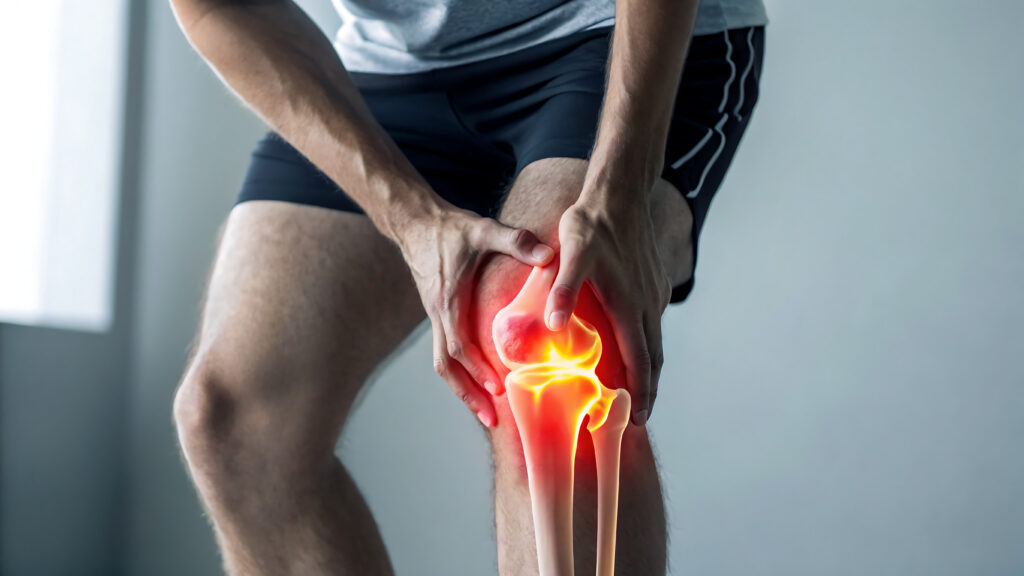
“My Knee Says Rain Is Coming.” Is That Actually True?
Nearly everyone who has spent time with an older relative who has arthritis has heard it: “My joints are aching — must be rain coming.” The claim is so common it has become a cultural cliché, the butt of jokes about living barometers. But is it real? And if so, what’s actually happening in the body when the weather changes?
The answer, after decades of research that has been frustratingly inconsistent, is: probably yes, but not in the simple way most people assume, and with important nuances that explain why some people are reliable weather predictors while others feel nothing at all. Spring — with its frequent frontal passages, rapid pressure swings, and dramatic day-to-day weather variability — is the season when this connection is most likely to be felt.
The Barometric Pressure Hypothesis
The most widely accepted mechanism for weather-related joint pain involves barometric pressure — the weight of the air pressing down on the body. When a low-pressure system approaches, barometric pressure drops. The prevailing hypothesis is that this pressure drop allows tissues surrounding joints to expand slightly, increasing pressure within the joint capsule and stimulating pain receptors.
Joint capsules are sealed, fluid-filled structures with a fixed volume. The tissues surrounding them — tendons, ligaments, muscles — contain gas and fluid that respond to external pressure changes. A drop in barometric pressure reduces the force compressing these tissues from outside, allowing slight expansion that can stretch an already-inflamed or damaged joint capsule enough to activate nociceptors — the pain-sensing nerve fibers distributed throughout joint tissue.
This mechanism is plausible and consistent with basic physics. The question is whether the pressure changes involved in normal weather systems are large enough to produce the effect. Barometric pressure typically drops by about 10 to 20 millibars ahead of a significant storm system — a change that represents less than 2 percent of baseline atmospheric pressure. Whether that small a change is sufficient to produce meaningful tissue expansion and pain is where the science gets complicated.
What the Research Actually Shows
Studies on weather and joint pain have produced inconsistent results for decades, and the inconsistency is itself informative. Some studies find strong correlations between dropping pressure and increased pain reports in arthritis patients. Others find no significant relationship. Some find that it’s not pressure but temperature, humidity, or wind speed that correlates most strongly. Still others find that individual patients vary dramatically — some are highly sensitive to weather changes while others are completely unaffected.
A large 2014 study using data from over 800 arthritis patients in the Netherlands found that lower temperatures, higher humidity, and lower atmospheric pressure were each independently associated with increased pain, with the strongest effect coming from humidity. A 2019 Australian study analyzed pain reports from 13,000 participants linked to weather station data and found a modest but statistically significant increase in pain on cold, rainy, humid days compared to warm, dry days.
The most honest summary of the literature is that weather effects on joint pain are real but modest in magnitude, highly variable between individuals, and not straightforwardly attributable to any single weather variable. The person who reliably predicts rain from their arthritis is probably experiencing a genuine physiological response — but the mechanism is likely a combination of pressure, temperature, humidity, and possibly other factors acting together, not a single clean barometric pressure signal.
Temperature, Synovial Fluid, and Cold Stiffness
Cold temperatures affect joints through a different and more direct mechanism than pressure changes. Synovial fluid — the lubricating fluid within joint capsules — becomes more viscous at lower temperatures, functioning less efficiently as a lubricant and shock absorber. Tendons and ligaments also lose some elasticity in cold conditions, becoming stiffer and less responsive.
This cold stiffness is why people with arthritis and other joint conditions often feel their worst in the morning during cold weather, before movement has warmed the joint fluid and restored tissue flexibility. It’s also why morning stiffness — a diagnostic criterion for several forms of arthritis — is more pronounced in cold seasons.
Spring’s temperature variability is particularly relevant here. The same week that delivers 75°F afternoons also delivers 38°F mornings, and joints that feel reasonably comfortable during the warm afternoon are stiff and painful the following cool morning. The day-to-day temperature swings of spring create a perpetual morning stiffness cycle that doesn’t resolve the way it would if temperatures simply stayed warm.
Humidity and Inflammation
The relationship between humidity and joint pain may be the most physiologically interesting. High humidity doesn’t directly affect joints mechanically, but it appears to influence the perception of pain through neural pathways that are still being investigated.
One hypothesis involves the skin’s humidity sensors — mechanoreceptors that detect moisture levels — feeding signals to the central nervous system that modulate pain perception. Another involves the effect of humidity on soft tissue hydration and the behavior of the extracellular matrix that surrounds joint structures. A third is more straightforwardly psychological: the discomfort and negative mood associated with damp, overcast weather may lower pain thresholds through central sensitization — the same pathway through which stress and anxiety amplify pain perception.
Whatever the mechanism, the association between high humidity and increased joint pain reports is one of the more consistent findings in the weather-pain literature. Late April’s rising humidity, still variable but trending upward as dew points climb, may be contributing to joint symptoms that would be attributed simply to “the weather.”
Why Some People Are Sensitive and Others Aren’t
The variation in individual sensitivity to weather-related joint pain is one of the field’s most interesting and least resolved questions. Some people with severe arthritis report no weather sensitivity whatsoever. Others with relatively mild joint disease describe dramatic changes in pain with weather shifts.
Several factors appear to influence sensitivity. The degree of joint inflammation matters — inflamed joint tissue with its higher density of activated pain receptors may be more responsive to pressure and temperature stimuli than less-inflamed tissue. Psychological factors including anxiety, depression, and catastrophizing — the tendency to expect and focus on pain — are associated with increased weather sensitivity independent of objective joint disease severity. Individual differences in baroreceptor sensitivity and autonomic nervous system reactivity may also play a role.
The implication is that weather-related joint pain is not simply a mechanical phenomenon but an interaction between physical joint status, nervous system sensitivity, and psychological state. Treatments that address the psychological components of pain — cognitive behavioral therapy, mindfulness-based approaches, pain education — may reduce weather sensitivity even without changing the joint disease itself.
What Helps on High-Pain Weather Days
For people who experience weather-related joint pain, several evidence-based approaches can reduce the impact of bad weather days.
Keeping joints warm reduces the cold-stiffness component. Layering clothing to maintain joint temperature during cool spring mornings — particularly for knees, hips, and hands — and warming up gradually before demanding activity helps keep synovial fluid viscous and tissue flexible.
Movement is consistently the most effective intervention for weather-related joint stiffness. The viscosity of synovial fluid decreases with use, the inflammatory mediators that accumulate in sedentary joints get cleared through circulation, and the muscles surrounding joints that provide stability and reduce loading get activated. The instinct to rest a painful joint during bad weather is understandable but often counterproductive — gentle, consistent movement typically produces better outcomes than rest.
Anti-inflammatory medications taken consistently rather than reactively — maintaining a steady blood level rather than responding to acute pain — provide more stable pain control through the variable conditions of spring. Discuss timing and dosing strategies with your prescriber if weather-related pain spikes are disrupting your daily function.
Tracking your own patterns over several weeks can be genuinely illuminating. Many people who keep a pain diary alongside weather records discover that their personal trigger is a specific combination of variables — a pressure drop combined with high humidity, for instance — rather than any single weather element. This information can guide preparation on days when the forecast matches the personal trigger pattern.
The Body as a Weather Instrument
The lived experience of weather-sensitive joint pain has been dismissed as superstition long enough that many people don’t bring it up with their doctors, expecting skepticism. The science, while imperfect and ongoing, supports what these patients have been reporting for generations: the body does respond to weather changes, the response is physiologically grounded, and it is more pronounced in people with joint disease than in those without.
Spring, with its relentless parade of frontal passages, pressure swings, temperature contrasts, and rising humidity, is the season that tests this sensitivity most thoroughly. Your joints, if they’re tracking the weather, are doing something real — not quite as precise as a barometer, but responding to the same atmospheric forces in their own biological way.