The Light at the End of a Spring Day Is Different. Here’s Why.
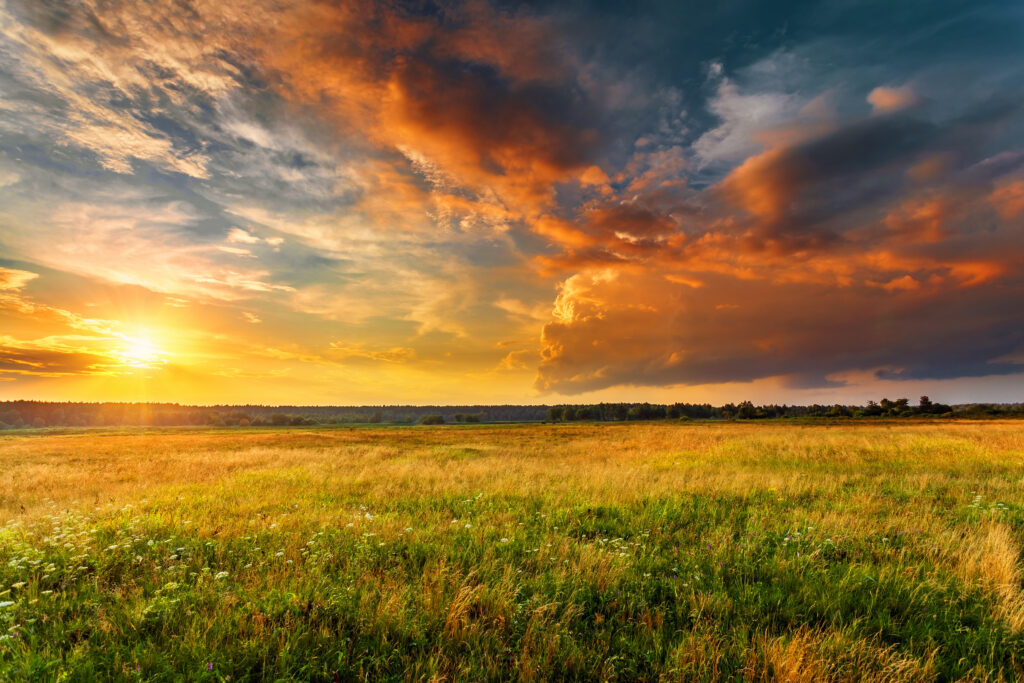
Pay attention to the sky in the hour before sunset on a clear spring evening and you’ll notice something that midwinter and midsummer don’t quite replicate: a quality of light that seems almost excessive in its color and warmth. Pinks that shade into deep reds. Oranges that saturate clouds from below. A golden hour that lives up to its name in a way that January’s pale late-afternoon light never does.
Spring sunsets are genuinely different from those of other seasons, and the difference is explained by the same atmospheric physics that governs everything else about the season’s skies. The combination of specific cloud types, moderate humidity, post-frontal air clarity, and the sun’s angle in late April creates conditions for atmospheric optics that the year’s other seasons produce less reliably.
Why Sunsets Are Red and Orange in the First Place
The basic mechanism of sunset color is the same physics responsible for blue midday skies: Rayleigh scattering, the preferential scattering of shorter wavelengths of light by atmospheric gas molecules.
At midday, the sun is high overhead and its light travels through a relatively short path of atmosphere before reaching your eyes. Blue light scatters in all directions, filling the sky with blue. Red and orange wavelengths, which scatter much less, pass through directly and reach your eyes from the direction of the sun.
At sunset, the sun is near the horizon, and its light must travel through a dramatically longer path of atmosphere — potentially fifty times longer than at midday — before reaching you. Over this extended path, virtually all of the blue and violet light scatters away, leaving only the longest wavelengths — reds, oranges, and yellows — to complete the journey. The sky near the horizon glows with these warm tones, and clouds illuminated by this light from below take on the colors that make sunsets remarkable.
The longer the atmospheric path, the more blue is removed, and the more saturated the remaining warm colors become. This is why the most intense sunset colors appear in the minutes just before the sun drops below the horizon, when the path length is at its maximum.
What Makes Spring Sunsets Particularly Vivid
If the basic mechanism is the same year-round, why do spring sunsets so often seem more dramatic? Several factors specific to the season enhance the effect.
Post-frontal atmospheric clarity. Spring’s active weather pattern delivers frequent cold frontal passages that scour the lower atmosphere of dust, pollen, and haze. The day after a cold front clears through — which in the active spring weather pattern happens regularly — the atmosphere is exceptionally clean and transparent. Clean air means light travels through it without being absorbed or scattered by particles before completing its journey, allowing colors to remain saturated rather than being muted by haze.
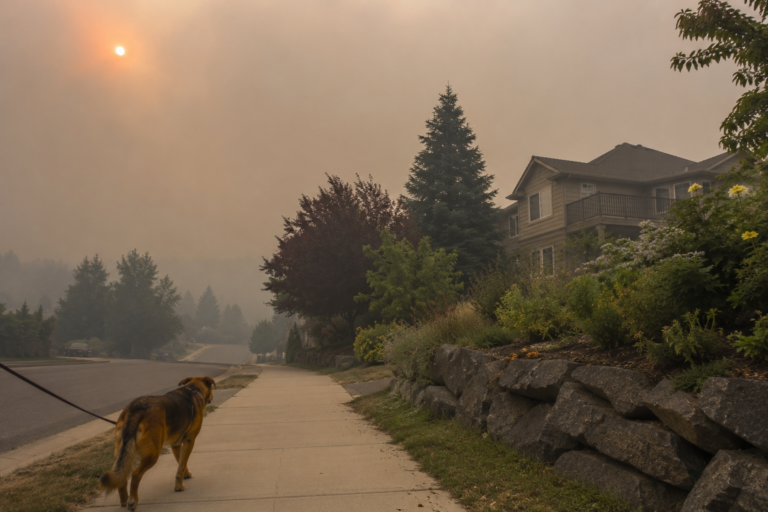
Paradoxically, some particles in the atmosphere actually enhance sunset color — but the right kind and amount. A small concentration of fine particles at high altitude can add additional scattering that enriches colors. Too many particles, as in heavy pollution or thick smoke, muds colors toward gray and brown. Spring’s moderate particulate levels, combined with post-frontal transparency in the lower atmosphere, often hit the sweet spot.
Optimal cloud architecture. Sunset color requires clouds to display it. Clear skies produce color only near the horizon; clouds catch the light and spread it across the entire sky. Spring’s atmospheric instability generates exactly the cloud types that produce the most dramatic sunset displays: mid-level altocumulus and cirrocumulus clouds, and the anvil remnants of afternoon thunderstorms that spread across the upper troposphere.
These high and mid-level clouds act as reflective screens positioned at the ideal altitude and distance to catch the last low-angle light and redirect it toward observers on the ground. An afternoon thunderstorm that has moved off to the east, leaving its anvil spread across the sky, can produce a spectacular sunset as the now-departed storm’s ice-crystal canopy catches the orange and red light of the descending sun.
Moderate humidity in the middle atmosphere. While high surface humidity muddies skies, moderate moisture in the middle levels of the atmosphere — typical of spring air masses — contributes to the formation of the layered clouds that display sunset color most dramatically. The cloud layers that produce the richest sunset displays often form at humidity gradients in the middle atmosphere, exactly where spring’s layered air masses create those gradients most consistently.
The sun’s angle. In late April, the sun sets north of due west and at an angle that illuminates the underside of clouds across a large portion of the sky rather than a narrow band near the horizon. The geometry of where the setting sun is relative to cloud positions overhead creates a wider canvas for color display than winter’s lower sun angle allows.
The Green Flash: Spring’s Rarest Optical Reward
At the very moment the sun’s upper edge disappears below a clear sea or flat horizon, observers occasionally see a brief flash of green or blue-green light — the green flash. It lasts a fraction of a second and is easy to miss if you blink.
The green flash is caused by atmospheric refraction — the bending of light as it passes through air of varying density. Different wavelengths of light refract by slightly different amounts, separating the sun’s image into a spectrum of colors stacked vertically. At the moment of sunset, the upper edge of the sun — the last part to disappear — shows the color that refracts most strongly and therefore stays visible the longest. In the clear air over a flat horizon, that color appears green.
The green flash requires exceptional atmospheric clarity and a flat, unobstructed horizon — most commonly seen over the ocean or a large lake. Spring post-frontal days, with their clean, transparent air, produce the atmospheric conditions most conducive to green flash sightings over appropriate horizons. It’s rare enough to qualify as genuinely extraordinary when witnessed, and spring is the season most likely to provide the atmospheric conditions that make it possible.
Crepuscular Rays: The Light Beams of Spring Evenings
The beams of light that appear to radiate outward from the sun in the minutes before sunset — crepuscular rays, sometimes called god rays or sun rays — are a spring and summer evening specialty that becomes more common as the season advances.
Crepuscular rays form when solid objects — clouds, mountains, or the horizon itself — cast shadows through illuminated, particle-laden air. The rays themselves are parallel, but perspective makes them appear to converge at the sun. The effect is most visible when the air contains just enough scattered particles to make the illuminated portions of the sky visibly brighter than the shadowed portions — not so much haze that the contrast is lost, but enough to make the structure of light and shadow visible.
Spring’s moderate aerosol content and the dramatic vertical development of afternoon clouds create ideal crepuscular ray conditions. A large cumulus or cumulonimbus cloud positioned to the side of the setting sun can cast shadows across a brightly illuminated sky that appear as dark bands radiating from the sun — spectacular enough that it regularly stops people in their tracks.
How to Watch a Spring Sunset Well
The peak of sunset color typically lasts 15 to 20 minutes, beginning about ten minutes before the sun reaches the horizon and extending for five to ten minutes after it disappears. The most intense colors usually arrive in the last two to three minutes before sunset and the first two to three minutes after, when the atmospheric path is longest and clouds are most intensely backlit.
Look not just at the horizon but at the sky overhead and in the direction opposite the sunset — the eastern sky. The warm light from the setting sun in the west illuminates clouds in the east with pinks and lavenders, and the subtle colors of the anti-solar sky are often as beautiful as the more obvious western display. The pink band above the eastern horizon just after sunset, separated from the sky above by the blue-gray shadow of Earth itself rising against the sky, is called the Belt of Venus — one of the quieter optical phenomena that rewards anyone paying attention at the right moment.
Spring evenings are long enough now that the sunset arrives at a civilized hour, the air is often clear after afternoon showers or frontal passages, and the season’s clouds are exactly the kind that make the light worth watching. The sky is doing something spectacular most evenings. It just requires looking up.