A Task That’s Easy to Forget Until It’s Too Late
The first hard freeze of the season is still weeks away for most of the country, but mid-September is actually the ideal time to start thinking about winterizing outdoor faucets and irrigation systems—not because the weather demands it yet, but because doing this task on your own schedule, rather than in a rush ahead of a sudden early cold snap, gives you time to address it properly and avoid the genuinely expensive damage that comes from getting caught off guard.
Why Unprotected Pipes Are So Vulnerable to Freezing
Water expands by roughly nine percent as it freezes, and this expansion generates tremendous pressure inside a pipe that has no room to accommodate that change in volume. Outdoor spigots and the pipes leading to them are particularly vulnerable because they’re often less insulated than interior plumbing and directly exposed to outdoor temperature swings. A pipe that freezes solid can crack or burst from this pressure, and the damage often isn’t discovered until the pipe thaws days or weeks later, at which point water has typically already caused significant, sometimes hidden damage inside a wall or foundation area.
This delayed discovery is part of what makes frozen pipe damage so costly—the actual freeze event that caused the crack often goes completely unnoticed, and it’s only once temperatures rise enough for the ice to thaw and water begins flowing through the compromised pipe that the problem becomes apparent, frequently well after the actual damage occurred.
Disconnecting and Draining Hoses
The simplest and most immediate step is disconnecting all garden hoses from outdoor spigots before temperatures regularly drop near freezing. A hose left connected can trap water in the spigot itself, preventing it from draining properly and creating exactly the standing water conditions that lead to freeze damage. Drain any remaining water from hoses before storing them for the season, since water left inside a hose can also freeze and cause the hose material itself to crack or degrade over winter storage.
Shutting Off and Draining Outdoor Spigots Properly
Many homes have a dedicated interior shutoff valve for outdoor spigots, separate from the main water shutoff, specifically intended for seasonal winterization. Locating this valve—often in a basement, crawl space, or utility area—and shutting it off, then opening the outdoor spigot to drain any remaining water from the line, is one of the most effective ways to prevent freeze damage to that specific fixture.
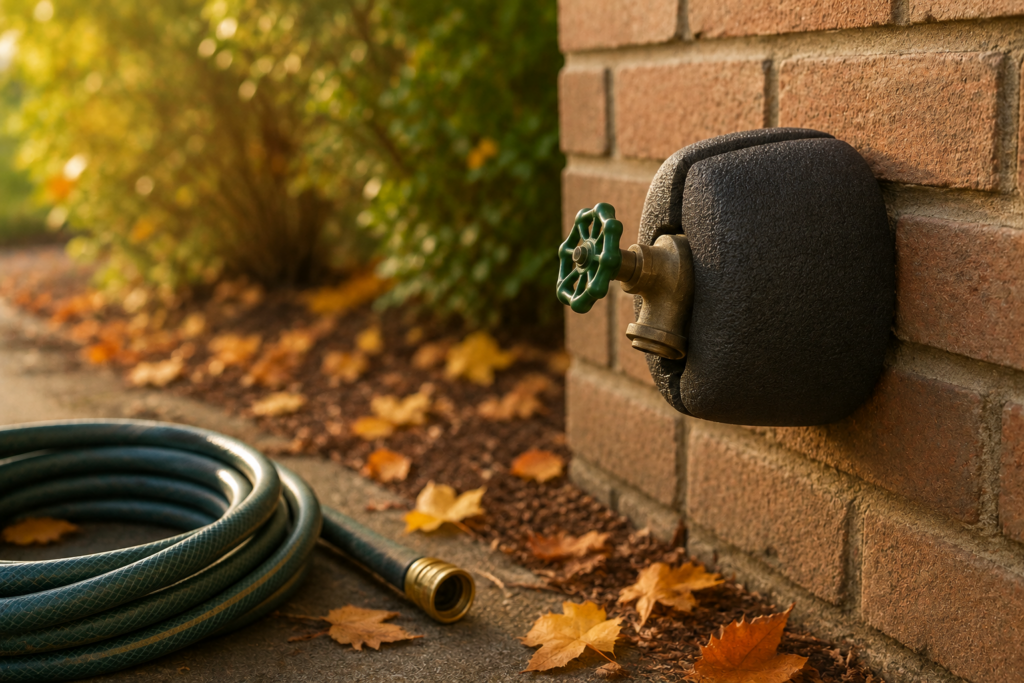
For homes without a dedicated shutoff valve for outdoor spigots, an insulated faucet cover, widely available at hardware stores, provides a reasonable secondary layer of protection by trapping a small pocket of warmer air around the spigot itself, though it’s a less complete solution than actually shutting off and draining the water supply to that fixture.
Irrigation Systems Need More Involved Attention
In-ground irrigation and sprinkler systems require more thorough winterization than a simple outdoor spigot, since these systems typically involve much longer runs of pipe, often buried at various depths, along with more complex valve and backflow prevention components that are similarly vulnerable to freeze damage. The standard winterization process involves shutting off the water supply to the system, then using compressed air to blow out any remaining water from the pipes, since even properly drained systems can retain enough residual water in low points to cause freeze damage if not actively cleared with air pressure.
This process typically requires either a dedicated air compressor with sufficient capacity or, for many homeowners, a professional irrigation service, since improperly executed compressed air winterization can itself cause damage to system components if performed with inappropriate pressure or technique.
Backflow Preventers Deserve Special Attention
Backflow prevention devices, which protect a home’s water supply from potential contamination through the irrigation system, are often the most freeze-vulnerable component of an entire irrigation setup, due to their typically exposed above-ground installation and internal components that don’t drain as completely as straight pipe runs. Insulating exposed backflow preventers with a specifically designed cover, in addition to draining the broader system, provides meaningful additional protection for this particularly vulnerable component.
Why Doing This Now, Rather Than Later, Makes Sense
Completing this process in mid-September, well ahead of any actual freeze risk, means you’re working without time pressure and without competing for scheduling attention with every other homeowner in your area who waited until the first cold forecast prompted a rush of last-minute winterization requests. It also means your system is protected regardless of when the season’s first genuine cold snap actually arrives, rather than depending on catching a weather forecast with enough lead time to react.
A Small Task That Prevents a Genuinely Expensive Problem
Frozen and burst pipes represent one of the more preventable and yet more costly categories of home damage each winter, and the prevention itself requires relatively little time or expense compared to the water damage remediation, pipe replacement, and potential mold issues that can follow an undetected freeze event. Taking care of outdoor spigots and irrigation winterization now, while there’s no urgency forcing a rushed job, is a straightforward way to avoid that risk entirely.