A November Afternoon Few Were Prepared For
On November 15, 1989, a powerful tornado tore through Huntsville, Alabama, killing 21 people and injuring hundreds more. It struck on a weekday afternoon in the middle of autumn, a time of year when many people assume tornado danger has passed, and it remains one of the most destructive tornadoes in the history of the Tennessee Valley.
The storm became a defining event for the region and an important example of a lesson that the fall tornado season illustrates every year: severe weather isn’t limited to the spring months.
A Secondary Tornado Season in the South
Tornadoes are most frequent in spring across much of the United States, but the Southeast experiences a distinct second peak in late fall. The cause is the same seasonal clash of air masses that produces many of the region’s autumn storms. As cold air surges south with each passing front, it meets warm, humid air from the Gulf of Mexico that hasn’t yet fully retreated, and the strong jet stream overhead provides the wind shear that organizes storms and helps them rotate.
November 1989 offered a textbook example. A strong storm system swept across the eastern half of the country, bringing warm, moist air ahead of a sharp cold front and producing a line of severe thunderstorms capable of spawning tornadoes across several states over a couple of days.
The Storm and Its Path
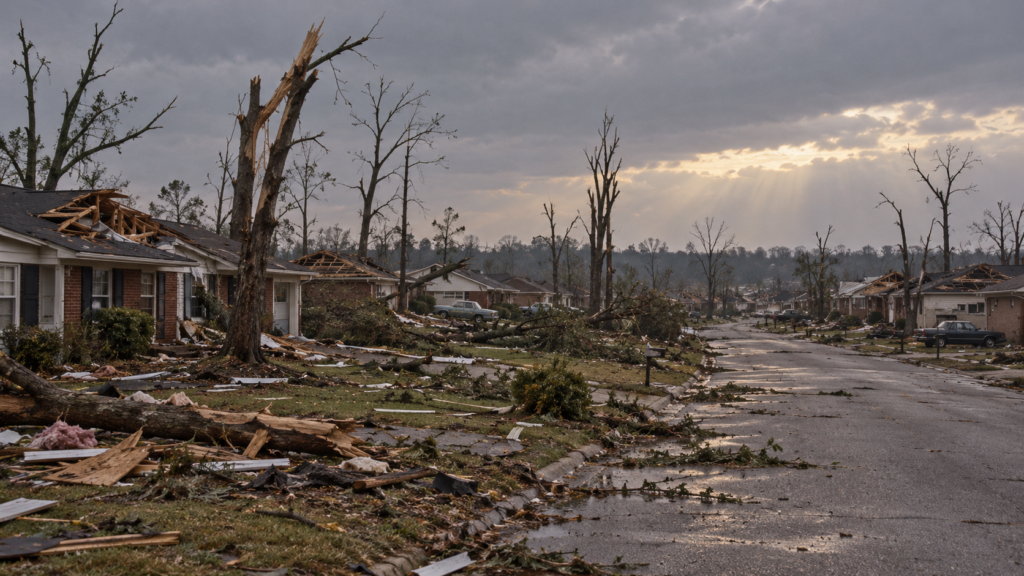
The tornado that struck Huntsville was part of that outbreak. It moved through a densely populated part of the city, cutting a path through neighborhoods, shopping areas, and roadways. At the time, the tornado was rated F4 on the Fujita scale, which indicated winds capable of leveling well-built homes and tossing heavy vehicles.
Because the storm struck during the afternoon, when many people were out running errands, at work, or traveling, large numbers of people were exposed in cars and buildings with limited shelter. Damage was extensive, and the loss of life included people caught in vehicles and in structures that couldn’t withstand the winds.
Why Fall Tornadoes Can Catch People Off Guard
Fall tornadoes tend to attract less public attention than their spring counterparts, and that gap in awareness can matter. People are generally less focused on severe weather in November, and community preparedness efforts and media coverage often peak in the spring. Fall storm systems also frequently move quickly, which can shorten the window between a warning and a tornado’s arrival.
Tornadoes in the Southeast bring additional challenges. Many occur in rain-wrapped storms, in hilly or heavily wooded terrain, and sometimes after dark, all of which make tornadoes harder to see coming. Those conditions mean that relying on warnings, rather than on spotting the funnel, is especially important.
What the Disaster Taught
The Huntsville tornado reinforced several practical lessons that remain relevant. Having a way to receive warnings, such as a NOAA Weather Radio or phone alerts, and knowing where to shelter before severe weather arrives can save lives. Vehicles are generally poor shelters, and being caught in traffic during a tornado is among the more dangerous situations, which underscores the importance of acting on a warning promptly.
The disaster also arrived at a time when forecasting and warning systems were on the cusp of major change. In the years after, the National Weather Service modernized with the national Doppler radar network, which greatly improved the ability to detect rotation inside storms and issue warnings with more lead time. Huntsville itself later became a center for atmospheric research, with scientists studying tornadoes in the Southeast and how warnings reach people.
A Season That Doesn’t Follow the Calendar
Looking back at the Huntsville tornado, the main message is that tornado risk isn’t confined to the traditional spring season. In the Southeast especially, late fall and early winter carry a genuine threat, and outbreaks can occur on days when many people don’t expect them.
For anyone living in a region with a secondary tornado season, the lesson is to keep a plan and a way to receive warnings in place year-round, not just in spring. The weather can change quickly in November, and a calm-looking day can still carry the ingredients for severe storms.