The Forecast Matters More Than You Think
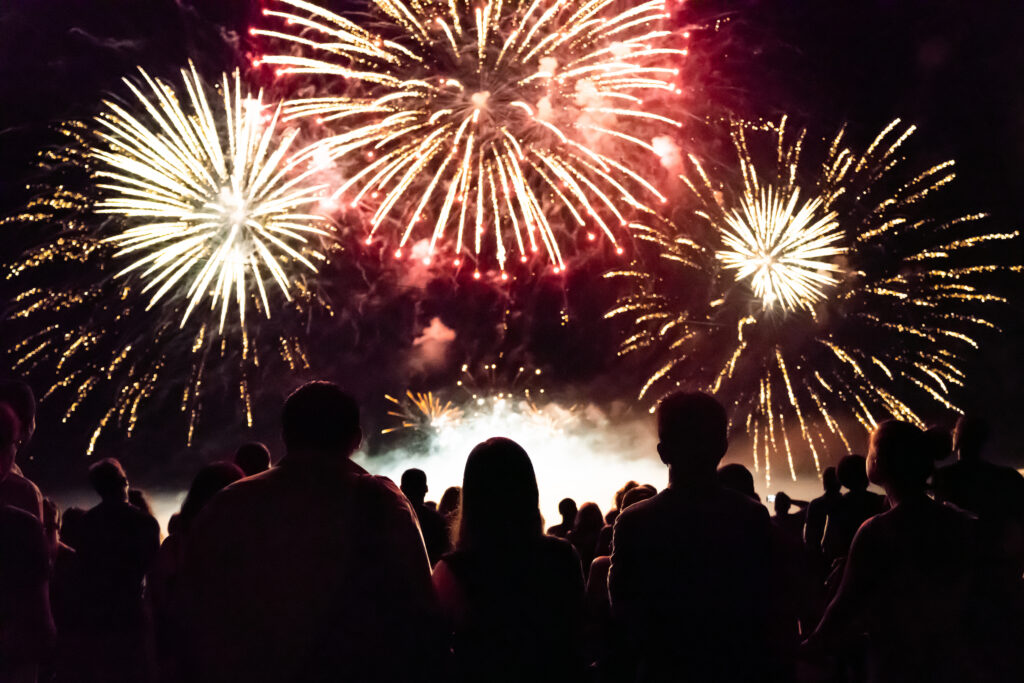
You’ve been to fireworks displays where the shells burst in brilliant, perfectly defined starbursts against a deep black sky, each explosion distinct and vivid before fading cleanly. You’ve also been to displays where the shells disappear into a low gray haze, where the smoke from each burst hangs motionless and obscures the next explosion, and where the whole show feels muffled and indistinct — less celebration than weather event.
The fireworks themselves were probably identical. What was different was the atmosphere through which they were viewed. Weather conditions have a profound effect on the visual and auditory experience of a fireworks display, and understanding which conditions produce the best shows — and why — turns a weather forecast into something more than temperature and rain probability in the days before the Fourth of July.
The Smoke Problem: Why Humidity and Wind Matter Most
The single most significant weather variable for fireworks display quality is the fate of the smoke produced by each shell. Every aerial burst generates a substantial cloud of combustion products — smoke, particulates, and residual chemicals — that must clear between shells for the display to be visually distinct and cumulative rather than a muddled blur.
In ideal conditions — low humidity, light wind — smoke disperses rapidly. Each burst clears cleanly within seconds, the sky resets between shells, and the display appears vivid and crisp. In poor conditions — high humidity, calm air — smoke lingers. Each burst adds to the accumulating cloud above the launch site, and by mid-display the shells are detonating inside a smoke bank of their own creation. The colors are muffled, the star patterns are indistinct, and the display looks as though someone is shooting fireworks into a fog bank — because, effectively, they are.
Humidity’s specific role is twofold. First, humid air carries more particulates and condensation nuclei that cause smoke to persist rather than dispersing. Second, high humidity reduces the contrast between the bright burst and the background sky — the same atmospheric scattering that makes humid summer skies hazy and milky rather than deep blue also makes the background against which fireworks are viewed less dark and less distinct. The deep, velvety black sky that makes a great fireworks display possible requires low humidity and clean, transparent air.
Wind’s role is equally important but cuts in two directions. Calm air allows smoke to hang motionless above the launch site, accumulating with each shell. Light to moderate wind — 5 to 15 mph — disperses smoke efficiently between shells, clearing the display area and keeping the sky clean throughout the show. Very strong wind — above 20 to 25 mph — creates a different problem: it carries shells off their intended trajectories before they burst, distorting the display pattern and potentially creating safety concerns as shells burst in unintended locations.
The ideal fireworks weather is therefore a specific and somewhat rare combination: low humidity, light to moderate wind from a consistent direction that carries smoke away from the viewing area, and clear skies. The post-frontal conditions that produce the best stargazing — clean, dry air following a cold front passage — also produce the best fireworks displays for exactly the same optical reasons.
Temperature Inversions: The Enemy of Smoke Dispersal
Temperature inversions — layers of warm air sitting above cooler surface air, which suppress vertical mixing and trap pollutants near the surface — are a specific and common fireworks display problem in summer. As covered in the pollen dispersal piece, inversions form on calm, clear nights when the surface cools by radiation while the air above remains warm. Summer nights frequently produce inversions by the time fireworks displays begin.
An inversion acts as a lid on the lower atmosphere, preventing smoke from rising and dispersing. Fireworks shells that burst above the inversion layer may actually appear crisper than those below it — the shells above are visible in cleaner air, while the smoke they produce settles into and remains trapped in the inversion below. The result is that the early, lower shells in a display may look spectacular while later, higher shells disappear into accumulated smoke, or vice versa depending on the inversion height relative to the burst altitudes.
Meteorologists and professional pyrotechnicians — the technical experts who design and execute large fireworks displays — account for inversion layers in pre-show weather assessments. A strong surface inversion on a calm night is one of the conditions that can lead to display modifications or, in extreme cases, postponement.
Rain and Wet Weather: Not Just a Viewing Problem
Rain during a fireworks display is obviously unpleasant for viewers, but its effects on the display itself are more complex than simply getting wet.
Light rain doesn’t necessarily ruin a fireworks show — shells are designed to function in wet conditions, and light precipitation actually clears smoke and particulates from the lower atmosphere, producing improved visibility between bursts. Some of the most visually striking fireworks photographs have been taken in light rain, where the wet atmosphere creates reflections and a glossy quality to the air that dry conditions don’t produce.
Heavy rain, however, creates real operational problems. Rain can affect the electrical components of remotely fired displays. Water can penetrate mortar tubes and compromise shells before firing. The ground surrounding the launch site becomes unstable, affecting the positioning of mortars. For these reasons, professional displays are typically delayed rather than cancelled outright in heavy rain — the pyrotechnicians are waiting for a window of lighter precipitation rather than simply calling off the show.
Lightning during or near a fireworks event is an absolute stop condition regardless of the pyrotechnicians’ preferences. The safety protocols for professional fireworks operations are explicit: all activity ceases immediately when lightning is within a defined radius of the site, and does not resume until a defined time after the last detected lightning. This is non-negotiable, which is why lightning during a holiday fireworks show produces a halt that the audience finds frustrating but that the operating crew finds straightforward — the protocol exists precisely to remove judgment from a situation where the temptation to continue might otherwise override safety.
What the Colors Tell You About the Chemistry — and the Atmosphere
The vivid colors of fireworks — the reds, greens, blues, and whites that distinguish different shells — are produced by specific metal salts that emit light at characteristic wavelengths when heated to combustion temperatures. Strontium produces red, barium produces green, copper produces blue, magnesium produces white, and sodium produces yellow and orange.
The atmosphere affects how these colors appear to viewers through the same scattering mechanisms that affect all light transmission. In humid, hazy air, shorter wavelengths — the blues and greens — scatter more readily, appearing less vivid relative to the reds and yellows that have longer wavelengths and scatter less. This is why fireworks in humid conditions tend to look warmer and less distinct in their blues and greens — the atmosphere is doing to the bursts what it does to the daytime sky, selectively scattering the shorter wavelengths.
In clean, dry post-frontal air, all wavelengths transmit more efficiently, and the full color palette of a display — including the cool blues and vivid greens — appears with the intensity the pyrotechnic formulations were designed to produce. The chemistry is the same. The atmosphere determines how much of the intended color reaches your eye.
Reading the Forecast for Friday
For this Friday’s Fourth of July displays, the ideal forecast is a cold front passage Thursday that leaves Friday with lower humidity, northwest winds of 10 to 15 mph, and clear skies by evening. This is the post-frontal scenario that would produce optimal display conditions across the Midwest and Northeast.
Heat and humidity that persist through Friday evening — the more typical early July scenario across much of the central and eastern United States — will produce the smoky, hazy conditions that soften colors and cloud successive bursts. The show will still be worth watching, but the specific combination of low humidity and light wind that produces a truly spectacular display is worth noting when you check the forecast.
If the conditions aren’t perfect this year, the fireworks are still worth watching. But now you’ll know exactly what the weather is doing to them — and why some years, the show seems to write itself across a sky that was made for it.