One of Winter’s Most Common Injuries
Every winter, falls on ice send a large number of people to emergency rooms with sprains, fractures, and head injuries. Even a short, slow walk to the mailbox can end badly on an icy surface, and older adults are at particular risk, since falls are more likely to cause broken bones as bones weaken with age. The good news is that a handful of simple habits and some decent footwear reduce the risk considerably.
Why Ice Is So Treacherous
Walking depends on friction between your shoe and the ground. Ice has very little friction, especially when a thin layer of meltwater sits on top of it, so your foot can slide before you have time to react. The danger is greatest at temperatures near freezing, when the surface is wet and slick, and in places where ice is hard to see, such as shaded areas, steps, curbs, and the thin glaze sometimes called black ice.
Choose the Right Footwear
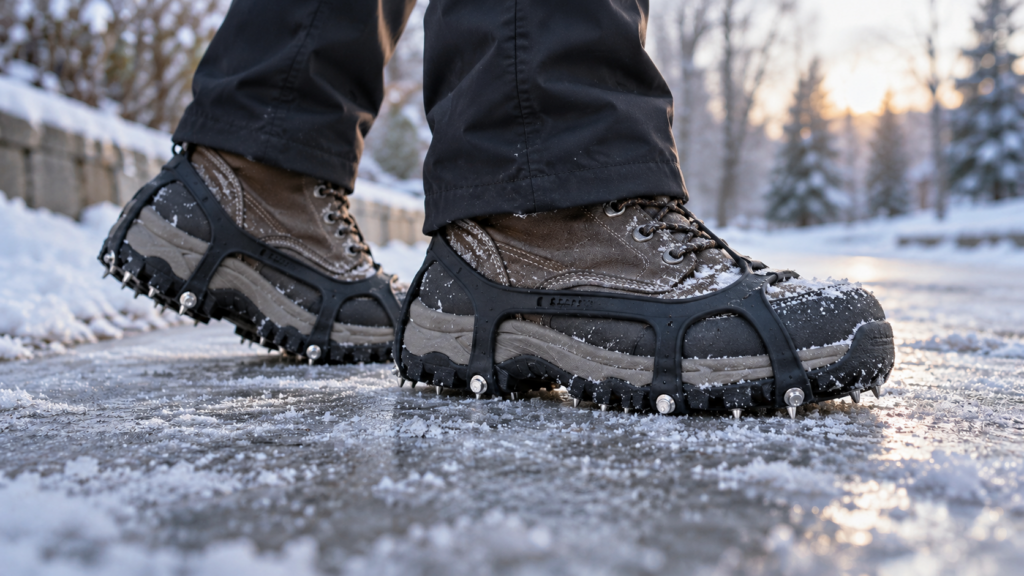
Shoes make a big difference. Look for boots or shoes with soft rubber soles and deep, wide treads that grip the ground, and avoid smooth leather or hard plastic soles on slippery days. Traction devices, such as slip-on ice cleats or spikes that fit over ordinary footwear, add significant grip on packed snow and ice and are worth keeping by the door during icy stretches. Remove them before stepping onto hard indoor floors, which can be slippery or damaged by the spikes.
Walk Like a Penguin
The famous “penguin walk” really does help. Take short, flat-footed, shuffling steps rather than your usual stride, and keep your feet pointed slightly outward for a wider base of support. Lean slightly forward so that your center of gravity stays over the front foot, and keep your knees loose rather than locked. Walking slowly and deliberately gives you more time to react if you start to slip.
Keep Your Hands Free and Your Eyes Up
Carrying heavy bags or keeping your hands in your pockets reduces your ability to catch yourself. Keep your hands out of your pockets, free for balance, and consider wearing gloves for warmth instead. Avoid looking at your phone while walking, and watch for slick patches ahead, particularly on stairs, curbs, and sloped surfaces. Use handrails whenever they’re available, and test an area with a small step before putting your full weight on it.
Mind the Hidden Hazards
Some of the trickiest ice is the kind you don’t expect. Parking lots and driveways often have ice patches where meltwater has refrozen. Getting in and out of a car is a common point of slipping, so hold on to the vehicle’s frame for support. Entering a building with wet soles can also be risky, since the floor just inside the door may be slick from tracked-in snow, so slow down on mats and tile.
If You Start to Fall
A few instinctive reactions can make a fall worse. People often throw out a hand to break the fall, which is a common cause of wrist fractures. If you can, try to relax and bend your knees, and aim to fall onto a padded part of your body, like your side or buttocks, instead of onto your hands or knees. Tuck your chin toward your chest to protect your head, and try not to stiffen. It’s hard to control in the moment, but practicing these ideas mentally can help.
When to Seek Medical Care
After a fall, take stock before getting up. Seek medical attention if you hit your head, particularly if you lose consciousness, feel dizzy, or develop a headache, or if you have severe pain, swelling, deformity, or an inability to put weight on a limb. Older adults and anyone on blood thinners should take head impacts especially seriously, since bleeding can develop slowly after a fall.
Prevention at Home
Keeping walkways, steps, and driveways clear of ice with shoveling and a suitable de-icer or sand reduces the risk for everyone who comes to your door, including delivery workers and visitors. Having a plan for icy days, such as postponing nonessential trips, or asking for help from a neighbor, can also be wise for those at higher risk.
A Little Care Goes a Long Way
Ice is unavoidable in much of the country each winter, but most falls can be prevented with good footwear, a careful walking style, and a bit of attention to where you’re stepping. Making these small habits routine before the first freeze can mean the difference between a slow walk to the car and a trip to the emergency room.