A Summer Hazard That’s Easy to Miss
As lakes, ponds, and slow-moving water bodies reach their warmest temperatures of the year, many of them also become hospitable to a hazard that’s easy for pet owners to overlook: harmful algae blooms. These blooms, often called blue-green algae (though they’re technically cyanobacteria rather than true algae), can produce toxins dangerous enough to kill a dog within hours of exposure. Understanding when and where these blooms occur—and recognizing the warning signs—can prevent one of the most serious and least anticipated water hazards of late summer.
Why Warm, Still Water Breeds Toxic Blooms
Cyanobacteria are present in low levels in many freshwater bodies year-round, but they multiply explosively under a specific combination of conditions: warm water temperatures, abundant sunlight, still or slow-moving water, and elevated nutrient levels, often from agricultural or lawn fertilizer runoff. Late summer—particularly following a stretch of hot, sunny weather with little rain to flush nutrients out of the water—creates close to ideal conditions for these blooms to develop.
Ponds, shallow lake edges, and slow sections of rivers are especially prone to blooms because still water allows the bacteria to concentrate rather than being dispersed by current or wave action. A pond that looked completely normal earlier in the summer can develop a dangerous bloom within days once conditions align.
What a Bloom Actually Looks Like
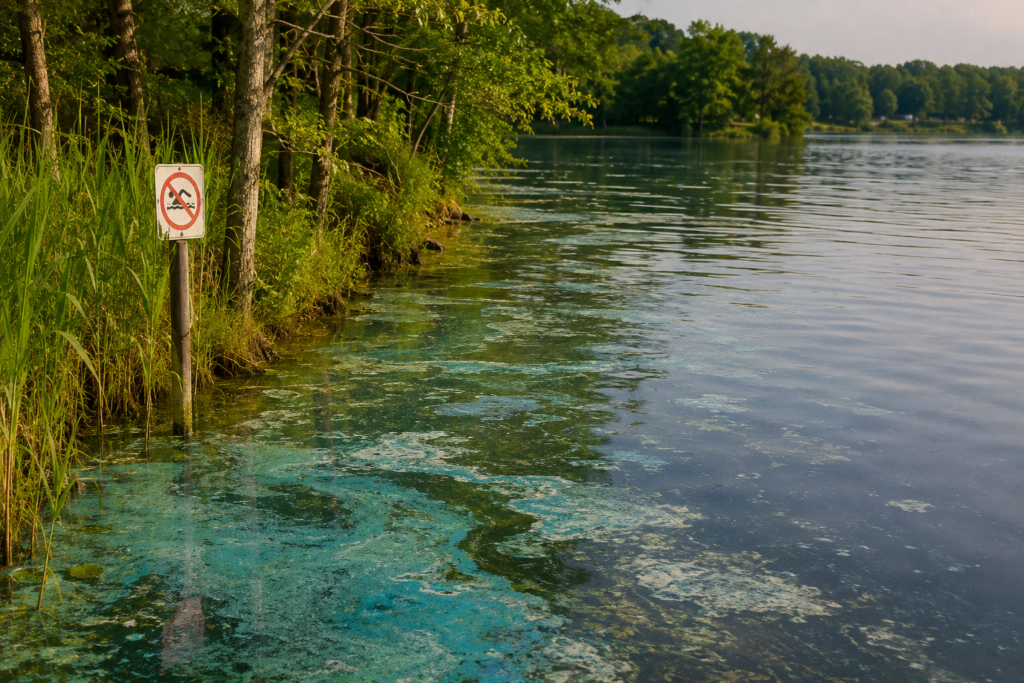
Harmful algae blooms often appear as a thick, paint-like scum on the water’s surface, ranging in color from bright green to blue-green, though some blooms take on a reddish-brown or tan appearance instead. The water may look like it has a film or mat covering the surface, sometimes described as looking like spilled paint. In some cases, blooms cluster along shorelines where wind pushes them, creating dense concentrations exactly where dogs are most likely to wade in or drink.
Not every bloom is toxic, and toxin-producing blooms can’t be reliably identified by appearance alone—but any visibly discolored, scummy, or unusually thick-looking water should be treated as a potential hazard rather than investigated up close.
Why Dogs Are Especially at Risk
Dogs face a particular danger from algae blooms for reasons that have less to do with biology and more to do with behavior. Dogs frequently wade, swim, and drink directly from the water bodies where blooms occur, and they often lick their fur clean after swimming—ingesting any algae residue that clung to their coat during the swim itself. A dog doesn’t need to drink large quantities of contaminated water to receive a dangerous dose of toxin; incidental exposure through swimming and grooming is often enough.
The toxins produced by harmful blooms can affect the liver or nervous system depending on the specific toxin type, and symptoms can appear within fifteen minutes to a few hours of exposure. Signs include vomiting, diarrhea, drooling, weakness, disorientation, difficulty breathing, seizures, and collapse. Because the toxins can act quickly and severely, algae bloom poisoning is considered a true veterinary emergency—any dog showing these symptoms after time near untreated water needs immediate veterinary attention.
Practical Precautions for the Rest of the Season
The most reliable protection is simple avoidance: check for posted advisories at lakes and ponds you visit regularly, and treat any water with visible scum, discoloration, or an unusual surface film as off-limits for swimming or drinking, regardless of how the rest of the water looks. Many state and local health departments post current bloom advisories for popular recreational water bodies during peak bloom season, and checking before a trip takes only a minute.
Bring fresh water and a bowl for your dog on outings near lakes and ponds, so there’s no temptation for them to drink from potentially contaminated water. After any swim in a natural body of water, rinse your dog thoroughly with clean water before they have a chance to groom themselves, removing any residue before it can be ingested.
A Risk Worth Taking Seriously
Toxic algae blooms are one of the few summer hazards that can turn a routine, enjoyable swim into a life-threatening emergency within the same afternoon. The good news is that the precaution required is straightforward: know what to look for, avoid water that looks suspicious, and rinse your dog after swimming in natural water bodies during the warmest, stillest stretches of summer, when these blooms are most likely to appear.