The Season That’s Hard on Skin
July is peak season for skin and coat problems in dogs and cats. The combination of heat, humidity, outdoor activity, swimming, and peak pollen counts creates a specific environment in which several common dermatological conditions develop, worsen, or first become apparent. Many of these conditions are painful, some progress rapidly if untreated, and most are significantly more manageable when caught early than when they’ve had days or weeks to develop.
Skin problems are also among the most commonly missed health issues in pets because the early signs — scratching, licking, small areas of redness — can be subtle and are easy to attribute to normal grooming behavior. By the time a hot spot is visibly raw or an ear infection is producing obvious discomfort, the condition has often been developing for days or weeks. Understanding what to look for and when to act makes a significant difference in outcomes and treatment burden.
Hot Spots: The Most Common Summer Skin Emergency
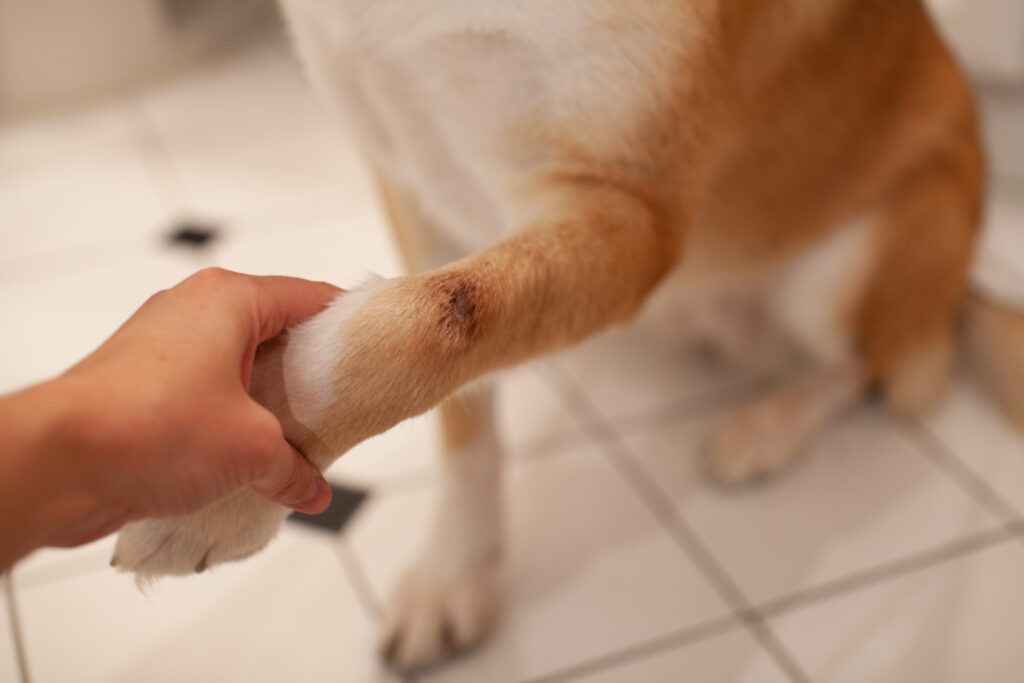
Hot spots — formally called acute moist dermatitis — are areas of rapidly developing, intensely inflamed skin that appear suddenly and worsen quickly. They begin as a small area of irritation, typically triggered by something that causes a dog to scratch, lick, or chew at one spot: an insect bite, a small wound, a mat in the coat, or localized allergic reaction. The mechanical trauma of repeated licking and scratching damages the skin surface, creating a warm, moist environment that bacteria colonize rapidly. Within 24 to 48 hours, a small area of irritation can become a raw, oozing lesion several inches across.
Hot spots are a summer-specific problem because heat and humidity provide exactly the environmental conditions that support rapid bacterial proliferation on the skin surface, and because summer increases exposure to the triggers — insects, allergens, water — that initiate the scratching and licking cycle.
They occur most frequently in dogs with dense, thick coats — Golden Retrievers, Labrador Retrievers, German Shepherds, St. Bernards — where moisture becomes trapped against the skin and doesn’t dry. Dogs that swim frequently are at elevated risk because the moisture retained in the coat after swimming creates ideal conditions for hot spot development, particularly if the coat isn’t thoroughly dried after water exposure.
Early recognition is critical. A small, moist, red area of skin that the dog is repeatedly attending to warrants prompt intervention — clipping the hair from around the area to allow air circulation, cleaning with a mild antiseptic, and veterinary consultation if the area is larger than a few centimeters, spreading rapidly, or producing significant discomfort. Hot spots treated early with topical antiseptic and an Elizabethan collar to prevent further licking often resolve within a week. Hot spots that are allowed to spread can require oral antibiotics and more extensive treatment.
Summer Allergies and Allergic Skin Disease
As covered in the spring pet care pieces, dogs and cats experience environmental allergies — and summer is when the full spectrum of seasonal allergens is present simultaneously. Tree pollen, grass pollen, weed pollen, mold spores, and insect proteins all peak at various points through summer, and dogs that are sensitized to multiple allergens may experience their worst symptoms in July and August.
The specific manifestation of allergies in dogs is primarily cutaneous — affecting the skin rather than producing the nasal and eye symptoms familiar from human allergies. The most common pattern is intense itching concentrated in specific areas: the paws (dogs lick their paws repeatedly), the groin and armpits, the face, and the ears. This distribution — called the “atopic distribution” — is the clinical signature of environmental allergy in dogs and distinguishes it from food allergy, which tends to produce more diffuse itching.
Chronic licking and scratching from allergic itch produces secondary skin changes: reddening and thickening of the skin, brown staining of the fur from saliva, and increased susceptibility to secondary bacterial and yeast infections. The ears are particularly vulnerable — allergic dogs frequently develop secondary yeast or bacterial ear infections that produce head-shaking, ear-scratching, and a characteristic odor.
For dogs with known seasonal allergies, summer represents a period of active management rather than the passive monitoring appropriate during low-allergen seasons. Antihistamines provide modest relief for some dogs; prescription options including oclacitinib (Apoquel) and lokivetmab (Cytopoint) provide significantly more effective itch control for dogs with significant allergic disease and are worth discussing with a veterinarian if seasonal allergies are producing noticeable discomfort.
Regular bathing — weekly or more during peak allergen seasons — reduces the pollen and allergen load on the coat and skin surface. Wiping paws and belly with a damp cloth when returning from outdoors removes allergens from the areas where dogs most commonly lick. These interventions reduce the allergen exposure that drives the inflammatory response without requiring medication.
Sunburn: The Overlooked Summer Pet Problem
Pets can and do sunburn — a fact that surprises many owners who assume fur provides complete UV protection. The reality is more nuanced: the coat protects the skin beneath it, but areas with thin or absent fur are directly exposed to UV radiation and can burn.
The areas most vulnerable to sunburn in dogs and cats are: the nose, particularly on dogs with pink or lightly pigmented noses; the ear tips, especially on cats and on dogs with thin-coated, erect ears; the belly and groin, which are exposed when pets lie in the sun; and any area of thin or absent coat due to natural breed characteristics, grooming, or previous skin disease.
White or light-colored pets and those with pink skin are at highest risk — the same relationship between pigmentation and UV protection that exists in humans applies to companion animals. White cats with pink ears are particularly vulnerable to repeated UV damage that can progress to squamous cell carcinoma of the ear tips — a genuinely serious condition that repeated sunburn over years can induce.
Pet-safe sunscreen — specifically formulated to exclude zinc oxide and salicylates, which are toxic to dogs and cats respectively — applied to vulnerable areas before extended outdoor sun exposure provides meaningful protection. Human sunscreens should never be used on pets. Avoiding the peak UV hours of 10 a.m. to 4 p.m. for pets with high UV vulnerability reduces the cumulative damage that summer sun exposure produces.
Sunburn in pets appears as redness, scaling, and tenderness of affected areas — similar to human sunburn. Chronic sun damage produces thickened, crusty, or ulcerated skin in repeatedly exposed areas. Ear tips that show progressive scarring, crusting, or thickening in an outdoor cat warrant veterinary evaluation for sun-induced skin changes.
Yeast Infections: The Humidity Problem
Malassezia pachydermatis, the yeast organism responsible for most canine skin yeast infections, is a normal resident of dog skin that causes problems only when its population overgrows — a situation that warm, humid conditions actively favor. Summer creates exactly the environment in which yeast overgrowth is most likely: warm temperatures, increased humidity, frequent swimming and bathing that alter the skin’s normal flora, and the skin fold moisture that accumulates in the groin, armpits, and between facial folds in short-faced breeds.
Yeast skin infections produce a characteristic smell — often described as corn chips, musty, or cheesy — along with reddening, greasiness, and thickened, darkened skin in affected areas. The paws are a common location, producing the brown staining and odor between the toes that owners of allergic dogs often recognize. The ears are another common site — yeast ear infections produce dark brown discharge and a distinctive yeasty odor that distinguishes them from bacterial infections.
Yeast infections require antifungal treatment — topical or oral depending on the extent of involvement — and are not resolved by antibiotics, which treat the bacterial infections that sometimes accompany them. A dog whose skin problems don’t respond to antibacterial treatment may have a yeast component that requires specific antifungal management.
Dogs with skin folds — Bulldogs, Pugs, Shar Peis, Basset Hounds — require specific summer attention to fold hygiene. Moisture and debris accumulate in folds and create ideal conditions for both yeast and bacterial overgrowth. Cleaning folds with a gentle antiseptic wipe daily during summer and drying thoroughly afterward prevents the infections that develop in moist, occluded skin.
When to Call the Vet
The threshold for veterinary consultation for summer skin problems is lower than many owners apply. Skin conditions that involve significant discomfort — intense scratching, persistent licking, head shaking — warrant evaluation rather than watchful waiting, because the secondary changes from scratching and licking progress faster than most owners expect.
Specific signs that warrant prompt rather than routine veterinary attention: a rapidly expanding moist, raw area (hot spot progressing); ear problems with head shaking, odor, or visible discharge; skin changes on ear tips or nose including crusting, ulceration, or thickening; and any skin lesion that is getting worse rather than better over 48 to 72 hours.
Summer is the season that stresses skin most — the heat, the humidity, the outdoor exposure, the swimming, the allergens. Paying closer attention to coat and skin condition through July and August than in cooler months catches problems when they’re most manageable rather than when they’ve had weeks to develop into more significant and more costly conditions.