Decorating Season Comes With Real Risks
The weekend after Thanksgiving is when many people drag out ladders, extension cords, and boxes of lights to decorate the outside of their homes. It’s a cheerful tradition, but it also sends a significant number of people to emergency rooms each year with falls, electrical shocks, and other injuries, and it contributes to house fires. Cold weather, wet surfaces, and short daylight hours make the job riskier, so a bit of planning goes a long way.
Choose the Right Lights and Cords
Not every string of lights is meant for outdoor use. Look for lights and extension cords that are labeled for outdoor use, which are built to withstand moisture and cold temperatures. Packaging should list a safety certification mark from a recognized testing laboratory.
LED lights are a good choice for many homes. They use far less electricity than incandescent bulbs, which means you can connect more strings together safely, and they stay cooler, reducing the chance of heat-related problems. Check the packaging for the maximum number of strings that can be connected end to end, and don’t exceed it.
Inspect Everything Before You Start
Before hanging anything, plug in each string of lights and examine it for damage. Look for frayed or cracked wires, broken or missing bulbs, loose connections, and damaged plugs. Discard any damaged lights rather than trying to repair them, since a frayed cord can cause a shock or a fire. Cold weather makes plastic insulation more brittle, which is another reason to examine old cords carefully.
Protect Against Shocks and Overloads
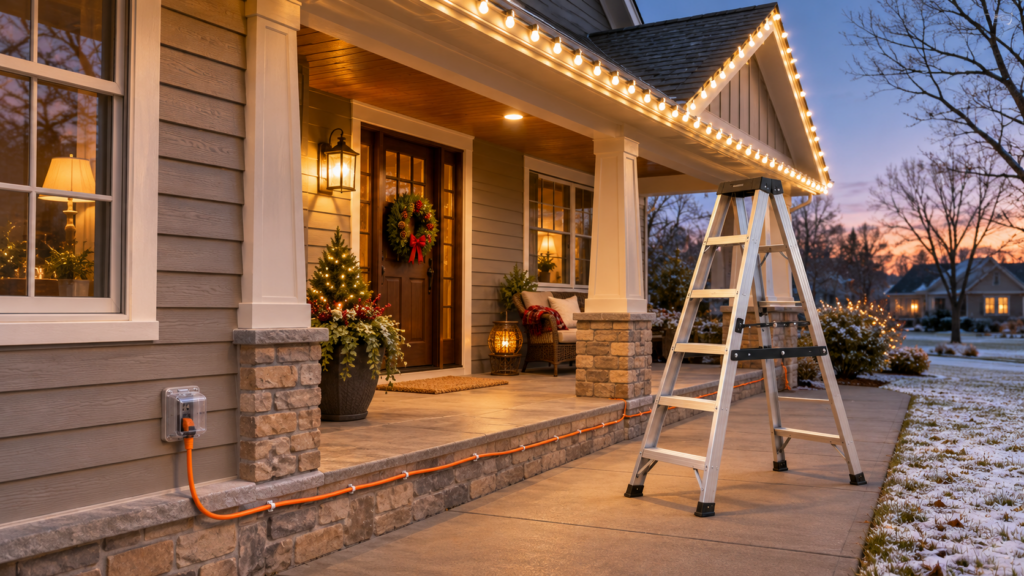
Plug outdoor lights into a ground-fault circuit interrupter outlet, commonly called a GFCI. It cuts power quickly if it detects a leak of electricity, which can prevent a serious shock. If your outdoor outlet isn’t protected, you can buy a portable GFCI adapter at a hardware store.
Avoid overloading outlets and extension cords. Check the wattage ratings and avoid daisy-chaining multiple extension cords together. Keep connections off the ground and out of puddles and snow, and consider using a weatherproof cover over plug connections. Use a timer designed for outdoor use so the lights turn off automatically and aren’t left on all night.
Use a Ladder Safely
Falls from ladders are one of the most common holiday decorating injuries. Choose a ladder tall enough to reach comfortably without standing on the top rungs, set it on firm, level ground, and avoid placing it on ice, snow, or wet leaves. Face the ladder, keep three points of contact at all times, with two hands and a foot or two feet and a hand, and don’t lean or overreach. Moving the ladder is safer than stretching.
A good rule of thumb for extension ladders is to position the base about one foot away from the wall for every four feet of height. Having someone hold the ladder or work with you adds safety, and wearing shoes with good traction helps. Don’t attempt the job in strong wind, rain, or poor light, and avoid working near power lines.
Secure the Lights Properly
Use clips or hooks designed for lights instead of nails, staples, or tacks, which can puncture the insulation on wires and create hazards. Avoid running lights across places where they can be damaged by doors, windows, or foot traffic. Cold temperatures and wind can put stress on connections, so secure them well and leave a little slack for movement.
Take Care With Real Trees and Indoor Decorations
If you have a natural tree, keep it watered, since a dry tree is a major fire hazard, and keep it well away from heat sources like fireplaces, radiators, and space heaters. Check that lights used on a tree are rated for the purpose, turn them off when you leave the house or go to bed, and consider using LED lights, which stay cooler. Candles should never be left unattended and should be kept clear of anything flammable.
Think About Winter Weather
Snow and ice can add weight to decorations and cause stress on gutters and rooflines. Inflatable decorations can be damaged by strong wind and should be anchored securely. After storms, check cords and connections for damage and moisture before turning lights back on. And plan to take everything down when the season ends, ideally before the weather turns icy, to avoid another ladder climb in harsh conditions.
A Bright Season Is Better When It’s Safe
A little time spent inspecting equipment, using the right lights and cords, and being careful on the ladder makes the holiday display safer for everyone. Taking a few precautions now means the season can stay merry and bright, without a trip to the emergency room.