The Busiest Travel Days Meet Unpredictable Weather
The days around Thanksgiving are among the busiest travel days of the year, and even modest weather problems can ripple through highways and airports packed with people. A few common misconceptions about how weather affects travel can lead to poor decisions, so it helps to sort out what’s true before you head out the door.
Myth: Flights Only Get Canceled When It’s Snowing at My Airport
Weather anywhere along a flight’s path can cause delays and cancellations, not just at your departure city. A plane has to arrive from somewhere, and if the incoming flight is delayed by weather at another airport, your departure can be delayed even when skies are perfectly clear locally. Weather at your destination, at a connecting hub, or along the route can also matter.
Delays also cascade. A flight delayed by weather in the morning can push back every flight that same aircraft and crew are scheduled to operate later in the day, so a storm in one region can affect travelers across the country hours later.
Myth: Snow Is the Biggest Threat to Flying
Snow itself is often manageable. Airports in snowy climates plow runways quickly, and aircraft are treated with de-icing fluid before departure to remove and prevent ice. The bigger problems are often low visibility and low cloud ceilings, which slow down arrivals and reduce the number of aircraft that can safely land, as well as strong winds and, in some cases, freezing rain.
Winds can also change which runways are in use, and some configurations can handle fewer flights per hour. Fog is another common cause of delays, and it can occur on days without any precipitation at all. So a day that looks mild can still bring significant delays.
Myth: Checking the Weather Where I Live Is Enough
Your departure forecast matters, but the forecast for your destination and for the route in between matters just as much, especially for flights and long drives. Check the forecast along the way, and keep an eye on updates in the day or two before you leave. Checking your airline’s app for delay and cancellation notices, and signing up for alerts, can give you more notice than the weather alone.
Myth: The Roads Are Fine Once the Snow Stops
Roads can remain hazardous, and can even become more dangerous, after precipitation ends. Melted snow can refreeze as temperatures drop, particularly overnight and in the early morning, leaving patches of ice. Wind can blow snow back across cleared pavement, and bridges, overpasses, and shaded stretches tend to freeze before other surfaces. Plows and road crews also take time to treat every road, particularly secondary routes.
Checking real-time road conditions through your state’s traffic information service or transportation department, often available by calling 511 or through an app, gives more reliable information than looking out the window.
Myth: Leaving Early Doesn’t Matter Because Traffic Is Traffic
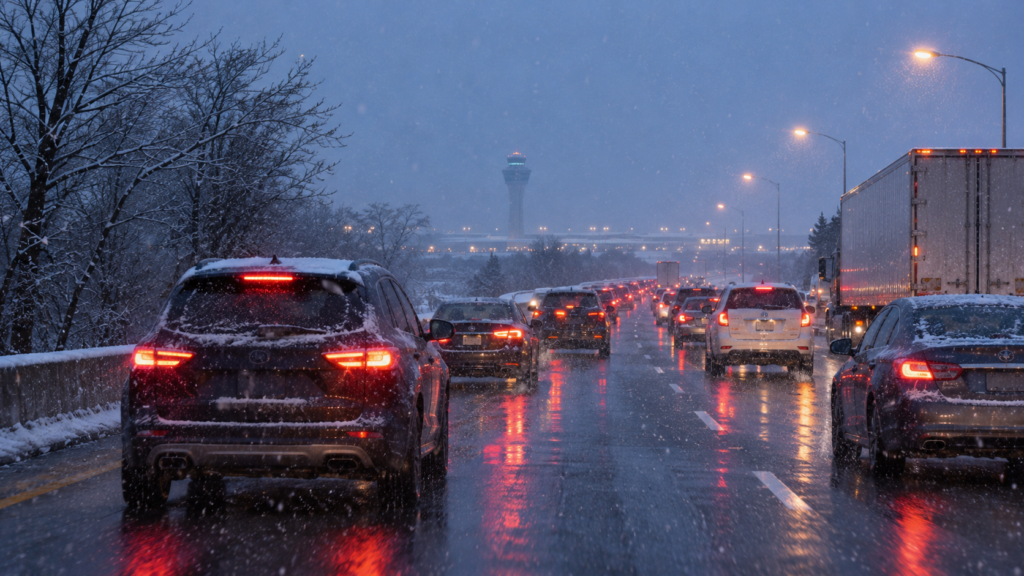
Holiday travel adds a lot of vehicles to the road, and even a minor weather issue can slow things considerably. Leaving earlier, or at a less busy time, can avoid the worst of the traffic and give you more time to adjust if conditions change. Allow extra time for slower speeds, a possible detour, and rest stops.
Myth: Following the GPS Shortcut Is Always the Smartest Choice
Navigation apps are useful, but in winter weather, the fastest route on paper may not be the best. Shortcuts often use smaller roads that are less likely to be plowed or treated, and they may involve hills, curves, and rural stretches where help is farther away. When conditions are poor, sticking to main highways, which are generally cleared first, is usually the safer choice.
Myth: I Don’t Need an Emergency Kit for a Short Trip
Even a drive of a few hours can turn into a long wait if a crash or a closure shuts down the road. A basic winter emergency kit with a blanket, a flashlight, water, snacks, a phone charger, and a small shovel can make a long delay far more comfortable and safer. Keep your gas tank at least half full in cold weather, both to avoid running out if you’re stuck and to reduce the chance of fuel line problems.
A Smarter Way to Plan
The best approach to holiday travel weather is flexibility. Check forecasts for the whole route, keep an eye on road and flight alerts, build in extra time, and have a backup plan in case conditions change. Understanding what really causes delays and hazards makes it easier to make good decisions, and to arrive at the holiday table safe and in good spirits.