A Task That’s Easy to Do at the Wrong Time
Gutter cleaning is a fall maintenance staple almost everyone knows they should do, but the timing of when you actually do it matters considerably more than most people realize. Clean your gutters too early, and you’ll likely need to do it again before winter. Wait too long, and you risk entering winter with clogged gutters during exactly the season when proper drainage matters most.
Why Gutters Matter Beyond Just Directing Rainwater
Gutters serve a more structurally important role than simply keeping water off your driveway during a rainstorm. Properly functioning gutters direct water away from your home’s foundation, siding, and roofline, preventing water damage that can develop in ways far more expensive than the gutter maintenance itself. Clogged gutters cause water to back up and overflow, often running directly down siding or pooling against the foundation, and this water can also back up under roof shingles at the eaves, creating the conditions for ice dams once winter arrives, or simply causing rot and water intrusion in warmer months.
The weight of accumulated wet leaves and debris also places genuine physical stress on gutters and their attachment points, and gutters that pull away from a house due to this accumulated weight can require considerably more expensive repair than the routine cleaning that would have prevented the problem.
Why Timing Is Genuinely Tricky
The core challenge with gutter cleaning timing is that leaf drop doesn’t happen all at once—it extends over several weeks, and sometimes over a couple of months, depending on your region and the specific tree species in your area. Cleaning gutters in early October, while satisfying to cross off a to-do list, often means dealing with a fresh accumulation by November as later-dropping trees continue shedding leaves after your initial cleaning effort.
For most regions, this means gutter cleaning benefits from being treated as a two-stage task rather than a single fall event: an initial cleaning once the majority of leaves have fallen from early-dropping species, followed by a second cleaning closer to when leaf drop has substantially finished for the season, typically capturing the debris from later-dropping trees like oaks, which in many regions hold their leaves considerably longer than earlier-dropping species like maples.
Watching Your Specific Trees Matters More Than a Calendar Date
Rather than relying on a fixed calendar date, paying attention to the actual leaf drop pattern of the trees near your home provides a more reliable guide for timing. If your property is surrounded primarily by early-dropping species, a single cleaning in mid-to-late October might suffice. If you have significant oak coverage or other late-dropping species nearby, planning for that second cleaning session in November becomes considerably more important, since oak leaves in particular can continue falling well after most other deciduous trees have gone fully bare.
Signs Your Gutters Need Attention Right Now
Beyond timing based on leaf drop patterns, several visible signs indicate gutters need cleaning regardless of the calendar date. Water visibly overflowing over the gutter edge during rain, rather than flowing properly through the downspout, is one of the clearest signs of a blockage. Visible plant growth sprouting from gutters, sagging gutter sections, or water stains on siding beneath gutter runs all indicate that debris accumulation has reached a point requiring attention.
Doing the Job Safely and Thoroughly
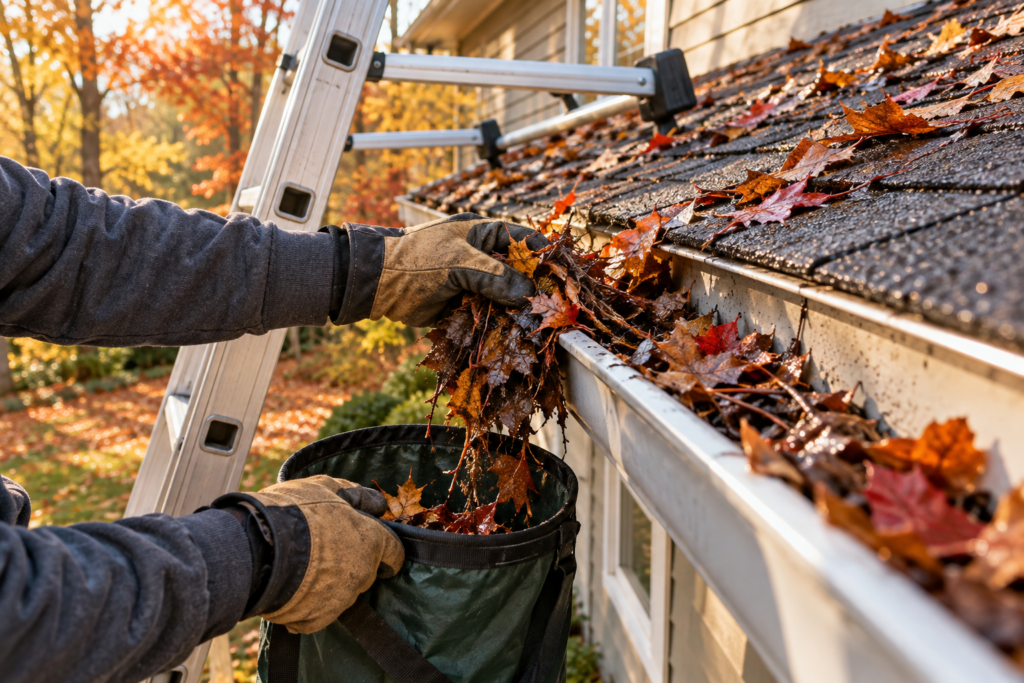
If you’re cleaning gutters yourself, working from a properly positioned, stable ladder—rather than overreaching to either side while positioned on the ladder—reduces a meaningful safety risk, since ladder falls during gutter cleaning represent a genuinely common source of fall home-maintenance injuries. Removing debris by hand or with a small scoop, then flushing the gutter and downspout with a hose to confirm proper flow, provides a more thorough result than simply clearing visible debris without testing actual water flow afterward.
For homes with gutters at heights or configurations that make DIY cleaning genuinely difficult or risky, professional gutter cleaning services offer a reasonable alternative, and scheduling this service during the shoulder period between the two natural leaf-drop waves, rather than waiting until the absolute end of the season when demand peaks, typically offers better scheduling flexibility.
Gutter Guards Reduce, But Don’t Eliminate, the Task
Gutter guards can meaningfully reduce the frequency and volume of debris accumulation, but most guard systems still require periodic inspection and occasional cleaning, particularly for finer debris like pine needles or seed pods that can still work through many guard designs. Guards are worth considering as a way to extend the interval between necessary cleanings, but they generally don’t eliminate the need for gutter maintenance entirely.
Getting the Timing Right Saves Real Effort
Approaching gutter cleaning as a timing question, rather than simply a single task to check off the list once, tends to produce meaningfully better results with roughly the same total effort. Watching your specific trees rather than a generic calendar date, and planning for a possible second cleaning session for late-dropping species, helps ensure your gutters are actually clear and functional once winter weather arrives, rather than freshly cleaned weeks too early and quietly filling back up by the time it matters most.