Why Fall Lawn Care Deserves More Attention Than It Gets
Spring often gets treated as the primary lawn care season, but the work done in fall arguably matters more for how a lawn actually performs the following year. Grass plants spend fall building root reserves and preparing for winter dormancy, and the specific tasks completed during this window have an outsized effect on how quickly and how healthily a lawn recovers once spring arrives.
Continue Mowing, But Adjust Your Approach
Many people stop mowing prematurely as temperatures cool, assuming grass growth has effectively ended for the season. In reality, cool-season grasses often continue growing, sometimes quite actively, well into fall, and continuing to mow at an appropriate height remains important during this period. As the final mows of the season approach, gradually lowering the cutting height slightly below your typical summer setting helps reduce the risk of matting and fungal issues that can develop under longer grass covered by fallen leaves and winter snow.
Stopping mowing too early, leaving grass at a taller summer height heading into winter, can actually increase the risk of snow mold and other fungal issues that develop more readily in longer grass held in cold, damp conditions for extended periods.
Aeration Addresses a Problem Most Lawns Develop Over Summer
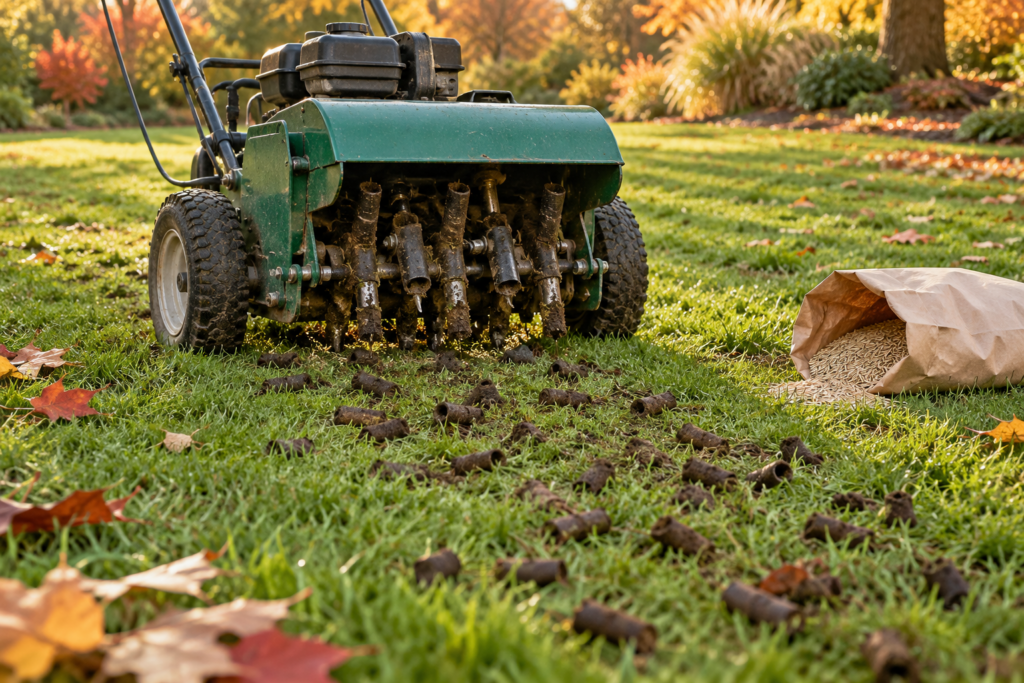
Soil compaction accumulates gradually over a summer of foot traffic, mowing, and general use, and this compaction restricts water, nutrient, and oxygen penetration to grass roots. Core aeration—mechanically removing small plugs of soil to relieve this compaction—is generally most effective when performed in early fall, since it coincides with the period when cool-season grasses are actively growing and can take fullest advantage of the improved soil conditions before winter dormancy sets in.
Aeration also creates favorable conditions for any overseeding performed around the same time, since the holes left by the aeration process provide direct soil contact for new grass seed, considerably improving germination rates compared to seed simply scattered across compacted, unaerated soil.
Overseeding Fills In Thin or Bare Patches
Fall represents the ideal window for overseeding most cool-season lawns, since the combination of warm soil temperatures (retained from summer) and cooling air temperatures creates favorable germination conditions without the intense heat stress that can challenge newly germinated grass during a spring or summer seeding attempt. New grass seedlings also benefit from having an entire fall growing season to establish strong root systems before facing their first winter, compared to spring-seeded grass that must establish itself while simultaneously facing the stress of approaching summer heat.
Overseeding immediately following aeration, when loosened soil provides good seed-to-soil contact, typically produces meaningfully better results than overseeding alone on undisturbed, compacted soil.
Fall Fertilization Supports Root Development, Not Just Green Growth
A fall fertilizer application, particularly one with a higher phosphorus and potassium content relative to nitrogen, supports root system development and overall plant health heading into winter dormancy, rather than primarily promoting the rapid top growth that a nitrogen-heavy spring or summer fertilizer encourages. This root-focused development during fall translates into a lawn that green-up faster and shows greater resilience the following spring, since it enters winter with a stronger root system than it would have developed without this seasonal fertilization support.
Managing Fallen Leaves Properly
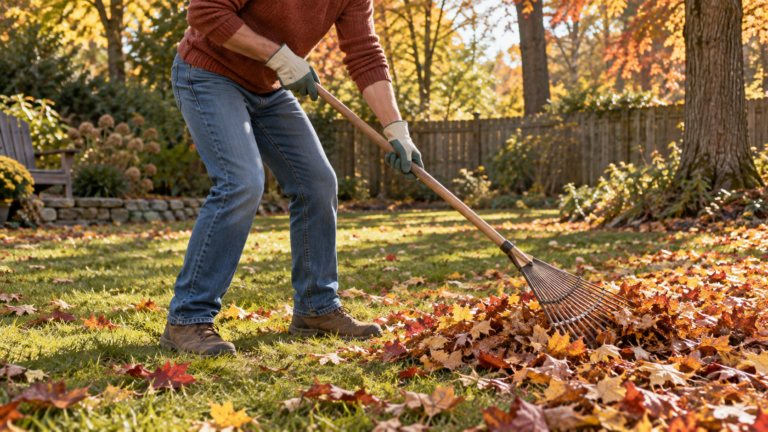
Leaving a heavy accumulation of fallen leaves on a lawn for extended periods blocks sunlight and can trap moisture against the grass, creating conditions favorable to fungal disease and potentially smothering grass in severely affected areas. Regular removal or mulching of fallen leaves—many mulching mowers can shred leaves finely enough to leave them as a beneficial, decomposing mulch layer rather than requiring full removal—prevents this smothering effect while still allowing the beneficial organic matter from decomposing leaves to enrich the soil over time.
A Season That Sets Up the Next One
Fall lawn care doesn’t produce the immediate visual payoff that spring lawn care does, since much of the benefit—stronger roots, improved soil structure, filled-in bare patches—isn’t fully visible until growth resumes the following spring. This delayed gratification is part of why fall lawn care often gets overlooked or deprioritized, even though the tasks completed during this window frequently have more lasting impact on a lawn’s overall health and appearance than an equivalent amount of effort applied during spring.