A Seasonal Task That Sends Plenty of People to the Doctor
As leaves begin falling in earnest, raking becomes one of the season’s most common outdoor chores, and it’s also a surprisingly frequent source of musculoskeletal injury, particularly back strain. Emergency rooms and urgent care clinics reliably see an uptick in raking-related injuries each fall, and understanding why this seemingly simple task causes so many problems—along with a few technique adjustments—can meaningfully reduce that risk.
Why Raking Is Harder on the Body Than It Looks
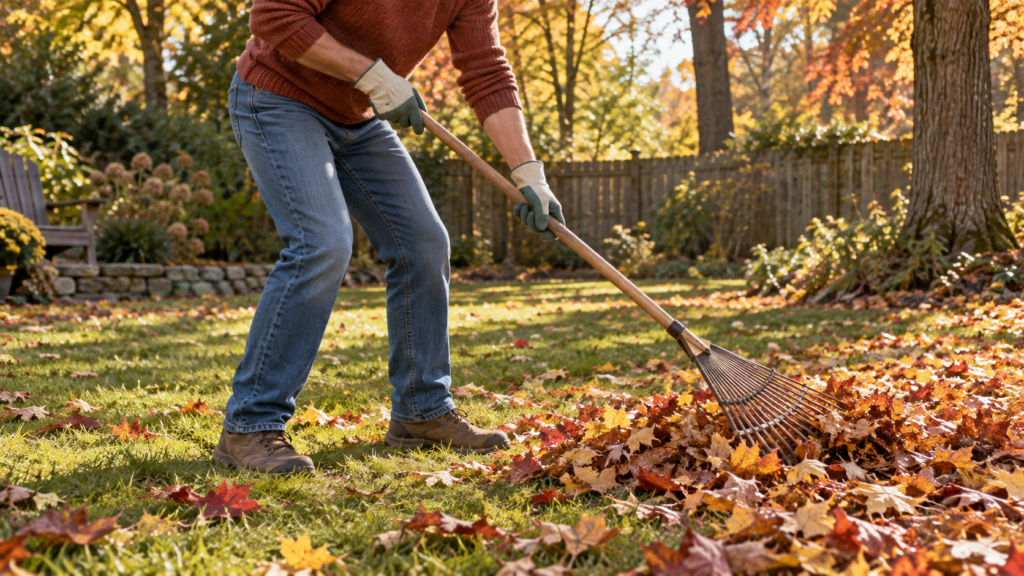
Raking involves a repetitive combination of movements that place real stress on the back specifically: a forward bending motion, a twisting rotation to move gathered leaves to a pile, and often an asymmetrical stance that favors one side of the body throughout the repeated motion. This combination of bending and twisting, repeated continuously over an extended period, places significant strain on the lower back’s muscles, ligaments, and spinal discs in a pattern that many people’s bodies simply aren’t conditioned for, particularly after a summer with less consistent physical activity of this specific type.
Unlike more familiar exercise movements that people might train for deliberately, raking’s specific combination of sustained forward flexion and rotational twisting isn’t a movement pattern most people practice or condition for regularly, which is part of why an activity that doesn’t feel especially strenuous in the moment can produce genuine strain injuries, sometimes not becoming apparent until the following day.
Warming Up Before You Start
Treating yard work like the physical activity it actually is—rather than simply an errand to complete—means a brief warm-up genuinely helps reduce injury risk. A few minutes of light movement, gentle stretching focused on the back, hamstrings, and shoulders, and starting at a moderate pace rather than immediately working at full intensity all help prepare muscles and joints for the sustained activity ahead, similar to how you’d approach any other physical exercise.
Proper Raking Technique Matters More Than People Expect
Using a raking technique that more closely resembles proper lifting mechanics can significantly reduce strain compared to the bent-over, twisting motion many people default to without much thought. Keeping your back relatively straight and bending at the knees rather than the waist when reaching for leaves reduces load on the lower back specifically. Facing the direction you’re raking, rather than twisting your torso to move leaves to a side pile, avoids the rotational stress that’s particularly hard on spinal discs.
Switching your raking side periodically throughout the task—rather than favoring one side exclusively for the entire session—helps distribute the physical demand more evenly rather than concentrating repetitive strain on one side of the back and shoulders.
Choosing the Right Tool Actually Makes a Difference
A rake that’s an appropriate length for your height allows you to work with better posture, since a rake that’s too short forces excessive bending to reach the ground effectively. Ergonomic rake handles, designed with a slight curve or cushioned grip, can reduce strain on hands and wrists during extended use, and a lighter-weight rake reduces the cumulative load your back and shoulders manage throughout a raking session, particularly one involving a large volume of leaves.
Pacing Yourself Through a Larger Job
For yards with substantial leaf coverage, breaking the task into shorter sessions with breaks, rather than attempting to complete the entire job in one extended push, gives muscles periodic recovery time and reduces the cumulative strain that builds during a long, continuous raking session. Alternating raking with other tasks, or simply taking short rest breaks every 20 to 30 minutes, can meaningfully reduce the fatigue-related loss of proper form that often precedes an injury during an extended physical task.
Lifting Leaf Bags Properly
The lifting portion of leaf cleanup—hoisting filled bags or loading a wheelbarrow—carries its own injury risk, often underestimated compared to the raking itself. Using proper lifting technique, bending at the knees while keeping the load close to your body and avoiding twisting while lifting, applies just as directly to leaf bags as it does to any other heavy lifting task, and using a smaller number of more manageable bags rather than a few very heavy ones reduces the peak load placed on your back during any single lift.
When to Stop and When to Seek Care
Mild muscle soreness the day after a significant raking session is common and generally resolves with rest, gentle stretching, and over-the-counter pain relief if needed. Sharp pain during the activity itself, pain that radiates down a leg, or significant pain that doesn’t improve after a few days of rest warrant medical evaluation, since these symptoms can indicate a more significant injury, including disc-related issues, that benefit from prompt professional assessment rather than continued self-management.
A Seasonal Task Worth Approaching Deliberately
Raking leaves feels like a mundane chore rather than genuine physical exercise, which is part of why so many people approach it without the same care they might apply to a workout. Bringing a bit more intentional attention to warm-up, technique, and pacing can meaningfully reduce the very real injury risk this common fall task carries.