Old Habits That Don’t Actually Save Energy
As heating systems start running regularly again, a handful of persistent thermostat myths tend to resurface, often passed down as practical wisdom without much scrutiny. Several of these beliefs actually work against the energy savings people are trying to achieve, making it worth separating genuinely effective habits from the ones that just feel intuitively right.
Myth: Setting the Thermostat Higher Heats Your Home Faster
This is one of the most common and most costly thermostat misconceptions. Furnaces and heat pumps generally operate at a single, fixed heating rate regardless of the target temperature set on the thermostat—the system doesn’t heat “harder” or faster just because you’ve requested a higher final temperature. Setting a thermostat to 78 degrees instead of 68 degrees doesn’t warm your home any faster than setting it to 68 directly; it simply means the system will continue running longer once it reaches 68, working toward a higher target than actually needed, typically resulting in unnecessary overheating and wasted energy.
The actual rate at which a home warms up depends on the heating system’s fixed output capacity and the home’s insulation and current temperature deficit, not on the number set on the thermostat display.
Myth: It’s Cheaper to Leave the Heat Running Constantly Than to Adjust It
This belief holds that turning the heat down while away and then back up upon return costs more energy than simply maintaining a constant temperature throughout the day, based on the assumption that reheating a cooled home requires disproportionately more energy than maintaining its temperature. Energy research consistently contradicts this: a home loses heat to its surroundings at a rate roughly proportional to the temperature difference between inside and outside. A home maintained at a constant, higher temperature all day loses more total heat to the outdoors over that period than a home allowed to cool somewhat while unoccupied and then reheated upon return, because the smaller temperature differential during the unoccupied period reduces the rate of heat loss during those hours.
This is precisely the principle behind programmable and smart thermostats, which the Department of Energy estimates can produce meaningful annual savings when used to lower temperatures during unoccupied hours, typically overnight and during work hours, rather than maintaining one constant temperature around the clock.
Myth: Closing Vents in Unused Rooms Saves Energy
This seems intuitive—why heat a room nobody’s using—but it often backfires with forced-air heating systems specifically. Most residential HVAC systems are designed and balanced assuming airflow through all vents as installed. Closing vents increases air pressure within the ductwork, and this increased pressure can force the system to work harder, potentially causing air leaks at duct joints, reducing overall system efficiency, and in some cases even causing damage to the HVAC equipment itself from operating outside its intended pressure range.
While closing a vent or two in a rarely used room is unlikely to cause serious problems, closing vents extensively throughout a home, expecting proportional energy savings, generally doesn’t produce the intended benefit and can create genuine mechanical issues over time.
Myth: A Higher Thermostat Setting Provides Meaningfully Better Comfort Than a Moderate One
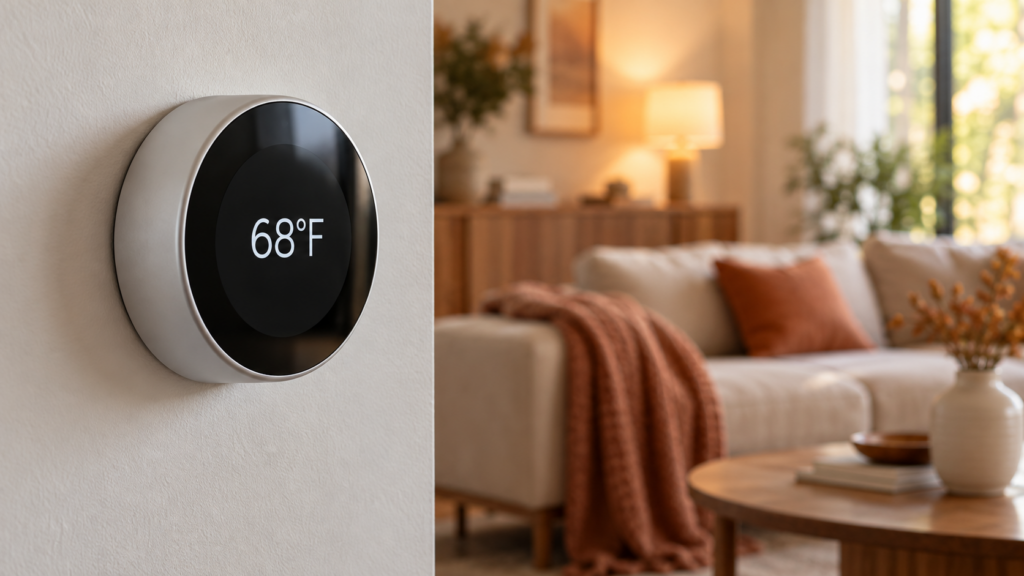
Many people set their thermostat several degrees higher than necessary, assuming the additional warmth provides proportionally better comfort. In reality, human comfort perception has diminishing returns well before typical “generously warm” settings—the difference in comfort between 68 and 70 degrees is often more noticeable than between 72 and 76, yet the energy cost difference for each two-degree increment remains roughly consistent. The Department of Energy commonly cites 68 degrees while home and awake, with lower settings while sleeping or away, as a reasonable comfort-efficiency balance for most households, though personal comfort preferences naturally vary.
Myth: New, High-Efficiency Furnaces Make Thermostat Habits Irrelevant
Upgrading to a more efficient furnace or heat pump genuinely reduces energy consumption for a given amount of heating output, but it doesn’t eliminate the underlying physics connecting temperature settings, usage patterns, and total energy consumption. A highly efficient system set to run constantly at a higher-than-necessary temperature will still consume more energy than the same efficient system used with sensible temperature adjustments during unoccupied hours—efficiency improvements and smart thermostat usage habits provide complementary, not substitute, energy savings.
What Actually Helps
Programmable or smart thermostats that automatically lower temperatures during sleep and away hours, then return to a comfortable setting shortly before you wake or arrive home, capture genuine energy savings without requiring active daily management. Setting a moderate baseline temperature rather than an unnecessarily high one, and layering clothing or using blankets for additional comfort rather than relying solely on higher ambient temperature, both represent more effective approaches than the common myths circulating about thermostat use.
Habits Worth Reconsidering as Heating Season Begins
As furnaces and heat pumps return to regular use for the season, this is a reasonable moment to reconsider thermostat habits that may have been passed down without much scrutiny of whether they actually deliver the savings or comfort benefits commonly assumed. Understanding the actual physics behind home heating—rather than relying on intuitive-sounding but inaccurate shortcuts—can meaningfully affect both comfort and heating costs over the months ahead.