Weather Folklore Has Deep Roots
Long before radar and forecast models, people looked to the natural world for clues about what weather was coming, and much of that folklore centered on animal behavior. Some of these beliefs have persisted for centuries and remain widely repeated today. A few have a kernel of genuine biological truth behind them; others are complete myths that happen to survive because they’re memorable and occasionally seem to “come true” by coincidence.
Myth: Woolly Bear Caterpillar Stripes Predict Winter Severity
According to this long-standing piece of American folklore, the width of the reddish-brown band on a woolly bear caterpillar predicts how harsh the coming winter will be—a wider band supposedly means a milder winter, while a narrower band predicts a severe one. This belief has been tested repeatedly, and the science doesn’t support it. The width of a woolly bear’s stripe is determined primarily by the caterpillar’s age, growth stage, and the environmental conditions it experienced as a larva earlier in the year—not by any forecasting ability related to the winter ahead. It’s an appealing piece of folklore, but not a genuine predictive signal.
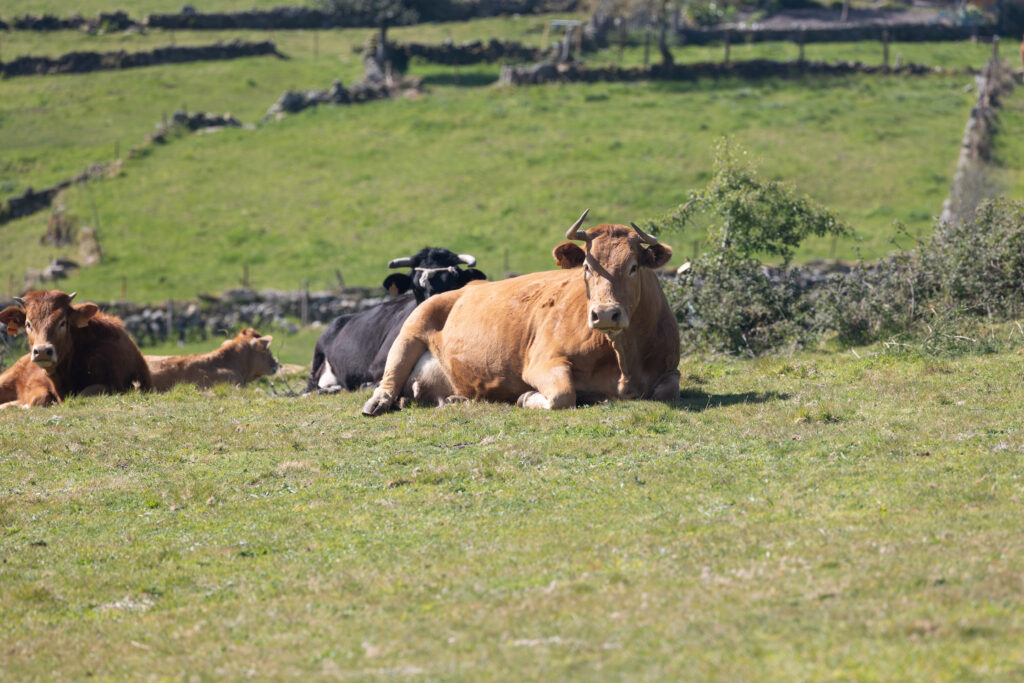
Myth: Cows Lying Down Means Rain Is Coming
This one is common across rural weather folklore, and it doesn’t hold up under scrutiny. Cows lie down for all sorts of ordinary reasons throughout the day—resting, ruminating, or simply because lying down is comfortable—regardless of the approaching weather. Studies attempting to correlate cow posture with subsequent rainfall have found no meaningful predictive relationship. Cows lying down on a given afternoon are about as likely to be followed by rain as cows standing up.
Partial Truth: Birds Flying Low Before a Storm
This one has more legitimate grounding than most animal weather folklore, though the mechanism isn’t quite what people usually assume. As atmospheric pressure drops ahead of an approaching storm system, some evidence suggests birds may fly at lower altitudes, possibly because reduced air pressure makes high-altitude flight more physically demanding, or because insects and other prey shift their behavior in ways that draw birds lower. The effect is real in a general sense but isn’t a precise or reliable predictor—birds fly at varying altitudes for countless reasons unrelated to weather, and using bird altitude alone as a forecasting tool would produce far more false alarms than accurate predictions.
Partial Truth: Crickets Chirping Faster in Warm Weather
This is one of the rare pieces of weather folklore with genuine scientific backing. Cricket chirp rate is directly tied to temperature because crickets, like most insects, are ectothermic—their metabolic processes, including the muscle contractions that produce chirping, speed up as ambient temperature rises. This relationship is consistent enough that a rough formula exists: count the number of chirps in 14 seconds and add 40 to estimate the temperature in Fahrenheit, and the result is often surprisingly close to the actual reading.
This isn’t really weather prediction in the sense of forecasting future conditions, though—it’s closer to crickets functioning as a rough, living thermometer for current conditions, which is a meaningfully different claim than predicting tomorrow’s weather.
Myth: Groundhogs Can Predict How Much Winter Remains
Groundhog Day, centered on the tradition that a groundhog’s shadow-seeing behavior on February 2nd predicts six more weeks of winter or an early spring, is popular cultural folklore rather than anything resembling meteorological science. Long-term tracking of Groundhog Day predictions against actual subsequent weather has found accuracy rates barely better than chance, and there’s no established biological mechanism by which a groundhog’s behavior upon emerging from its den would carry any forecasting value about weather patterns weeks in advance.
Why These Myths Persist
Animal weather folklore tends to survive for a few consistent reasons: many of these sayings are memorable and easy to repeat, people tend to notice and remember the times a prediction happened to be correct while forgetting the times it wasn’t, and some beliefs contain just enough partial truth—like the cricket-temperature relationship—to lend false credibility to the ones that have no basis at all.
What Actually Predicts the Weather
Modern forecasting relies on a global network of weather balloons, satellites, radar, and surface observation stations feeding data into sophisticated atmospheric models—tools that have made forecasts dramatically more accurate over the past several decades. Animal behavior can occasionally reflect current atmospheric conditions in interesting, scientifically explainable ways, as with the cricket-temperature relationship, but none of these folklore traditions offer genuine advance prediction of what the sky is about to do.