A Festive Home Can Hide Hazards
As the holiday season begins and decorations go up, many homes fill with greenery, ornaments, candles, and lights. These touches make a house feel festive, but they can also introduce hazards for curious dogs and cats. Knowing which plants and decorations are risky, and how to place them, helps keep pets safe without giving up the seasonal look.
Lilies: A Serious Danger for Cats
Of all the seasonal plants, lilies deserve the most caution if you have a cat. Many true lilies and daylilies, which often appear in holiday bouquets and arrangements, are extremely toxic to cats. Even small exposures, such as nibbling a leaf, licking pollen off fur, or drinking water from a vase, can cause kidney failure, which can be fatal without prompt treatment.
If you have a cat, it’s safest to avoid bringing lilies into the house at all, and to check any bouquet or arrangement for lilies before accepting it as a gift. If a cat has any contact with a lily, contact a veterinarian immediately, even if the cat seems fine.
Poinsettias: Less Dangerous Than Their Reputation
Poinsettias have a reputation as a deadly holiday plant, but in reality they are considered mildly toxic. The sap can irritate the mouth and stomach, and may cause drooling, vomiting, or mild skin irritation, but serious poisoning is unusual. Even so, it’s best to keep them out of reach and to call a veterinarian if your pet eats a significant amount or seems unwell.
Holly, Mistletoe, and Their Berries
Holly and mistletoe are traditional holiday decorations, and both can cause problems if pets eat them. Holly berries and leaves can cause vomiting, diarrhea, and drooling. Mistletoe can cause gastrointestinal upset and, in larger amounts, can affect the heart and cause other signs. Place these plants well out of reach, or consider artificial versions, though even those can pose a choking hazard if chewed.
Christmas Trees: Needles and Tree Water
Fir and pine needles are not highly toxic, but they can irritate the mouth and stomach, and sharp needles can cause injuries in the digestive tract if swallowed in quantity. Vacuum fallen needles regularly.
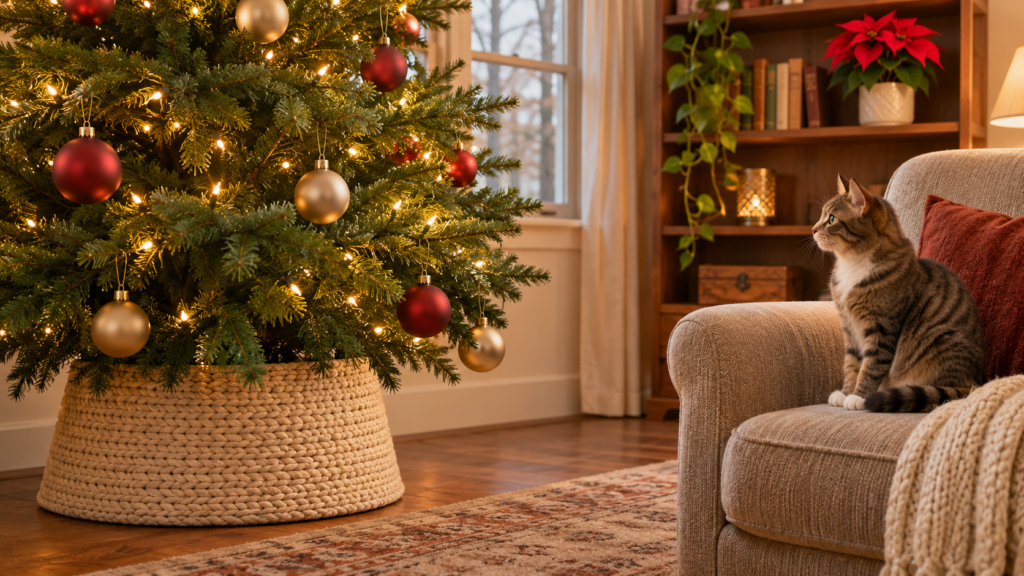
The water in the tree stand deserves attention, too. It can contain preservatives or fertilizers and can grow bacteria as it sits, so it’s best to cover the stand or use a design that prevents pets from drinking from it. Anchor the tree securely so a climbing cat or a bouncing dog can’t tip it over.
Ornaments and Tinsel
Glass ornaments can shatter into sharp pieces, and some pets will bat at or chew on anything shiny. Place breakable ornaments higher on the tree and consider using shatterproof ones on lower branches. Edible ornaments, such as those made from chocolate or salt dough, can be toxic. Salt dough, in particular, contains high amounts of salt that can cause serious problems if a pet eats it.
Tinsel, ribbon, and string are especially dangerous for cats. Long, thin strands can be swallowed and become anchored in the digestive tract, a condition called a linear foreign body that can cause serious damage to the intestines and often requires surgery. Skip tinsel if you have a cat, and keep ribbon and wrapping materials put away.
Lights, Cords, and Candles
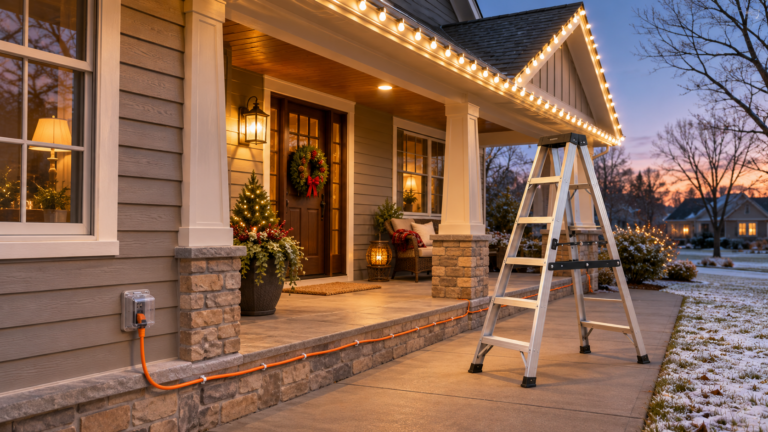
Chewing on electrical cords can cause burns or electric shock. Use cord covers or tape cords against the wall, unplug lights when you aren’t watching, and keep cords out of reach. Candles can be knocked over by tails and paws, so they should be placed in stable holders and kept out of reach, or replaced with flameless, battery-operated versions.
Holiday Foods and Gifts
Chocolate, candy, baked goods, and foods containing xylitol, which is dangerous to dogs, are common during the holidays and tend to be left in reach in bowls, stockings, and gift bags. Keep them in cabinets or closed rooms, and tell guests to do the same with food and medications in purses and bags.
Be Prepared
Keep the number of your veterinarian, the nearest emergency animal hospital, and an animal poison control hotline posted in a convenient place, since regular offices are often closed on holidays. If you suspect your pet has eaten something harmful, don’t wait for symptoms to appear.
A Pet-Safe Holiday
A few small adjustments, such as choosing safer plants, placing decorations thoughtfully, and keeping tempting items out of reach, allow pets to share in the season safely. With a little planning, the house can look festive and stay safe for everyone who lives there.