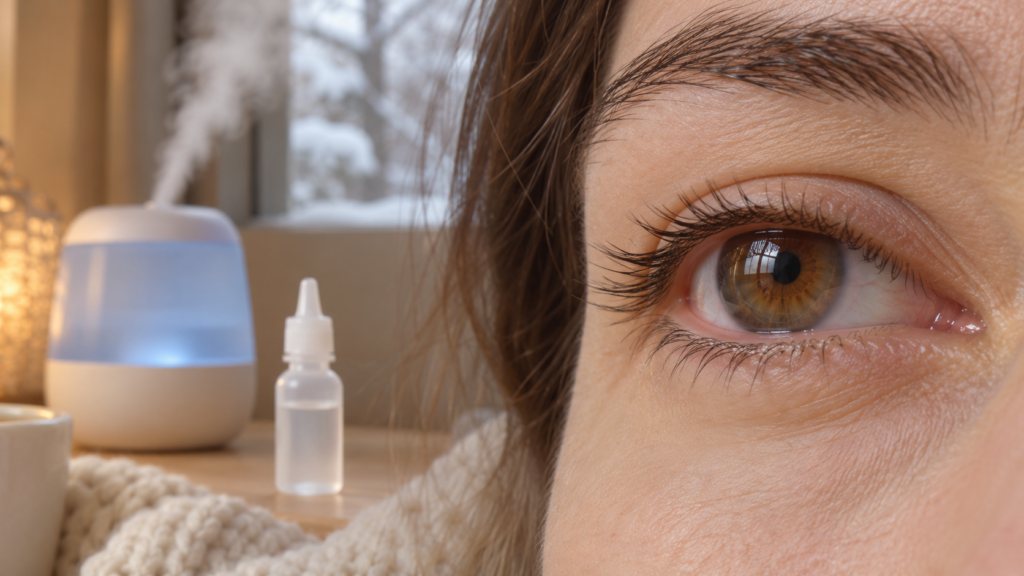
A Common Complaint That Peaks With the Season
As cold weather settles in, a lot of people notice their eyes feeling dry, scratchy, tired, or oddly watery. Contact lens wearers often feel it first, but it affects people of all kinds. Winter doesn’t cause an eye problem so much as it creates conditions that make the eye’s natural protection work harder, and understanding what’s happening can help you keep your eyes comfortable.
How the Tear Film Works
The surface of the eye is covered by a thin layer called the tear film, which is made up of three parts: an oily outer layer that slows evaporation, a watery middle layer that provides moisture and nutrients, and an inner mucus layer that helps the tears spread evenly. Every blink spreads a fresh layer across the surface. When this system is working well, the eye stays smooth, comfortable, and clear.
Dry eye symptoms occur when the tear film becomes unstable, either because tears evaporate too fast or because the eye doesn’t produce enough of them or the right balance of their components.
Why Winter Makes It Worse
Several features of the season act together to dry out the eyes. Cold air holds very little moisture, so outdoor air in winter is typically quite dry. Indoors, heating systems warm the air without adding moisture, often pushing indoor humidity well below comfortable levels. Dry air increases the rate at which tears evaporate from the surface of the eye.
Wind adds to the problem. Cold winter winds can strip moisture from the eye’s surface quickly and irritate it, and they can trigger reflex tearing, which leaves the eyes watery but not necessarily well lubricated, since reflex tears are thinner and less effective than the tears that normally protect the eye.
Screens and Concentration Add to the Effect
People tend to spend more time indoors and in front of screens in winter, and screen use reduces blinking. Concentrating on a screen can lower the blink rate by about half, which means the tear film isn’t refreshed as often. Combined with dry indoor air, this can leave the eyes feeling tired and gritty by the end of the day.
Heating vents and car heaters that blow air directly toward the face can also dry the eyes, which is why many people notice symptoms during winter commutes.
Contact Lenses and Winter
Contact lens wearers can find lenses less comfortable in dry air, because the lens itself can dry out and draw moisture from the eye. Many wearers switch to glasses on particularly dry days, use rewetting drops that are approved for use with lenses, or ask their eye care provider about lenses designed for comfort in dry conditions.
Simple Steps That Help
Several habits can make a real difference. Using a humidifier, particularly in the bedroom and in rooms where you spend a lot of time, helps raise indoor humidity. Redirecting vents away from your face and avoiding sitting directly in front of a heater reduces direct drying. Wearing wraparound sunglasses or glasses outdoors on windy days shields the eyes from wind.
For screen time, the 20-20-20 rule is a popular reminder: every 20 minutes, look at something about 20 feet away for at least 20 seconds, and make a point of blinking fully. Over-the-counter artificial tears can add moisture and relieve symptoms, and many people find preservative-free versions more comfortable if they use them frequently. Drinking enough water and a healthy diet also support overall eye health.
Warm Compresses for Oil Gland Problems
The oily layer of the tear film is produced by tiny glands along the edge of the eyelids. When these glands become clogged, tears evaporate faster, and a common cause of dry eye is meibomian gland dysfunction. A warm compress held on closed eyelids for several minutes, followed by gentle lid cleaning, can help loosen the oils and improve the function of the glands. An eye care provider can explain the best approach for your situation.
When to See an Eye Doctor
Mild dry eye symptoms often improve with the measures above, but some situations call for professional evaluation. See an eye care provider if you have significant eye pain, redness that doesn’t go away, sensitivity to light, changes in vision, discharge, or symptoms that persist despite using drops and making changes. Contact lens wearers with pain or redness should remove their lenses and seek care promptly, since these can be signs of infection or injury.
A Seasonal Problem With Practical Solutions
Dry eyes in winter are common and mostly manageable. By adding moisture to the air, reducing direct drafts, taking breaks from screens, and treating symptoms promptly, most people can keep their eyes comfortable through the dry months, and know when it’s time to ask for help.