A Seasonal Pattern With Real Physiological Roots
As temperatures continue dropping through fall, many people with asthma, COPD, or other chronic respiratory conditions notice their symptoms becoming more pronounced, particularly during outdoor activity in cold air. This isn’t simply a matter of general discomfort—cold air produces specific physiological effects on the airways that genuinely worsen breathing difficulty for people with underlying respiratory sensitivity, and understanding the mechanism explains both why this happens and what actually helps.
Cold Air Is Also Dry Air, and That Combination Matters
One of the most significant factors behind cold air’s effect on breathing is that cold air holds considerably less moisture than warm air, meaning cold outdoor air is typically quite dry regardless of the relative humidity percentage reported in a forecast. As this cold, dry air travels into the airways during breathing, it draws moisture from the airway lining to help humidify it before it reaches the lungs, a normal function the respiratory system performs continuously.
For people with healthy airways, this moisture transfer typically doesn’t cause noticeable problems. But for people with asthma or COPD, whose airways are already more sensitive and prone to inflammation, this drying effect can trigger irritation and inflammation of the airway lining, contributing directly to the coughing, wheezing, and shortness of breath that often worsen during cold weather exposure.
Cold Air Can Trigger Bronchospasm Directly
Beyond the drying effect, cold air exposure can directly trigger bronchospasm—a sudden constriction of the muscles surrounding the airways—in people with asthma specifically. This response, sometimes referred to as cold-induced bronchospasm or exercise-induced bronchoconstriction when it occurs during cold-weather physical activity, involves the airways narrowing in direct response to the cold air itself, independent of any other trigger like allergens or irritants that might also be present.
This is part of why many people with asthma notice their symptoms are particularly pronounced when combining cold air exposure with physical exertion, such as outdoor exercise in cool fall weather, since the combination of increased breathing rate (drawing more cold, dry air into the airways more rapidly) and the airways’ response to cold itself compounds the overall respiratory stress compared to either factor alone.
Why COPD Symptoms Also Tend to Worsen in Cold Weather
For people with chronic obstructive pulmonary disease, cold weather presents a somewhat different but related challenge. COPD already involves compromised airway function and reduced lung capacity, and cold air’s tendency to trigger airway inflammation and increased mucus production can further restrict already limited airflow. Additionally, cold weather is associated with increased respiratory infection rates more broadly, and respiratory infections pose a particularly significant risk for people with COPD, since even a relatively mild upper respiratory infection can trigger a more serious exacerbation of underlying COPD symptoms.
Practical Steps for Managing Cold-Weather Symptoms
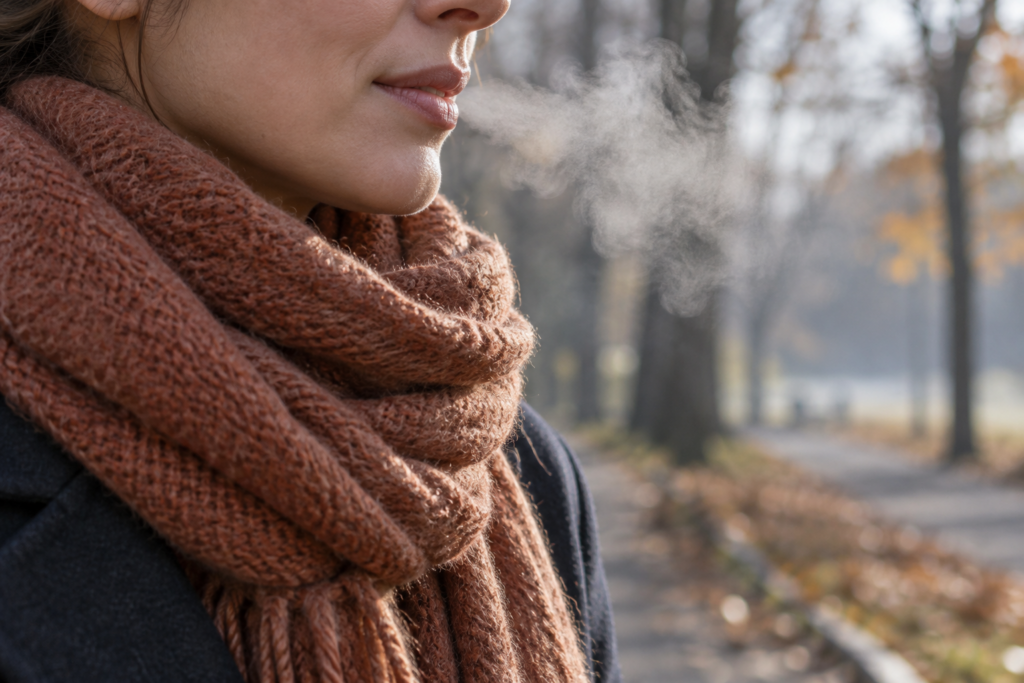
Covering the nose and mouth with a scarf or specifically designed cold-weather face covering when spending time outdoors in cold air can provide a meaningful buffer, since this trapped layer of air warms and humidifies slightly before being inhaled, reducing the shock of directly breathing very cold, dry air. Breathing through the nose rather than the mouth when possible also allows for more natural warming and humidifying of incoming air before it reaches the lower airways, compared to mouth breathing, which bypasses much of this natural conditioning process.
For people with asthma, using a prescribed rescue inhaler before anticipated cold air exposure, particularly before outdoor exercise in cold weather, following a treatment plan established with a healthcare provider, can help prevent or reduce the severity of cold-triggered bronchospasm before it develops rather than treating it only after symptoms have already begun.
Timing Outdoor Activity Around the Coldest Parts of the Day
For those with significant cold-air sensitivity, scheduling outdoor activity for the warmer parts of the day, rather than during the coldest early morning or evening hours, can reduce overall symptom burden during the cold season. This isn’t always fully practical given work and school schedules, but where flexibility exists, this kind of timing adjustment provides a reasonably straightforward way to reduce cumulative cold air exposure without eliminating outdoor activity altogether.
Recognizing When Symptoms Need Medical Attention
While mild, manageable symptom fluctuation in cold weather is common and often addressable with the strategies above, any significant increase in symptom severity, frequency, or a reduced response to usual medications warrants a conversation with a healthcare provider. This is particularly true heading into winter, when cold exposure combines with peak respiratory illness season to create genuinely elevated risk for people with underlying respiratory conditions, making proactive management planning valuable before the coldest months fully arrive.
A Predictable Seasonal Challenge Worth Planning For
The connection between cold air and worsened respiratory symptoms reflects genuine physiological mechanisms rather than simple discomfort, and recognizing this pattern allows people with asthma, COPD, or other respiratory sensitivities to take proactive steps as the weather continues cooling, rather than being caught off guard by symptoms that predictably tend to intensify during this seasonal transition.