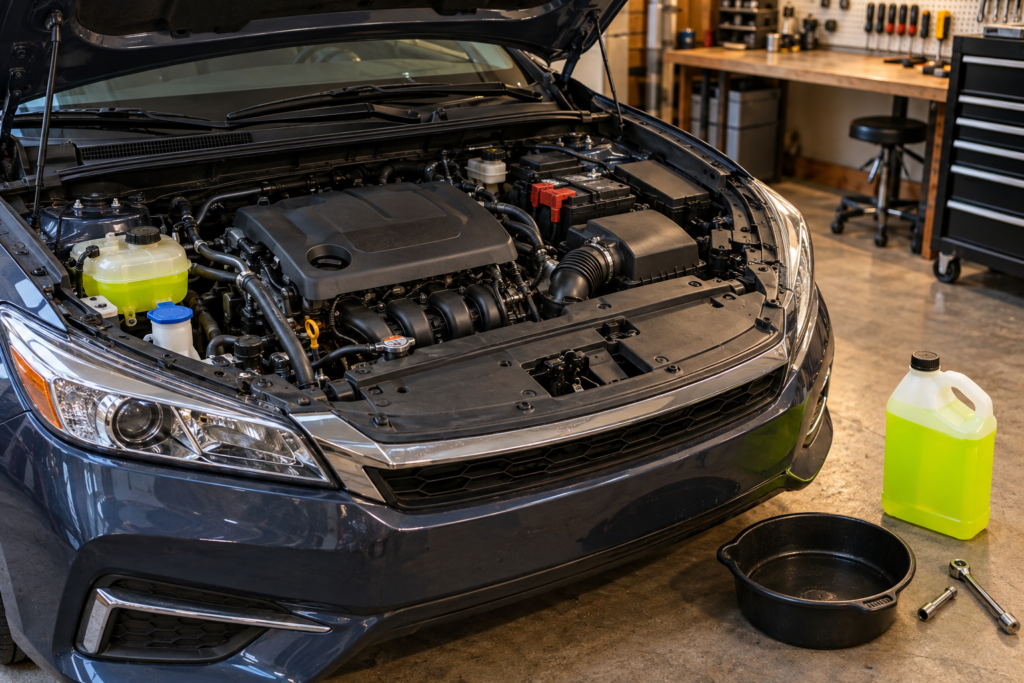
A Seasonal Risk Tied to Vehicle Maintenance
As temperatures drop and people begin winterizing vehicles—checking coolant levels, topping off antifreeze, or having radiator systems serviced—a genuinely dangerous seasonal hazard becomes more prevalent in garages, driveways, and parking areas: ethylene glycol, the primary toxic ingredient in most conventional antifreeze products. This substance is responsible for a significant number of accidental pet poisonings each year, and its specific properties make it an unusually dangerous hazard compared to many other household chemicals.
Why Antifreeze Is Especially Dangerous to Pets
Ethylene glycol has a notably sweet taste, and both dogs and cats are drawn to it readily when they encounter a spill or leak, unlike many toxic substances that animals instinctively avoid due to bitter or unpleasant taste. This palatability means pets will often consume a meaningful quantity of spilled antifreeze without any of the natural hesitation that might otherwise limit exposure to a less appealing-tasting toxic substance.
Even a relatively small amount of ingested antifreeze can be fatal, particularly for cats, who are more sensitive to ethylene glycol toxicity relative to body size than dogs. As little as a teaspoon or two can be lethal for a cat, and even a few tablespoons can pose a serious threat to a medium-sized dog, making even small, easily overlooked spills or drips a genuine hazard.
How Antifreeze Poisoning Actually Works
Once ingested, ethylene glycol is metabolized by the liver into several toxic byproducts, including compounds that form calcium oxalate crystals within the kidneys. This process causes progressive and often irreversible kidney damage, and the timeline of symptoms follows a distinctive and genuinely dangerous pattern: initial symptoms, often appearing within 30 minutes to a few hours of ingestion, can resemble intoxication—wobbliness, disorientation, and excessive thirst or urination—and these early symptoms sometimes improve or seem to resolve temporarily, creating a false sense that the pet is recovering.
This apparent improvement is deceptive. Behind the scenes, kidney damage continues progressing, and without prompt treatment, a pet that seemed to be getting better in those early hours can go on to develop severe, often fatal kidney failure within 24 to 72 hours of the original ingestion. This delayed, deceptive symptom pattern is part of why antifreeze poisoning is considered a true veterinary emergency requiring immediate action, even if a pet appears to be doing better in the initial hours after a known or suspected ingestion.
Where Exposure Commonly Happens
Vehicle maintenance during fall—when many people top off coolant, flush radiators, or bring vehicles in for winterization service—creates increased opportunity for antifreeze spills in driveways, garages, and parking areas. Even a small drip from a radiator or a container left slightly open can create a puddle that a curious pet investigates and licks. Garages where vehicles are stored or serviced, and parking areas at auto shops or dealerships, represent higher-risk environments during this seasonal maintenance window than they might be at other points in the year.
Reducing Exposure Risk
Cleaning up any antifreeze spill immediately and thoroughly, rather than assuming a small amount isn’t worth the effort, addresses the most direct exposure risk. Storing antifreeze containers securely, in areas pets can’t access, and checking your vehicle periodically for leaks—since a slow radiator leak can create repeated small puddles over time rather than a single obvious spill—both reduce ongoing exposure risk throughout the season.
Some newer antifreeze formulations use propylene glycol instead of ethylene glycol, a considerably less toxic alternative, though even these products aren’t entirely without risk and shouldn’t be treated as fully pet-safe. If you’re purchasing antifreeze and have pets with regular access to your garage or driveway, checking the product’s specific formulation is a reasonable additional precaution, though proper spill cleanup and secure storage remain the most reliable protection regardless of which formulation you use.
What to Do if You Suspect Exposure
If you know or suspect your pet has ingested antifreeze, contact your veterinarian or an emergency animal poison control hotline immediately, even if your pet seems entirely normal in the moment. Given the deceptive symptom pattern described above, waiting to see whether symptoms develop or worsen wastes critical time during a window when treatment is most likely to be effective. Prompt treatment, ideally within the first few hours after ingestion, offers a considerably better chance of preventing the severe kidney damage that develops if treatment is delayed until more obvious symptoms appear.
A Hazard Worth Extra Vigilance This Season
Antifreeze toxicity represents one of the more severe, time-sensitive pet poisoning risks that becomes more prevalent specifically during fall’s vehicle winterization season. A bit of extra attention to spill cleanup, secure storage, and prompt veterinary contact in the event of known or suspected exposure can make a genuine difference in outcomes for a hazard that, while entirely preventable, remains one of the more dangerous substances many pets encounter each year.