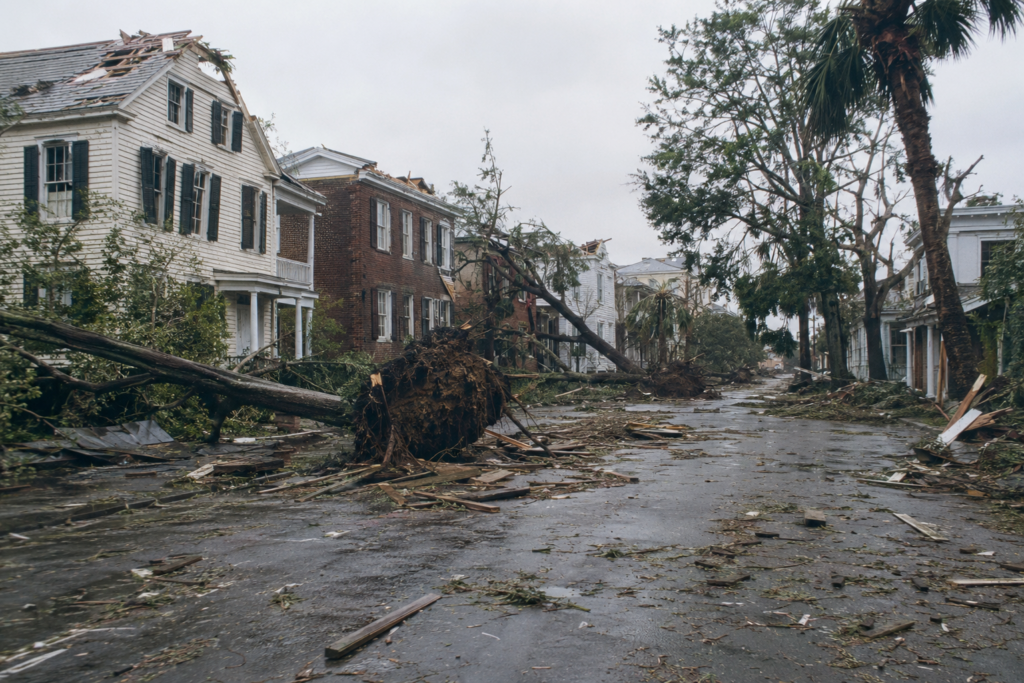
A Storm That Arrived on This Very Date in 1989
Hurricane Hugo made landfall just north of Charleston, South Carolina, late on the night of September 21, 1989, as a powerful Category 4 hurricane, and at the time, it stood as the costliest hurricane in U.S. history. Hugo’s combination of extreme storm surge, sustained hurricane-force winds that reached far inland, and a track that carried destructive impacts hundreds of miles from the coast made it a landmark storm in the modern era of hurricane preparedness and response.
A Storm That Devastated the Caribbean Before Reaching the Mainland
Before striking South Carolina, Hugo tore through the Caribbean as a major hurricane, causing catastrophic damage across Guadeloupe, the Virgin Islands, and Puerto Rico. On Puerto Rico alone, Hugo destroyed tens of thousands of homes and left widespread areas of the island without power for weeks, foreshadowing the extended, difficult recovery that would follow its eventual U.S. landfall as well.
By the time Hugo approached the South Carolina coast, it had strengthened into an exceptionally powerful storm, drawing energy from the warm late-summer Atlantic waters it crossed en route to the mainland.
Storm Surge That Redefined Expectations for the Region
Hugo produced a storm surge reaching approximately 20 feet in parts of the South Carolina coast north of Charleston, among the highest storm surge levels ever recorded on the U.S. East Coast at the time. This surge devastated coastal communities, particularly in the area around the Cape Romain National Wildlife Refuge and nearby coastal towns, where entire structures were swept from their foundations and coastal geography itself was visibly reshaped by the force of the incoming water.
Charleston’s historic downtown, while spared the very highest surge levels that struck areas to the north, still experienced significant flooding and wind damage that affected numerous historically significant buildings, prompting a substantial preservation and restoration effort in the years that followed.
Wind Damage That Extended Remarkably Far Inland
One of Hugo’s most distinctive characteristics was how far inland its destructive winds extended while the storm retained hurricane-force intensity. Hugo remained a hurricane as it tracked more than 200 miles inland, an unusually persistent intensity for a landfalling storm moving over land, where friction and the loss of a warm ocean energy source typically weaken hurricanes considerably faster.
This meant cities like Charlotte, North Carolina—located well inland and not traditionally considered to face significant hurricane risk—experienced substantial wind damage, widespread power outages, and considerable tree damage, catching many inland residents and emergency planners without the same hurricane preparedness mindset that coastal communities typically maintain.
A Storm That Struck an Area With Fresh Memory of Its Danger
Hugo arrived at a moment when it had been decades since the Carolina coast had experienced a hurricane of comparable intensity, meaning much of the affected population had limited direct personal experience with a storm of this magnitude. This gap in recent institutional and personal memory contributed to some of the challenges in evacuation compliance and preparedness the region faced, a pattern that has recurred in various forms across numerous historical hurricanes when a significant time gap separates a region’s most recent major storm experience from a new, dangerous system approaching.
The Scale of Destruction and Recovery
Hugo caused an estimated $7 billion in damage at the time—a figure that made it briefly the costliest hurricane on record before subsequent storms surpassed it—and resulted in approximately 60 deaths across its full path from the Caribbean through the Southeast. Recovery in the hardest-hit coastal areas took years, with some communities fundamentally rebuilding rather than simply repairing what the storm had destroyed.
The scale of destruction prompted significant reassessment of coastal building codes and storm surge planning in South Carolina, contributing to broader regional efforts to better understand and prepare for the storm surge risk facing the state’s coastline, informed directly by what Hugo demonstrated was possible in a worst-case landfall scenario.
Why Hugo Still Matters Decades Later
Hurricane Hugo remains a significant reference point in Southeastern hurricane history, both for the scale of physical destruction it caused and for what it revealed about the vulnerability of a region that hadn’t faced a major hurricane in a generation. Its unusually persistent inland wind intensity also became an important case study in hurricane risk communication, reinforcing that hurricane danger doesn’t end cleanly at some fixed distance from the coast, a lesson that has informed how meteorologists communicate inland hurricane risk in the decades since.