A Seasonal Coat Change, Not a Problem
If you’ve noticed noticeably more fur around the house lately—on furniture, clothing, and seemingly everywhere else—your pet isn’t necessarily dealing with a skin issue or stress. Early September marks a genuine seasonal shedding period for many dogs and cats, driven by a predictable biological process tied directly to changing daylight hours as summer transitions toward fall.
Shedding Is Triggered by Light, Not Temperature
It’s a common assumption that pets shed in response to temperature changes, but the primary trigger for seasonal shedding cycles is actually photoperiod—the changing length of daylight hours—rather than temperature itself. As days grow shorter heading into fall, this shift in light exposure signals a pet’s body to begin transitioning their coat, shedding out the lighter, less dense coat that served them through summer’s heat in preparation for growing a thicker, more insulating coat for the colder months ahead.
This light-driven mechanism explains why indoor pets, who experience relatively stable temperatures year-round due to climate control, still go through seasonal shedding cycles tied to the actual changing daylight outside, even though their immediate environment doesn’t change temperature nearly as dramatically as the outdoors does.
Double-Coated Breeds Shed the Most Dramatically
Breeds with a double coat—an outer layer of coarser guard hairs and a dense, insulating undercoat beneath—tend to experience the most pronounced seasonal shedding, since they’re transitioning two distinct coat layers rather than a single uniform coat. Breeds like Huskies, German Shepherds, Golden Retrievers, and many other double-coated breeds can shed remarkable quantities of fur during this seasonal transition, a process sometimes informally called “blowing coat” among owners of these breeds.
Single-coated breeds and many cat breeds still experience seasonal shedding, but typically with less dramatic volume than double-coated breeds specifically transitioning between their two distinct coat layers.
Why More Frequent Brushing Actually Helps
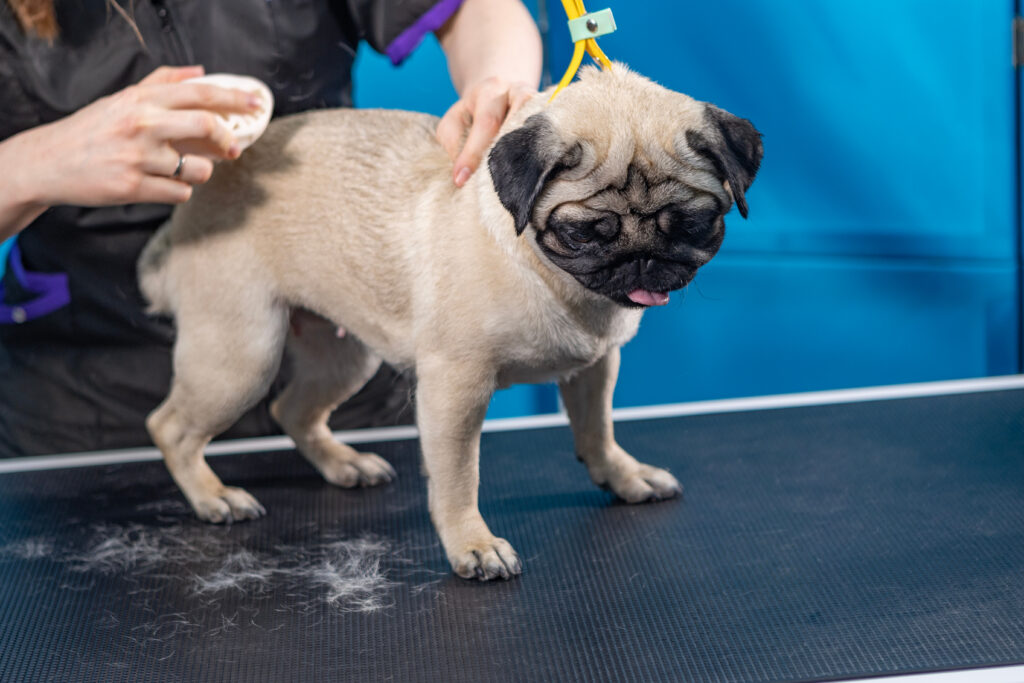
During a heavy seasonal shedding period, more frequent brushing—rather than less—is the most effective way to manage the process, both for household cleanliness and for your pet’s comfort. Brushing removes loose, dead undercoat fur before it has a chance to shed naturally around the house, and for double-coated breeds, using an undercoat rake or deshedding tool specifically designed to reach the dense underlayer, rather than a standard brush that primarily addresses the outer coat, makes a meaningful difference in how effectively the loose fur gets removed.
Increasing brushing frequency to several times a week, or even daily during the most intense phase of a seasonal shed, can significantly reduce the amount of loose fur that ends up shed naturally around the home, while also preventing the matting that can develop when dead undercoat fur isn’t removed and becomes tangled with the growing new coat.
When Shedding Might Signal Something Else
While seasonal shedding is a normal, healthy process, certain patterns warrant a closer look rather than being dismissed as purely seasonal. Bald patches, excessive scratching accompanying the shedding, skin redness or visible irritation, or shedding that seems dramatically more severe than in previous years could indicate an underlying issue like allergies, a skin infection, parasites, or a hormonal imbalance rather than typical seasonal coat transition. Seasonal shedding, even at its most dramatic, should still leave an even, generally healthy-looking coat underneath rather than patchy or irritated skin.
If shedding seems unusual in pattern or severity, or is accompanied by other symptoms like changes in appetite, energy level, or behavior, a veterinary visit can rule out underlying causes that go beyond a normal seasonal transition.
Diet Can Support a Healthy Coat Transition
Ensuring your pet’s diet includes adequate essential fatty acids, commonly found in fish oil supplements or high-quality commercial pet foods formulated with skin and coat health in mind, can support healthier coat growth during a demanding seasonal transition period. While diet alone won’t eliminate seasonal shedding, since the process is fundamentally driven by photoperiod rather than nutrition, adequate nutritional support helps ensure the new coat growing in is as healthy as possible.
An Annual Cycle Worth Expecting
The volume of fur that accompanies this seasonal shedding period can feel excessive, but it represents a normal, healthy biological process rather than a cause for concern on its own. Staying ahead of it with more frequent brushing, appropriate tools for double-coated breeds, and basic awareness of what distinguishes normal seasonal shedding from a genuine skin issue makes this predictable annual transition considerably more manageable for both pets and the humans sharing a home with them.