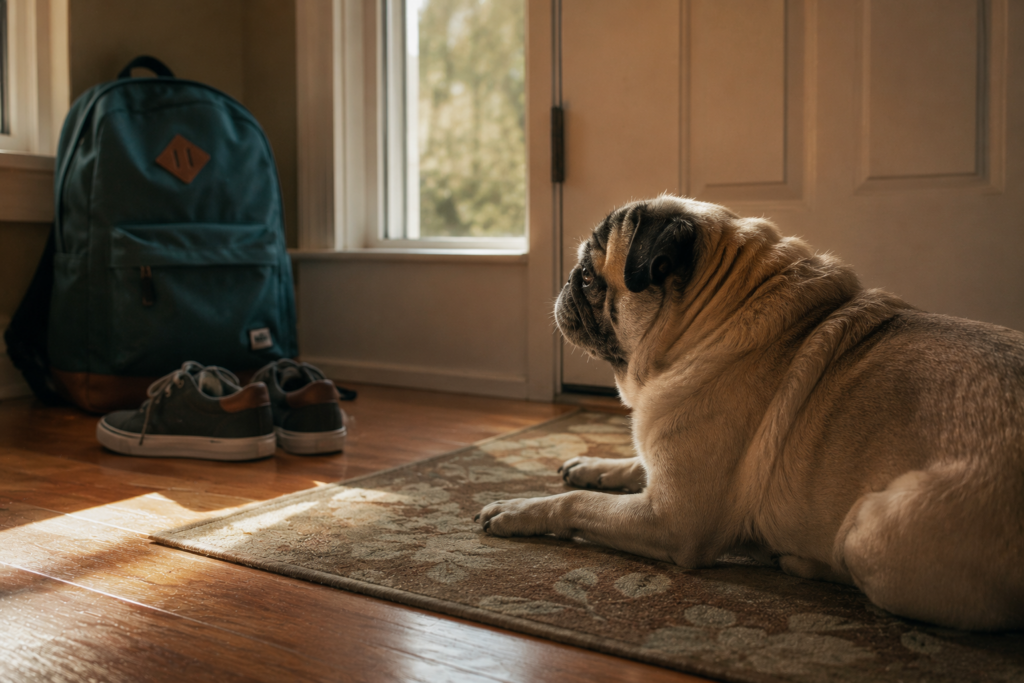
A Seasonal Transition That Affects Pets Too
As late August settles into the rhythm of a new school year, households across the country are shifting from the more relaxed, presence-heavy pace of summer into structured schedules that leave pets alone for significantly longer stretches than they’ve experienced in months. This transition, while obviously beneficial for kids returning to school, can genuinely disrupt pets who’ve grown accustomed to near-constant companionship throughout the summer, and recognizing the signs of that disruption early makes for a much smoother adjustment.
Why This Transition Hits Pets Harder Than People Expect
Pets don’t understand the concept of a school calendar—they only experience the practical reality of a household routine that’s suddenly and dramatically different from what they’ve known for weeks or months. A dog that spent summer mornings with kids constantly around, frequent outdoor play, and irregular but plentiful attention now faces long, quiet stretches alone, often for the first extended period since the previous school year ended.
This kind of abrupt routine change is a well-recognized trigger for situational anxiety in pets, distinct from the more dramatic separation anxiety some pets experience with any alone time, but still capable of producing real behavioral and emotional distress during the adjustment period.
Signs Your Pet Is Struggling With the Change
Behavioral changes worth watching for during this transition include increased vocalization (barking or whining shortly after the household leaves), destructive behavior concentrated near exit points like doors and windows, changes in appetite, excessive licking or grooming, and accidents in house-trained pets that hadn’t been an issue previously. These behaviors, particularly when they appear or intensify specifically around the same time a school year begins, are worth interpreting as a response to the routine change rather than an unrelated or random development.
Cats, while often perceived as more independent, can show their own version of this adjustment stress—increased hiding, changes in litter box habits, or excessive vocalization when household members who were home all summer suddenly aren’t.
Building a Gradual Transition Rather Than an Abrupt One
If possible, introducing the new alone-time schedule gradually in the days before school actually starts, rather than having a pet experience the full change all at once on day one, gives them a chance to adjust incrementally. Short practice periods of alone time, building up toward the actual duration a pet will experience once the school routine is in full effect, can meaningfully ease the transition compared to a pet going from near-constant company to a full school-day absence with no intermediate adjustment period.
Maintaining consistent morning and evening routines around departure and return—rather than dramatically different behavior on school days versus non-school days—also helps pets settle into a predictable pattern more quickly than an inconsistent schedule would allow.
Enrichment Matters More During Long Alone Stretches
Providing mental and physical enrichment during the newly extended alone periods helps offset the reduced attention pets have grown accustomed to over summer. Puzzle feeders, treat-dispensing toys, and rotating a small selection of toys rather than leaving everything out constantly can meaningfully reduce boredom-driven anxiety and destructive behavior during the school day.
For dogs experiencing a significant increase in alone time, a mid-day walk or visit from a dog walker, neighbor, or pet sitter can break up an otherwise long stretch and provide a meaningful outlet, particularly during the first few weeks of the new routine when the adjustment tends to be most pronounced.
When Professional Support Makes Sense
For pets showing significant, persistent distress—severe destructive behavior, self-injury from excessive licking or chewing, or extreme vocalization that doesn’t improve after a few weeks of consistent routine—consulting a veterinarian or a certified animal behaviorist is worth pursuing rather than assuming the adjustment will simply resolve on its own with time. In some cases, genuine separation anxiety, a more clinically significant condition than typical routine-adjustment stress, may be present and benefit from a structured behavioral plan or, in some cases, veterinary-guided medication support.
Patience Through the Adjustment Period
Most pets adapt to a new school-year routine within a few weeks, particularly with some intentional effort to ease the transition rather than leaving them to adjust entirely on their own. Recognizing that this seasonal shift represents a genuine change from a pet’s perspective—not just a human scheduling adjustment—makes it easier to respond to their adjustment period with the patience and support it actually requires.