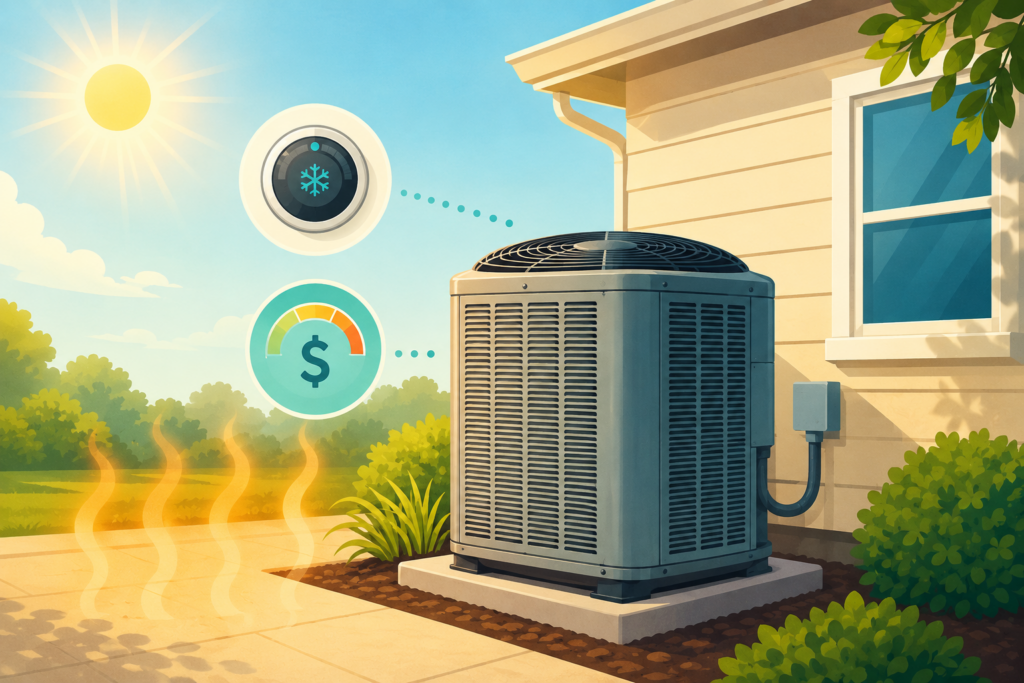
Weeks of Continuous Cooling Catches Up With Your System
By early August, most air conditioning systems have been running nearly nonstop for six to eight weeks, and the cumulative effect shows up unmistakably on the electric bill. Some of that increase is simply the unavoidable cost of staying cool through the hottest stretch of the year. But a meaningful portion of it comes from inefficiencies that build up over the course of a long, hot summer—inefficiencies that a handful of checks can identify and fix without professional help.
Check Your Air Filter Before Anything Else
A clogged air filter is the single most common and most fixable source of reduced cooling efficiency. As filters accumulate dust and debris over weeks of continuous operation, they restrict airflow through the system, forcing your air conditioner to work harder and run longer to reach the same temperature. A severely clogged filter can reduce system efficiency substantially and, in extreme cases, contribute to icing on the evaporator coil that causes the system to stop cooling altogether.
Most residential filters should be checked monthly during peak cooling season and replaced when visibly dirty—typically every one to three months depending on the filter type, household dust levels, and whether you have pets. If you haven’t checked yours since spring, early August is a good time to look.
Clear Debris Away From Your Outdoor Unit
The outdoor condenser unit needs adequate airflow around it to release the heat it’s extracting from your home. Over the course of a summer, grass clippings, leaves, dirt, and plant growth can accumulate around and even inside the unit’s fins, restricting that airflow and forcing the system to work harder to dissipate heat.
Keep at least two feet of clearance around the unit, trim back any vegetation that’s grown into that space since spring, and gently rinse accumulated debris from the exterior fins with a garden hose—never a pressure washer, which can bend the delicate metal fins and damage the unit.
Seal the Air Leaks You Can Feel
Air leaking out around windows, doors, and other penetrations forces your cooling system to fight a losing battle against outdoor heat constantly seeping back in. A simple test: on a hot afternoon, hold your hand near window and door frames, electrical outlets on exterior walls, and where pipes or cables enter your home. Noticeable air movement indicates a leak worth sealing with weatherstripping or caulk.
These leaks matter more in peak summer than people expect, because the temperature differential between inside and outside is often at its highest point of the year, which maximizes the rate at which conditioned air escapes and unconditioned heat enters through any gap.
Reverse Your Thinking About Ceiling Fans
Ceiling fans don’t actually cool the air—they cool people, by increasing air movement across skin and enhancing evaporative cooling from sweat. This distinction matters because it means fans are only useful when you’re in the room to feel the airflow; running them in empty rooms wastes electricity without any cooling benefit.
Make sure your fans are set to spin counterclockwise during summer (viewed from below), which pushes air downward and creates the direct breeze that produces a cooling sensation. Using fans in occupied rooms lets many households raise their thermostat setting by several degrees without any loss of comfort, directly reducing the load on the air conditioning system.
Check Your Thermostat Schedule
If your cooling schedule hasn’t been revisited since you first set it, mid-summer is worth a second look. A programmable or smart thermostat set to ease off slightly while you’re away at work and return to a comfortable setting shortly before you’re home typically produces meaningful savings compared to running a constant temperature all day, without sacrificing comfort during the hours you’re actually there.
Small adjustments—even one or two degrees during unoccupied hours—compound significantly over weeks of continuous summer operation.
Small Fixes, Meaningful Savings
None of these checks require a technician visit or significant expense, but together they address the specific inefficiencies that accumulate over a long, continuously hot summer. A clean filter, a clear outdoor unit, sealed leaks, correctly oriented fans, and a sensible thermostat schedule won’t eliminate the cost of running an air conditioner through August—but they can meaningfully reduce it, right when your system is working its hardest.