A Common Summer Complaint With a Specific Physical Cause
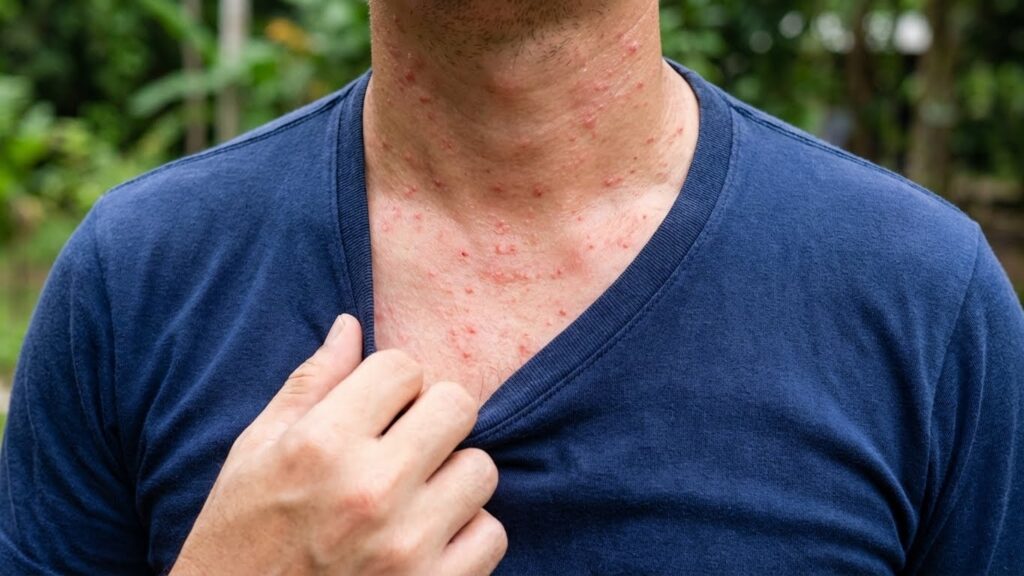
By late July, a lot of people develop a cluster of small, itchy red bumps in places where skin folds or clothing sits tight—the neck, chest, underarms, and the backs of knees and elbows. It’s often dismissed as an allergic reaction or an irritation from a new detergent, but in the depths of summer, the far more common cause is heat rash, also known as prickly heat or miliaria. Understanding the actual mechanism behind it explains why it appears now, why it targets certain areas of the body, and why the standard advice for treating it works.
Sweat That Can’t Escape
Heat rash develops when sweat becomes trapped beneath the skin instead of evaporating off the surface. Sweat glands push moisture up through small ducts to the skin’s surface, where evaporation carries away heat and cools the body. In hot, humid conditions, several things can interfere with that process: dead skin cells and debris can block the duct openings, tight clothing can trap sweat against the skin, and high ambient humidity slows evaporation even when sweat does reach the surface.
When a duct becomes blocked, sweat continues to be produced beneath it and has nowhere to go. It leaks into the surrounding skin tissue, triggering inflammation and the small, raised bumps characteristic of the rash. This is why heat rash appears specifically in areas prone to friction and reduced airflow—skin folds, areas under tight clothing or straps, and places where two skin surfaces rest against each other—rather than uniformly across the body.
Why Humidity Matters More Than Temperature Alone
A hot, dry day and a hot, humid day can feel similarly uncomfortable, but they carry very different heat rash risk. On dry days, even in high heat, sweat evaporates efficiently, clearing the skin’s surface and reducing the odds of duct blockage. On humid days, the air is already saturated with water vapor and can’t absorb much more, so sweat sits on the skin far longer before evaporating—if it evaporates at all.
This is why heat rash rates climb sharply during the muggy stretches of summer rather than tracking with temperature alone. A 95-degree day with low humidity is often less likely to produce heat rash than an 85-degree day with oppressive humidity, because the deciding factor is how effectively sweat can actually leave the skin.
Who Develops It, and Why Infants Are Especially Prone
Heat rash can affect anyone, but infants develop it far more readily than adults because their sweat ducts are still immature and more prone to blockage. This is why parents are often advised to dress babies in lightweight, breathable fabrics during hot weather and to watch for rash development in skin folds, particularly around the neck.
Adults face elevated risk during intense exercise in humid conditions, while bedridden or overweight individuals face increased risk in areas where skin remains in prolonged contact with itself or with bedding. Anyone wearing tight, non-breathable clothing during humid weather—athletic gear, occupational uniforms, tight straps—faces a higher likelihood of duct blockage regardless of age.
Why the Standard Treatment Advice Actually Works
The universal advice for heat rash—cool down, remove tight clothing, and let the skin breathe—follows directly from the mechanism. Moving to an air-conditioned or shaded space reduces sweat production, giving blocked ducts a chance to clear without new sweat accumulating behind them. Loose, breathable clothing—cotton rather than synthetic fabrics—reduces the friction and trapped moisture that caused the blockage in the first place. Cool showers or compresses lower skin temperature directly and can provide immediate relief from the itching.
Most cases resolve within a few days once the skin dries out and inflammation subsides. Calamine lotion or over-the-counter hydrocortisone cream can ease itching in more persistent cases, though heavy ointments containing petroleum should generally be avoided, since they can further block pores and worsen the underlying problem rather than solving it.
When It’s More Than a Nuisance
In most cases, heat rash is uncomfortable rather than dangerous, but a more severe form—when sweat glands become inflamed deeper in the skin—can produce larger, more painful bumps and occasionally signals that the sweat glands themselves have stopped functioning properly in the affected area. Reduced sweating capacity is a genuine concern in extreme heat, since it can impair the body’s ability to cool itself. Signs of infection—increased pain, pus, swelling, or fever—warrant a visit to a doctor rather than continued home treatment.
A Small Discomfort With a Clear Explanation
Heat rash is one of those summer conditions that feels random until you understand the physical mechanism behind it—a straightforward story of sweat, blocked ducts, and humidity that can’t carry away moisture fast enough. Recognizing the pattern makes prevention simple: breathable clothing, cooler environments when possible, and staying attentive during the muggiest stretches of the season, when the air itself is working against your skin’s ability to cool down.