Late July Is When Summer Heat Becomes Genuinely Dangerous for Pets
By the last week of July, summer heat has stopped being a mild inconvenience and become something closer to a daily hazard. Pavement, sidewalks, and parking lots have spent weeks absorbing sun and heat, and the air itself carries the kind of oppressive, saturating warmth that builds cumulatively rather than resetting overnight. For pets, this is the most dangerous stretch of the year—not the occasional single hot day, but the sustained heat of the “dog days,” when there’s no real overnight cooling and every surface your pet touches has been baking since sunrise.
Understanding two specific risks—scorching pavement and the subtler progression of heatstroke—can prevent the two most common and most preventable summer emergencies pet owners face this time of year.
The Pavement Test Most Owners Never Think to Do
Asphalt and concrete absorb solar radiation throughout the day and can reach temperatures 40 to 60 degrees hotter than the surrounding air. On a 90-degree afternoon, pavement in direct sun can easily exceed 140 degrees—hot enough to cause second-degree burns on unprotected paw pads in under a minute.
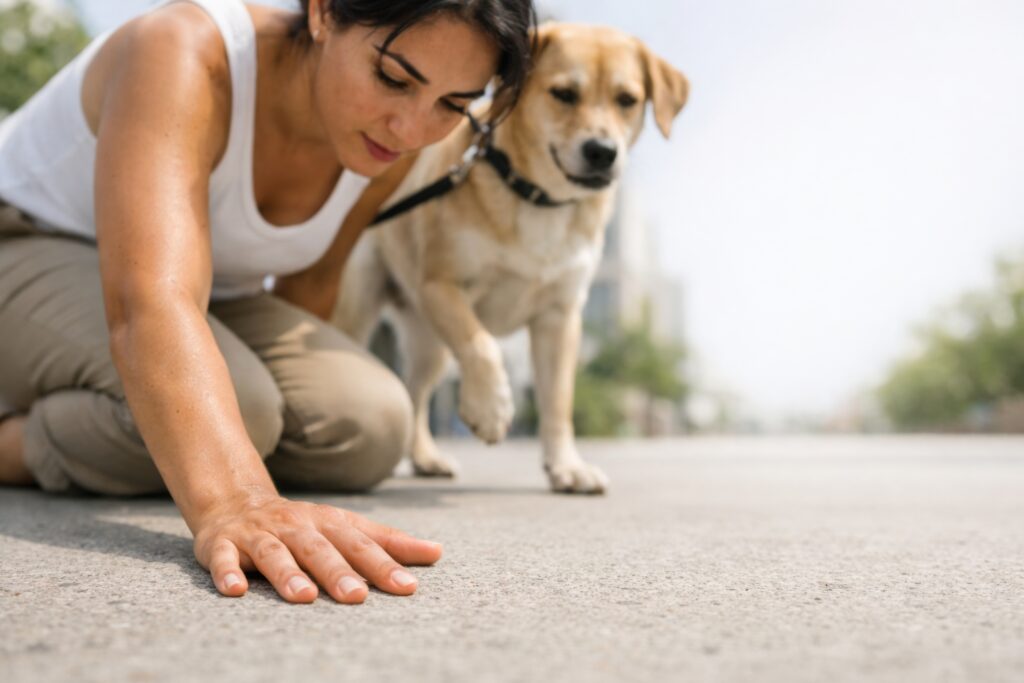
The simple test: press the back of your hand to the pavement and hold it there for seven seconds. If it’s too hot for your hand, it’s too hot for your dog’s paws. This isn’t a rough guideline—it’s a reliable physical indicator, because human skin and paw pad tissue have similar burn thresholds.
Paw pads are thick, but they aren’t heatproof, and repeated exposure on hot days can cause blistering, peeling, and cracked pads that take weeks to heal. Signs of paw burns include limping, refusing to walk, licking or chewing at the feet, and visibly darkened or blistered pad tissue. If you suspect burned pads, rinse with cool (not ice-cold) water, keep your pet off the affected feet, and contact your veterinarian—burned pads can become infected without care.
Timing Walks Around the Heat, Not Around Your Schedule
The single most effective prevention is also the simplest: shift outdoor time to the coolest parts of the day. Early morning, before the sun has had hours to heat surfaces, and late evening, after the ground has had time to release stored heat, are both dramatically safer than midday or mid-afternoon walks.
Grass and dirt trails stay significantly cooler than asphalt and hold up as safer walking surfaces even during the hottest hours, so route choice matters as much as timing when a walk can’t be avoided. Dog booties offer a physical barrier for pets who need to be out during warmer periods, though most dogs need time to adjust to wearing them.
Recognizing Heatstroke Before It Becomes an Emergency
Heatstroke in pets progresses along a spectrum, and the early stage is often mistaken for ordinary panting on a hot day. The distinction matters because early intervention is far more effective than emergency treatment once a pet’s body temperature has climbed into the danger zone.
Early signs include heavy panting that doesn’t ease with rest, bright red gums or tongue, and noticeably increased thirst or drooling. At this stage, moving to shade or air conditioning and offering water is usually sufficient.
Escalating signs include glazed eyes, rapid heartbeat, stumbling or lack of coordination, and thick, ropey saliva. This stage requires active cooling—wetting the coat with cool (not cold) water, applying water-soaked towels to the belly and paws, and using a fan to promote evaporative cooling—along with an immediate call to your veterinarian.
Critical signs—vomiting, diarrhea, seizures, or collapse—represent a life-threatening emergency requiring immediate veterinary care. Cooling efforts should continue during transport, but pavement and dashboard time in a hot car en route is not a substitute for professional treatment.
Flat-faced breeds like bulldogs and pugs, senior pets, overweight animals, and pets with heart or respiratory conditions face substantially elevated risk and can progress from early to critical signs faster than healthier animals.
The Car Is Never an Option
Every summer brings a wave of preventable tragedies from pets left in parked cars, and the physics explain why “just a few minutes” is never actually safe. On an 85-degree day, the interior of a car can reach 102 degrees in ten minutes and 120 degrees in thirty minutes, even with the windows cracked. Cracking a window has minimal effect on interior temperature rise. If you can’t bring your pet inside your destination, the safest choice is to leave them at home.
Small Adjustments, Meaningful Protection
None of these precautions require special equipment or dramatically changed routines—just an awareness that the hottest stretch of summer asks more of pet owners than the rest of the year does. Testing the pavement before a walk, shifting outdoor time to cooler hours, and knowing the early signs of heat stress are small habits that prevent the emergencies that fill veterinary waiting rooms every July and August.