The Temperature Is 85°F. It Feels Like 100°F. Here’s Why.
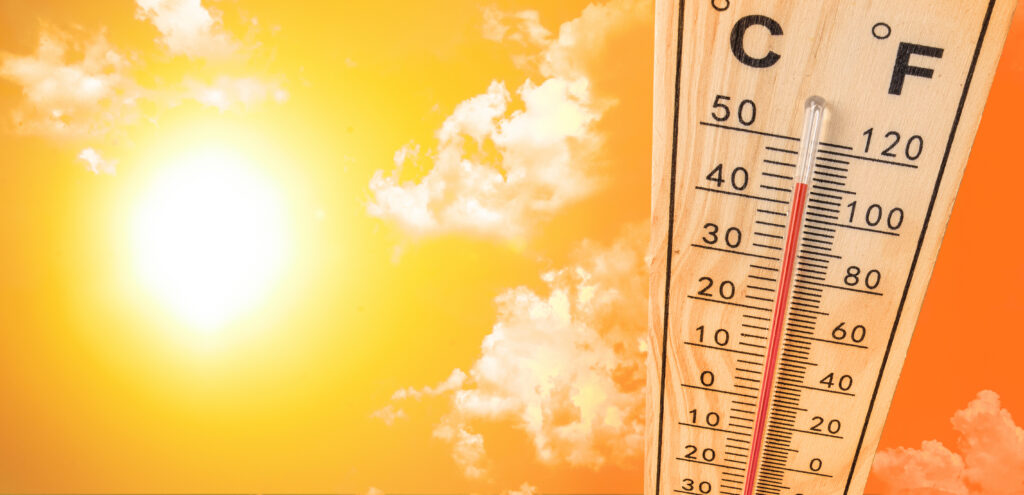
Memorial Day weekend delivers the first genuinely summer-feeling outdoor days of the year for most of the country, and with them comes the familiar experience of heat that seems disproportionate to what the forecast promised. The thermometer says 85°F, but standing on the deck, sitting at the beach, or working in the garden feels significantly hotter — and the gap widens through the afternoon in ways that can catch people off guard.
This gap between measured air temperature and experienced heat is not perception error. It reflects the multiple simultaneous heat inputs that the body manages outdoors that a standard thermometer — shaded, positioned at specific heights, measuring only air temperature — doesn’t capture. Understanding the physics of outdoor heat explains both why it feels so much more intense than the forecast suggests and why certain environments — beaches, patios, open fields — amplify the experience dramatically.
How Temperature Is Actually Measured
The official air temperature reported in weather forecasts is measured by thermometers housed in radiation shields — louvered white boxes that allow air circulation while blocking direct sunlight and reflected radiation from the ground. These shields are positioned at a standard height of approximately five feet above the ground over grass surfaces, away from pavement, buildings, and other heat-radiating objects.
This measurement captures one specific thing: the temperature of the air in the shade at five feet above a grassy surface. It does not capture solar radiation striking the body, infrared radiation emitted by hot surfaces surrounding the body, humidity’s effect on evaporative cooling, or wind’s effect on convective heat exchange. All of these variables affect the heat load a person actually experiences outdoors, and none of them are included in the reported temperature.
The result is that the thermometer reading is a useful baseline but often a significant underestimate of what the human body experiences in real outdoor conditions — particularly in environments with high solar radiation, hot reflective surfaces, and limited air movement.
Solar Radiation: The Dominant Summer Heat Input
The most significant gap between measured temperature and felt temperature comes from solar radiation — the direct energy of sunlight striking the body’s surface. On a clear summer day, solar radiation delivers approximately 1,000 watts of energy per square meter of surface perpendicular to the sun’s rays. A person standing in direct sunlight absorbs a significant fraction of this energy directly through their skin and clothing.
This solar load adds what physiologists call the mean radiant temperature — the temperature equivalent of the radiation environment surrounding the body. Instruments designed to measure outdoor heat stress for human health purposes (such as the wet bulb globe temperature used in military, athletic, and occupational health settings) incorporate a black globe thermometer specifically to capture radiant heat input that standard thermometers miss.
In practical terms, a person standing in direct summer sunlight may be receiving a radiant heat load equivalent to adding 15 to 20°F to the air temperature in terms of body heat gain. The 85°F afternoon that the thermometer reports can produce a physiological heat experience equivalent to 100°F or more when solar radiation is added to the equation — which is exactly what people experience and why the forecast temperature consistently feels low on sunny summer days.
Ground Surface Temperature: The Forgotten Heat Source
While solar radiation comes from above, hot ground surfaces radiate infrared energy upward — a heat source that the shielded thermometer at five feet doesn’t measure but that the human body, positioned much closer to the ground, experiences directly.
Pavement and sand reach extraordinarily high surface temperatures on summer afternoons. Asphalt, which absorbs nearly all incident solar radiation due to its dark color, can reach surface temperatures of 130°F to 150°F on a clear summer afternoon when air temperatures are in the 80s and 90s. Concrete reaches slightly lower but still extreme temperatures. Sand — which has low thermal mass and heats rapidly — can reach surface temperatures of 120°F to 140°F in direct sun.
These superheated surfaces radiate infrared energy upward into the space where people are standing, sitting, and walking. A person at the beach is receiving solar radiation from above and infrared radiation from hot sand below simultaneously — a double radiant heat load that no thermometer positioned at standard height measures. This is why the beach feels dramatically hotter than the thermometer suggests and why barefoot walking on sand or pavement in direct summer sun can cause burns within seconds — the surface temperature is genuinely hazardous.
The radiant heat from hot pavement also affects the air immediately above it. The thin layer of air in contact with 140°F asphalt is substantially warmer than air measured at five feet — which is why outdoor thermometers placed directly on or near pavement read dramatically higher than official measurements, and why heat experienced at ankle level on a hot parking lot is genuinely more intense than heat at shoulder level.
Humidity and the Evaporative Cooling Failure
The body’s primary cooling mechanism in heat is sweat evaporation — the conversion of liquid sweat to water vapor, which requires energy (heat) drawn from the skin surface. This mechanism works efficiently in dry air and progressively less effectively as humidity increases, as covered in the heat and exercise physiology piece earlier in this series.
The heat index — the “feels like” temperature shown in summer forecasts — captures this humidity effect by expressing the combined temperature-humidity heat load as a single equivalent temperature. On an 85°F day with 70 percent relative humidity, the heat index reaches approximately 95°F — the temperature at which sweat evaporation is sufficiently impaired that the body experiences heat stress comparable to a dry 95°F day.
But the heat index itself is calculated for shaded conditions at standard measurement height. It captures humidity’s effect on evaporative cooling but not the additional solar and ground radiation loads that outdoor sun exposure adds. The true physiological heat experience on a sunny, humid, 85°F afternoon with a heat index of 95°F may be equivalent to 105°F or higher when all heat inputs are combined — which is why heat-related illness occurs at temperatures and heat index values that people, relying on the forecast numbers, believe should be manageable.
Wind: The Variable That Works Both Ways
Wind is the one outdoor heat variable that reliably reduces rather than increases heat experience. Moving air accelerates convective heat loss from the skin surface and enhances evaporative cooling by removing the thin layer of humid air that accumulates immediately above the skin during sweating.
On a dry, hot day, wind provides significant cooling — the difference between still air and a 10 mph breeze can reduce felt temperature by 5 to 10°F through enhanced convection and evaporation. This is the basis for the cooling fan’s effectiveness in dry heat.
In humid conditions, wind’s cooling benefit diminishes because the moving air is itself laden with water vapor that limits evaporation. A 10 mph breeze on a 85°F, 80 percent humidity day provides far less cooling than the same breeze on an 85°F, 30 percent humidity day. In extreme heat and humidity, wind can actually add to heat load by moving hot air against the skin rather than removing heat — though this effect requires air temperatures significantly above body temperature, typically above 95°F.
The practical takeaway: wind helps in hot weather, especially in dry conditions, but doesn’t overcome the solar and ground radiation loads of direct outdoor sun exposure. Seeking shade eliminates solar radiation input and reduces ground radiation. Seeking shade with a breeze combines both benefits and produces the most comfortable outdoor conditions available without air conditioning.
The Urban and Suburban Heat Amplification
The heat physics described above are amplified in urban and suburban environments by the concentration of heat-absorbing surfaces and the reduction of vegetation that would otherwise moderate temperatures.
Urban heat islands — the phenomenon by which cities run several degrees warmer than surrounding rural areas — are driven primarily by the replacement of vegetation with pavement and structures. Vegetation stays cool through evapotranspiration — the evaporation of water through leaves — which is energetically equivalent to a natural air conditioner. Pavement and building surfaces have no evapotranspiration and reach extreme surface temperatures that radiate heat into the surrounding environment.
A suburban patio surrounded by concrete, with a dark-colored deck and little shade, creates a local heat environment dramatically more intense than the surrounding air temperature. The thermometer on the shaded porch might read 88°F while the person sitting in the unshaded patio chair, surrounded by hot concrete and receiving direct solar radiation, is experiencing conditions equivalent to 105°F or higher in terms of body heat load.
Adding shade — umbrellas, pergolas, trees — is the single most effective intervention for outdoor comfort because it eliminates the dominant heat input of solar radiation. A shaded outdoor space can be 15 to 20°F cooler in effective heat experience than an unshaded space at the same air temperature, simply by blocking the solar radiation component that the thermometer doesn’t measure.
Reading the Conditions, Not Just the Forecast
The practical takeaway from understanding outdoor heat physics is to assess actual outdoor conditions rather than relying solely on the forecast temperature. Several conditions signal that outdoor heat will be significantly more intense than the thermometer suggests:
Direct sunlight with clear skies — solar radiation load is at maximum. UV index above 6 — both UV damage and radiant heat input are elevated. Humidity above 60 percent — evaporative cooling is substantially impaired. Pavement or sand surfaces — ground radiation adds significantly to body heat load. Little or no wind — convective cooling is minimal.
When multiple conditions are present simultaneously — the typical Memorial Day beach or backyard scenario — the gap between forecast temperature and actual heat experience is at its widest. Planning outdoor activity timing to include shade breaks, timing strenuous activity for morning hours, staying hydrated proactively, and treating the UV index as a heat stress indicator as well as a burn risk indicator all help manage the heat load that the thermometer alone understates.
The forecast temperature is the starting point for understanding summer heat, not the complete picture. The sun, the sand, the pavement, and the humidity are all doing their own work — and on a Memorial Day afternoon, they’re doing it simultaneously.