A Hazard That Can Arrive From Hundreds of Miles Away
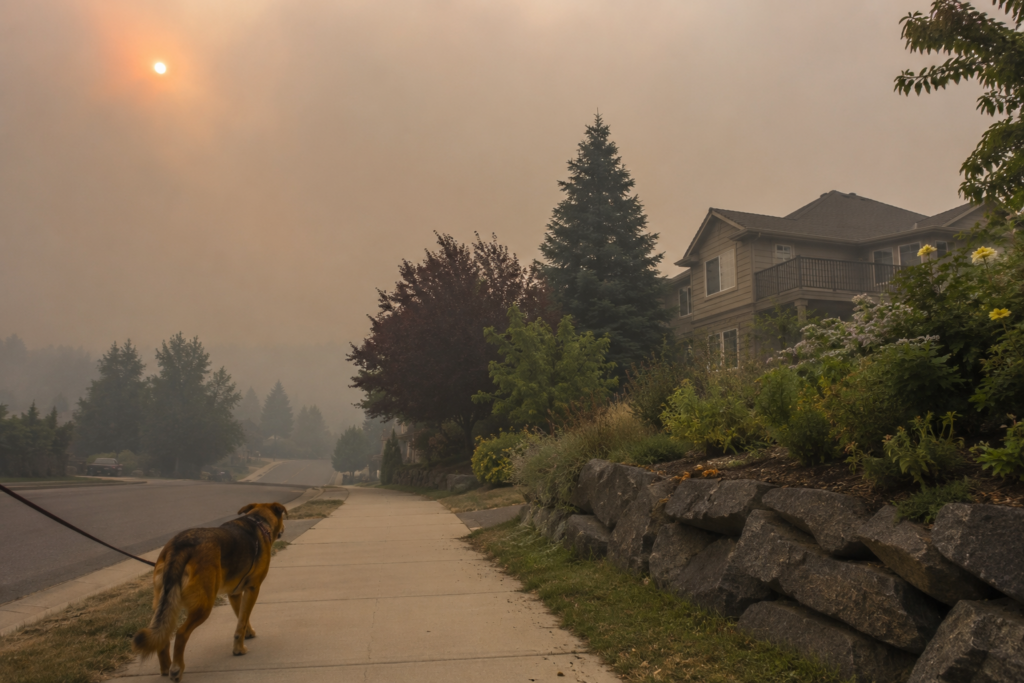
Late summer brings peak wildfire activity across much of the western United States, and the smoke from those fires doesn’t stay confined to the areas actually burning. Smoke and fine particulate matter routinely travel hundreds or even thousands of miles on prevailing winds, meaning air quality can deteriorate significantly in regions with no fire activity of their own. Pets, much like people, are affected by this reduced air quality, and their exposure often goes unnoticed simply because it’s easy to assume that indoor, non-fire-adjacent regions are unaffected.
Why Smoke Particles Are Particularly Harmful
Wildfire smoke contains fine particulate matter, commonly referred to as PM2.5, small enough to penetrate deep into the respiratory system and, in some cases, cross into the bloodstream. These particles cause respiratory irritation and inflammation in humans, and the same basic mechanism applies to pets, whose respiratory systems, while not identical to ours, are similarly vulnerable to this kind of fine particulate exposure.
Because pets, particularly dogs, often spend meaningful time outdoors even during a smoke event, their cumulative exposure over the course of a day can be substantial, especially for animals that are walked or exercised outside on a normal daily schedule regardless of air quality conditions.
Signs Smoke Exposure Is Affecting Your Pet
Respiratory irritation from smoke exposure in pets can present as coughing, wheezing, or labored breathing, along with eye irritation—redness, squinting, or excessive watering, since smoke irritates mucous membranes in ways similar to how it affects human eyes. Reduced appetite, unusual lethargy, or general reluctance to engage in normal activity can also indicate that a pet is feeling the effects of poor air quality, even without dramatic respiratory symptoms.
Pets with pre-existing respiratory conditions, including brachycephalic (flat-faced) breeds whose airway structure already presents some breathing challenges, as well as pets with asthma-like conditions or heart disease, face meaningfully elevated risk during smoke events and warrant closer monitoring when air quality deteriorates.
Checking Air Quality Before Outdoor Activity
Air quality index readings, widely available through weather apps and government air quality monitoring websites, provide a reliable way to gauge whether conditions warrant modifying a pet’s outdoor routine on any given day. When the air quality index reaches “unhealthy for sensitive groups” or worse, reducing the duration and intensity of outdoor activity for pets—shorter walks, less vigorous exercise, more frequent breaks—can meaningfully limit their cumulative exposure during the affected period.
For pets with known respiratory sensitivities, even moderate air quality degradation may warrant more significant activity reduction, since the threshold at which particulate exposure becomes problematic can be lower for animals with underlying vulnerabilities than the general guidance intended primarily for average human sensitivity.
Keeping Indoor Air Cleaner During a Smoke Event
Keeping windows and doors closed during a smoke event reduces the amount of particulate matter entering the home, and running air conditioning on a recirculate setting, rather than pulling in outside air, similarly limits indoor infiltration. A HEPA air purifier, if available, can meaningfully reduce indoor particulate concentrations and provide pets—particularly those less able to avoid extended indoor time, like cats—with genuinely cleaner air during a prolonged smoke event.
If your pet already has a respiratory condition and a significant smoke event is forecast, discussing a management plan with your veterinarian in advance—rather than during an active event—allows for a more considered approach than reactive decision-making once conditions have already deteriorated.
When to Seek Veterinary Care
Persistent coughing, breathing that appears labored or unusually rapid even at rest, blue or pale gums, or significant lethargy following smoke exposure all warrant a veterinary evaluation rather than a wait-and-see approach. Because smoke-related respiratory distress can develop gradually over the course of a multi-day exposure event rather than presenting as a single dramatic episode, it’s worth taking cumulative behavioral changes seriously rather than dismissing them as temporary discomfort that will resolve on its own.
A Hazard Worth Tracking, Even Far From Any Fire
Wildfire smoke’s ability to travel enormous distances means pet owners don’t need to live anywhere near an active fire to have a meaningful reason to check air quality readings during peak wildfire season. A brief check of the day’s air quality index before heading out for a walk, and some awareness of the subtler signs of smoke-related distress in pets, are simple habits that can meaningfully reduce a genuinely underappreciated late-summer health risk.