A Painful Summer Complaint With a Clear Weather Connection
Doctor’s offices and urgent care clinics reliably see a jump in swimmer’s ear cases during the peak of summer, and the timing isn’t coincidental. This common ear infection, medically known as otitis externa, is driven by a specific combination of moisture and warmth that late summer provides in abundance—both from time spent in the water and from the humid air itself. Understanding the mechanism explains why this condition clusters so heavily in August and what actually helps prevent it.
The Ear Canal Is Built to Stay Dry
The ear canal has a delicate balance that depends on staying appropriately dry between exposures to water. A thin layer of earwax, along with the slightly acidic environment it helps maintain, normally keeps bacteria and fungi from establishing themselves in meaningful numbers. This protective balance works well under normal conditions, but it depends on the canal actually drying out between exposures to moisture.
When water becomes trapped in the ear canal—after swimming, showering, or simply spending extended time in humid air—it disrupts this dry protective environment. Trapped moisture softens and breaks down the skin lining the ear canal, creating small entry points, while simultaneously creating exactly the warm, damp conditions that bacteria and fungi need to multiply rapidly.
Why Frequent Swimming Is the Primary Trigger
Repeated water exposure without adequate drying time between sessions is the most direct pathway to swimmer’s ear, which is why the condition disproportionately affects people who swim frequently during summer months—competitive swimmers, kids at day camps with daily pool time, and anyone spending multiple consecutive days at lakes or pools. Each swim session introduces new moisture into the canal, and if the ear doesn’t fully dry before the next exposure, the protective skin barrier has less and less opportunity to recover.
Pool water carries an additional risk factor: chemical disinfectants like chlorine, while necessary for controlling other pathogens in pool water, can also irritate and dry out the skin in ways that paradoxically make the ear canal more vulnerable to the infections swimmer’s ear represents, by disrupting the same protective skin barrier that trapped moisture also damages.
Humidity Itself Plays a Role, Even Without Swimming
It’s not only direct water exposure that contributes to swimmer’s ear risk—ambient humidity matters too. In consistently humid climates or during especially muggy stretches of summer, the air itself carries enough moisture that ear canals may not dry out as efficiently between showers or swims as they would in a drier climate, extending the window during which the protective skin barrier remains compromised. This is part of why swimmer’s ear rates tend to track not just with swimming frequency but with regional and seasonal humidity patterns more broadly.
Recognizing the Early Signs
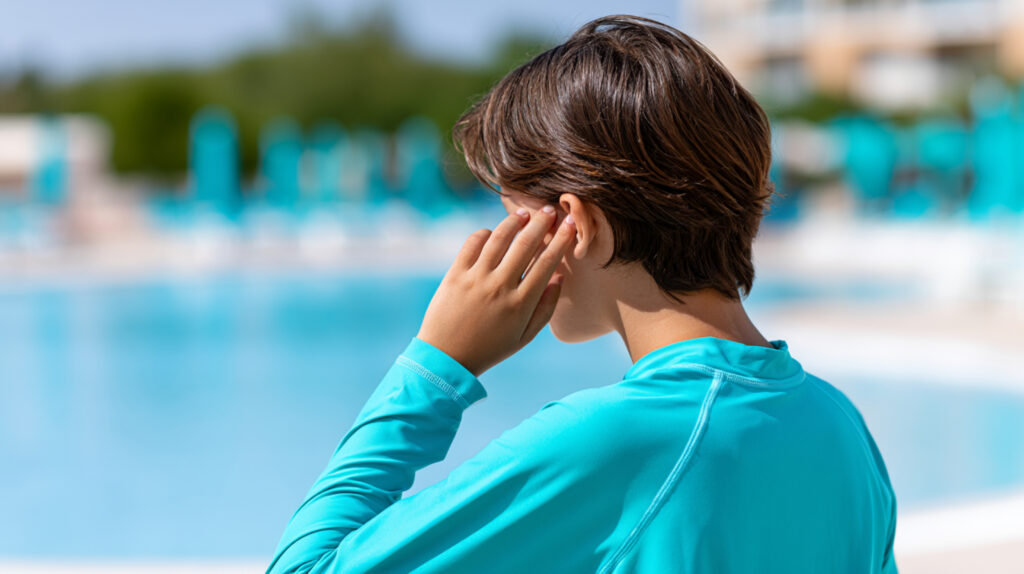
Swimmer’s ear typically begins with itching inside the ear canal, followed by increasing pain, particularly when the outer ear is touched, tugged, or when chewing. As the infection progresses, symptoms can include redness, swelling severe enough to partially block the ear canal, drainage of clear or pus-like fluid, and a sensation of fullness or muffled hearing in the affected ear. Unlike a typical middle ear infection, swimmer’s ear pain is often distinctly worsened by pressing on or moving the outer ear itself.
Because the infection develops in the external canal rather than deeper in the ear, prompt treatment with prescription antibiotic or antifungal ear drops is usually effective, though the condition typically needs medical attention rather than resolving entirely on its own.
Practical Prevention for the Rest of the Season
Drying ears thoroughly after any water exposure—tilting the head to each side and gently pulling the earlobe to help water drain, then drying the outer ear with a towel—addresses the most direct risk factor. A hair dryer set to its lowest, coolest setting, held several inches from the ear, can help evaporate residual moisture from the canal itself for those particularly prone to recurring infections.
Over-the-counter preventive ear drops, typically a mixture of alcohol and vinegar, can help restore the ear canal’s normal acidic environment and promote drying after swimming; these are widely available and commonly recommended for frequent swimmers during peak summer months. Earplugs designed specifically for swimming can reduce water entry in the first place, particularly useful for anyone with a history of recurring swimmer’s ear.
A Preventable Complaint During Water Season’s Peak
Swimmer’s ear is uncomfortable but almost entirely preventable with basic drying habits, and understanding why it spikes specifically during humid, water-heavy stretches of summer makes it easier to take the simple precautions that keep it from developing in the first place. With weeks of warm weather and pool time still ahead, a few extra minutes of ear care after each swim is a small investment against a genuinely painful and disruptive infection.