Understanding the Freeze-Thaw Cycle That Traps Water and Threatens Your Home
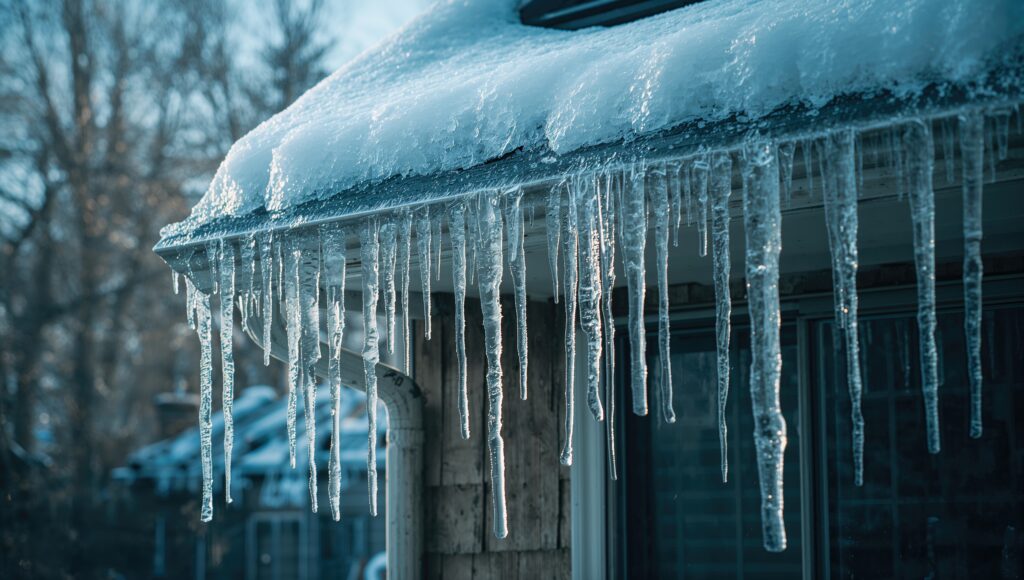
You wake up to a beautiful winter scene: fresh snow blanketing your roof,icicles hanging from the eaves—a picturesque winter postcard. But those charming icicles might signal a serious problem developing above your head. Ice dams—thick ridges of ice that form along roof edges and in gutters—can cause thousands of dollars in water damage to ceilings, walls, and insulation. Understanding how ice dams form reveals they’re not inevitable winter phenomena but rather symptoms of heat loss and poor insulation, problems you can address to protect your home.
The Basic Ice Dam Formation Process
Ice dams develop through a specific sequence of events driven by heat escaping from your home:
Heat escapes through the roof. Warm air from your living spaces rises into the attic. If insulation is inadequate or there are air leaks, this heat warms the roof deck—the structural surface underneath the shingles.
Snow on the warm roof section melts. The upper portions of your roof, warmed by escaping heat, reach temperatures above 32°F even when outdoor air is well below freezing. Snow on these warmed areas melts into water that runs down the roof toward the eaves.
Water refreezes at the cold eaves. The roof eaves (overhangs) extend beyond the heated building envelope. Without warm attic space beneath them, eaves stay at outdoor temperature. When meltwater from higher on the roof reaches the cold eaves, it refreezes into ice.
Ice builds up and creates a dam. As this freeze-melt-refreeze cycle continues over hours and days, ice accumulates at the eaves, forming a barrier—a dam—that prevents meltwater from draining off the roof.
Water backs up behind the dam. Continued melting on the warmer upper roof sections sends more water downward, but the ice dam blocks normal drainage. Water pools behind the dam, eventually working its way under shingles and into the home.
Why Heat Loss Is the Real Problem
The critical factor in ice dam formation is the temperature difference between upper roof sections and the eaves. This temperature difference comes from heat escaping your home:
Well-insulated, properly sealed attics keep heat inside the living space where it belongs. Without heat warming the roof deck, snow melts slowly and uniformly based only on outdoor temperature and sun exposure, draining gradually without forming dams.
Poorly insulated or vented attics allow heat to escape upward, warming the roof deck. This artificial warming of the upper roof while eaves remain cold creates the exact conditions for ice dams.
Air leaks into attics from recessed lights, plumbing penetrations, chimneys, and attic hatches can deliver enormous amounts of warm air to attic spaces even if insulation itself is adequate.
The distinction is important: ice dams aren’t caused by cold weather or heavy snow—they’re caused by heat loss from your home creating uneven roof temperatures.
Why Eaves Stay Cold
The roof overhang that extends beyond your home’s walls creates the cold zone where ice dams form:
No heated space beneath means no heat source warming the eave from below.
Exposure to outdoor air on both top and bottom surfaces allows eaves to cool to ambient temperature.
Lack of insulation in the overhang (there’s nothing to insulate—it’s outside the building envelope) means the eave responds only to outdoor temperature.
This cold zone is necessary for proper roof function—you want eaves at outdoor temperature. The problem occurs when the roof above the house is warmer, creating that critical temperature gradient.
Conditions That Favor Ice Dam Formation
Certain circumstances make ice dams more likely:
Heavy snow accumulation provides more material to melt and refreeze. Thick snow also insulates the roof, trapping more heat from below and maintaining higher roof temperatures.
Temperature fluctuations around freezing create repeated melt-freeze cycles. Days reaching the 30s with nights dropping to the 20s or teens provide ideal conditions—warm enough to melt but cold enough to refreeze.
Sustained cold after snowfall maintains the temperature differential. The upper roof stays warm from heat loss while eaves remain frozen, and the process continues day after day.
South-facing roof slopes receive more solar heating, which can contribute to melting even without significant heat loss—though inadequate insulation remains the primary cause.
Complex roof designs with multiple roof planes, valleys, and level changes create areas where water can be trapped and ice can accumulate.
The Damage Ice Dams Cause
Ice dams are more than just an inconvenience—they can cause serious, expensive damage:
Water infiltration through shingles damages roof sheathing, insulation, ceiling materials, and walls. Water stains on ceilings and walls indicate damage has already occurred.
Mold growth can develop in damp insulation and wall cavities, creating health hazards and requiring expensive remediation.
Structural damage to roof edges, fascia boards, and soffits from the weight of ice and repeated freeze-thaw cycles.
Gutter damage from ice weight pulling gutters away from the house or ice expansion forcing sections apart.
Shingle damage as water works under shingles and refreezes, lifting and tearing the roofing material.
Insulation damage from water saturation reduces insulation effectiveness permanently, worsening the heat loss problem that caused ice dams in the first place.
Repair costs for ice dam damage commonly run thousands to tens of thousands of dollars, far exceeding the cost of prevention through proper insulation and air sealing.
Preventing Ice Dams: Long-Term Solutions
Effective ice dam prevention addresses the root cause—heat loss:
Improve attic insulation to at least R-38 to R-49 in cold climates. Proper insulation keeps heat in living spaces rather than warming the roof deck.
Seal air leaks between living spaces and the attic. This is actually more important than insulation—you can have R-60 insulation, but if warm air leaks around it, heat still reaches the roof. Focus on recessed lights, plumbing stacks, chimneys, wall top plates, and attic hatches.
Ensure proper attic ventilation with soffit vents and ridge vents or gable vents. Ventilation removes any heat that does reach the attic, keeping the roof deck close to outdoor temperature.
Create a cold roof by keeping the entire roof at or near outdoor temperature through insulation, air sealing, and ventilation. When the whole roof is cold, snow doesn’t melt prematurely, and ice dams can’t form.
Address cathedral ceilings carefully—these are especially prone to ice dams because there’s limited space for insulation and ventilation between ceiling and roof deck.
Short-Term Interventions
When ice dams do form, several approaches can help:
Roof raking removes snow from the lower portions of the roof, eliminating the material that would melt and refreeze. Pull snow down toward the eaves using a roof rake from the ground—never get on an icy roof.
Calcium chloride ice melt in tube socks or mesh bags placed perpendicular to the ice dam can melt channels through the ice to allow drainage. Don’t use rock salt, which damages shingles.
Professional ice dam removal by steaming can clear dams without damaging roofing. Never chip ice from roofs with sharp tools—you’ll damage shingles.
Emergency measures if water is actively leaking include creating channels through the ice to allow drainage, but these are temporary fixes only.
However, all of these are reactive responses to ice dams that have already formed. They don’t prevent future dams without addressing heat loss.
What NOT to Do
Some common responses actually worsen problems:
Don’t install heating cables without addressing insulation and air lealing. Heating cables use electricity to melt ice, treating symptoms rather than causes. They’re expensive to operate and do nothing to fix the underlying heat loss problem.
Don’t chip ice with hammers, axes, or sharp tools. You’ll damage shingles and potentially hurt yourself.
Don’t use salt directly on roofs—it damages shingles and corrodes metal.
Don’t ignore the problem hoping it will resolve itself. Ice dams that caused damage one winter will cause it again until heat loss is addressed.
Professional Assessment
If your home regularly experiences ice dams, consider a professional energy audit:
Thermal imaging reveals exactly where heat is escaping through the roof, showing problem areas that need attention.
Blower door tests measure air leakage and help identify paths where warm air reaches the attic.
Professional recommendations for insulation improvements and air sealing typically pay for themselves through reduced energy bills and damage prevention.
Climate Considerations
Ice dam risk varies by climate:
Cold climates with heavy snow face the highest risk because conditions that favor ice dams occur frequently.
Moderate climates with occasional snow might seem safer but can actually experience worse ice dams because homes aren’t built with cold-climate insulation standards.
Very cold climates (average winter temperatures well below 0°F) may have less ice dam risk despite heavy snow because outdoor temperatures stay cold enough that even heat-losing roofs don’t warm above freezing.
An Expensive, Preventable Problem
Ice dams represent one of winter’s most damaging but most preventable problems. Unlike many weather-related issues beyond your control, ice dams result from heat loss you can address through insulation and air sealing.
Those charming icicles hanging from your eaves aren’t just decorative winter features—they’re warning signs that heat is escaping your home, energy dollars are being wasted, and water damage may already be occurring or soon will be. Understanding the physics of ice dam formation—warm roof melting snow, cold eaves refreezing meltwater, ice building up and backing up water—points directly to solutions that protect your home and reduce energy costs simultaneously.
Next time snow blankets your roof, take a look at your home and your neighbors’ homes. Houses with thick ice dams and massive icicles are broadcasting their poor insulation and air sealing. Houses with minimal ice and uniform snow coverage are demonstrating proper building envelope performance. The difference isn’t luck or roof design—it’s whether heat stays inside the house where it belongs or escapes upward to create the conditions for ice dams and the expensive damage they cause.