Understanding the History, Folklore, and Reality of February 2nd Weather Predictions
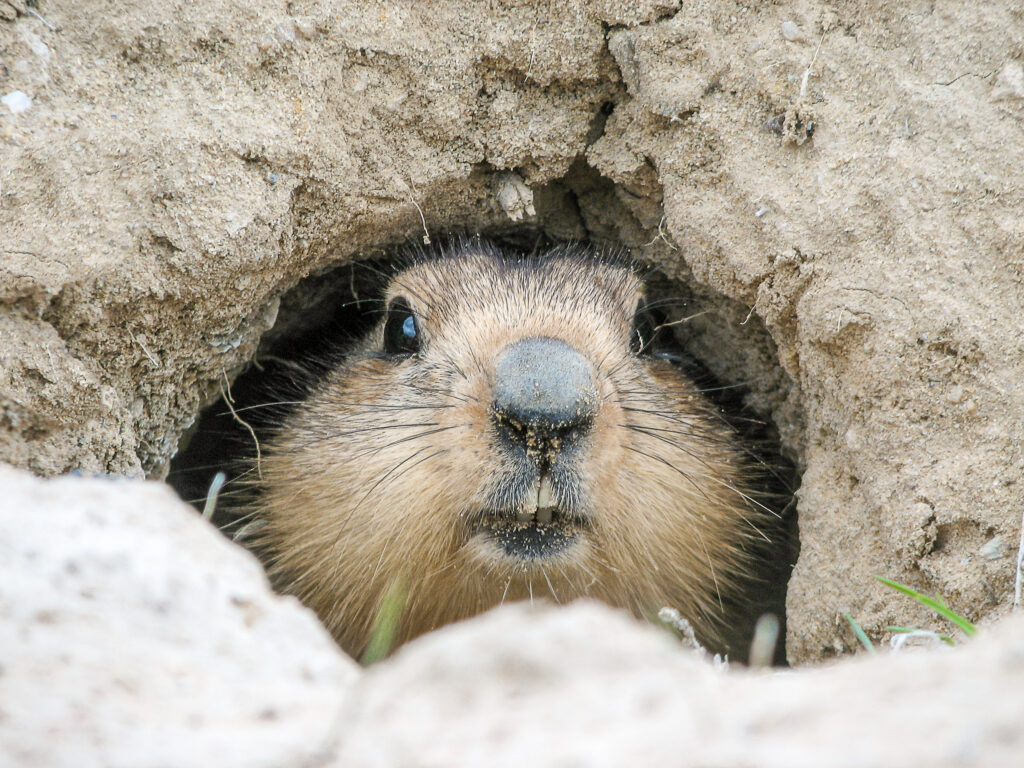
Every February 2nd, thousands gather in Punxsutawney, Pennsylvania to watch a groundhog named Phil emerge from his burrow and supposedly predict whether winter will last six more weeks or end early. Media covers the event nationally, weather services acknowledge it, and people genuinely discuss whether the groundhog “saw his shadow” as if it has meteorological significance. But does a rodent seeing its shadow actually predict spring’s arrival? The short answer is no—groundhogs can’t forecast weather, and Groundhog Day predictions have no statistical accuracy. Understanding why this tradition persists despite zero scientific basis reveals the deep human need for seasonal markers, the cultural staying power of folklore, and the calendar quirks that make early February a natural psychological turning point in winter.
The Tradition’s European Roots
Groundhog Day didn’t originate in Pennsylvania—it came from European traditions:
Candlemas Day (February 2nd) is a Christian feast celebrating the presentation of Jesus at the temple, occurring 40 days after Christmas. This date has long been associated with weather predictions.
European folklore held that Candlemas marked winter’s midpoint. A sunny Candlemas supposedly meant winter would continue; a cloudy one meant spring was approaching. The logic: sunny, clear weather in early February indicated persistent cold patterns, while clouds suggested mild, unsettled weather breaking winter’s grip.
German immigrants brought this tradition to Pennsylvania in the 1700s and 1800s, adapting it with the groundhog—a common local animal—replacing European badgers or hedgehogs.
The first official Groundhog Day celebration in Punxsutawney occurred in 1887, when a local newspaper editor and groundhog hunters declared the animal could predict weather.
The tradition stuck and commercialized, eventually becoming the media event and tourist attraction it is today.
The logic was always backwards: The tradition suggests shadow (sunny day) means prolonged winter, which contradicts the idea that clear, cold weather is stable and pleasant. But folklore doesn’t always make meteorological sense.
Why February 2nd Feels Significant
The date itself has psychological importance:
Early February marks roughly the midpoint between winter solstice (December 21) and spring equinox (March 20). This “cross-quarter day” falls halfway through winter’s darkest period.
Six weeks from February 2nd brings you to mid-March, when spring is genuinely approaching in most of the U.S., regardless of what happens on Groundhog Day.
The human need for hope during winter’s worst period makes people crave signs that spring is coming. February is often the bleakest month—cold, dark, and seemingly endless—making any promise of spring psychologically appealing.
Ancient cultures worldwide marked cross-quarter days with festivals and observations, recognizing these midpoints as important psychological and agricultural timing markers.
Candlemas/Groundhog Day fills this seasonal marker role, giving people a focal point to discuss spring’s approach even when months of winter remain.
Does the Groundhog Predict Accurately?
Multiple analyses have checked the groundhog’s success rate:
Phil’s accuracy has been tracked by various organizations, with results consistently showing accuracy rates around 39-40%—worse than chance (50%).
If you predicted the opposite of Phil’s prediction, you’d be right more often than following his forecast.
Different measures of “accuracy” exist—does “six more weeks of winter” mean below-average temperatures, continued snow, or delayed spring? The vague prediction makes verification difficult.
No correlation exists between sunny/cloudy February 2nd and subsequent winter length across historical records.
Other weather folklore (like woolly bear caterpillars, persimmon seeds, or Farmers’ Almanac predictions) similarly lack statistical support despite persistent belief.
Meteorologically, February 2nd weather tells you nothing about weather six weeks later. Long-range weather prediction is extremely difficult, and single-day conditions provide no useful information about patterns weeks away.
Why the Tradition Persists Despite Zero Accuracy
Groundhog Day continues because:
It’s fun. The tradition is quirky, harmless, and provides entertainment during winter’s depths. Media coverage treats it with appropriate tongue-in-cheek humor.
Cultural inertia preserves traditions long after their practical purpose (if any) disappears. Groundhog Day is now about the festival, community gathering, and media spectacle, not genuine weather prediction.
Confirmation bias means people remember the times predictions seemed accurate and forget the misses. Vague predictions are easy to interpret as “correct” after the fact.
It’s a seasonal marker regardless of predictive accuracy. February 2nd marks a recognized point in winter’s progression, giving people a date to reference when discussing spring’s approach.
Economic interests maintain it—Punxsutawney benefits enormously from tourism, media attention, and the groundhog “industry” that’s developed around Phil.
No harm is done. Unlike medical quackery or financial scams, Groundhog Day predictions don’t cause tangible damage, so there’s little pressure to “debunk” or eliminate the tradition.
Actual Spring Arrival Timing
When does spring really arrive?
Astronomical spring begins at the vernal equinox, around March 20-21, when day and night are approximately equal length.
Meteorological spring is defined as March 1-May 31, based on temperature patterns and climatology rather than Earth’s orbital position.
Practical spring—when temperatures reliably stay above freezing, snow melts, and plant growth begins—varies enormously by latitude and geography:
- Southern locations: Late February to early March
- Mid-Atlantic and Midwest: Late March to early April
- Northern states and mountains: April to early May
- Far north: May or later
The variation is so large that no single date or prediction can meaningfully forecast “spring’s arrival” for diverse climates.
Six weeks from February 2nd (mid-March) is actually a reasonable approximation of spring’s approach for many temperate U.S. locations—not because of the prediction but because of calendar math and climate averages.
Other Weather Folklore and Accuracy
Groundhog Day fits into broader weather folklore:
“Red sky at night, sailor’s delight; red sky at morning, sailors take warning” has some meteorological basis—red skies can indicate certain pressure patterns, though it’s not reliable.
Woolly bear caterpillars (black and brown bands supposedly predicting winter severity) have zero predictive accuracy. The bands reflect the caterpillar’s age and diet, not future weather.
Persimmon seeds cut open and examined for “spoon, knife, or fork” shapes supposedly predict precipitation, but no mechanism or statistical accuracy exists.
Farmers’ Almanac long-range forecasts claim 80% accuracy but this hasn’t been verified by independent analysis. Their predictions are vague enough that many outcomes can be considered “correct.”
Animals’ behavior (squirrels gathering nuts, birds migrating early, etc.) reflects current conditions and instinct, not foreknowledge of future weather.
The common thread: These traditions persist not because they work but because they’re culturally embedded, provide seasonal talking points, and occasionally seem accurate through chance or vague predictions.
Scientific Long-Range Forecasting Ability
What can meteorology actually predict?
1-3 day forecasts are quite accurate, with temperature predictions within a few degrees and precipitation likelihood generally reliable.
4-7 day forecasts have useful accuracy, though confidence decreases with each additional day.
Beyond 10-14 days, specific weather predictions become no more accurate than climatology—simply predicting “typical conditions for the date and location.”
Seasonal outlooks (like “warmer than average” or “wetter than average” for three-month periods) have some skill from phenomena like El Niño/La Niña but can’t predict specific conditions weeks away.
The six-week time frame of Groundhog Day predictions is firmly in the “no predictive skill” range—far too long for weather forecasting, not long enough for statistical seasonal patterns to be useful.
This explains why Phil has 40% accuracy—it’s essentially random, impossible to predict at that timeframe, so the groundhog does as well as any other method (which is to say, not at all).
The Psychology of Seasonal Hope
Groundhog Day’s persistence reveals human psychology:
Winter is challenging mentally and physically, especially in cold climates. By early February, people are desperate for signs of spring.
False hope is better than no hope. Even a groundhog prediction people consciously know is meaningless provides a psychological boost during winter’s depths.
Marking time matters to humans. We create milestones, festivals, and traditions that structure the year and give meaning to seasonal progression.
Communal rituals strengthen social bonds. Gathering for Groundhog Day (or watching on TV) creates shared experience during isolated winter months.
Humor and absurdity can be therapeutic. Treating a rodent as a weather oracle is deliberately ridiculous, and leaning into the absurdity is part of the fun.
Regional Groundhogs and Variations
Punxsutawney Phil isn’t alone:
Staten Island Chuck (New York) and Wiarton Willie (Ontario) are among numerous other prognosticating groundhogs across North America.
Different groundhogs often disagree on any given year, highlighting the arbitrary nature of the predictions.
Regional traditions sometimes use other animals—badgers, hedgehogs—for similar predictions.
The multiplicity of groundhogs making different predictions exposes the lack of any real forecasting method—if it worked, all groundhogs would agree because weather patterns are continental in scale.
If You Want Real Spring Predictions
For actual information about spring’s approach:
Watch temperature trends. Consistent warming, even if slow, indicates spring’s progression more reliably than any folklore.
Follow growing degree days if you’re a gardener—cumulative temperature above base thresholds that predict plant development.
Check climate normals for your location showing typical timing of last frost, snowmelt, and temperature milestones.
Trust seasonal forecasts from NOAA and other meteorological services, which have some skill at predicting whether upcoming months will be warmer/colder or wetter/drier than average.
Observe nature directly: Tree buds swelling, early migratory birds returning, and daylight increasing all indicate spring’s actual approach better than groundhog shadows.
A Harmless Tradition
Groundhog Day persists not despite its inaccuracy but because accuracy was never the point. It’s a mid-winter festival, a reason to gather and celebrate during the bleakest season, a culturally embedded tradition that gives people something to talk about and look forward to when winter feels endless.
The “prediction” provides a framework for the celebration, but nobody genuinely plans activities around whether Phil sees his shadow. It’s folklore acknowledged as folklore, myth recognized as myth, yet maintained because the tradition serves psychological and social purposes that have nothing to do with meteorology.
When you hear that the groundhog predicted six more weeks of winter or early spring, understand you’re participating in a centuries-old tradition of seasonal marking and winter morale-boosting disguised as weather prediction. Whether Phil sees his shadow or not tells you nothing about when spring will arrive—but it does tell you we’re approaching the midpoint of winter, and that regardless of predictions, spring will come in its own time according to Earth’s orbit and atmospheric patterns, not rodent shadows.
The real message of Groundhog Day isn’t in the prediction—it’s in the reminder that winter has a midpoint, that spring is mathematically approaching even if six weeks away, and that humans have always needed seasonal markers and reasons to hope during dark, cold periods. Phil’s shadow isn’t a forecast—it’s a communal acknowledgment that we’re all waiting for the same thing, and that sharing the wait makes it more bearable, even when we dress it up as divination and pretend a groundhog knows something meteorologists don’t.