The Hidden Activity Before Leaves Appear
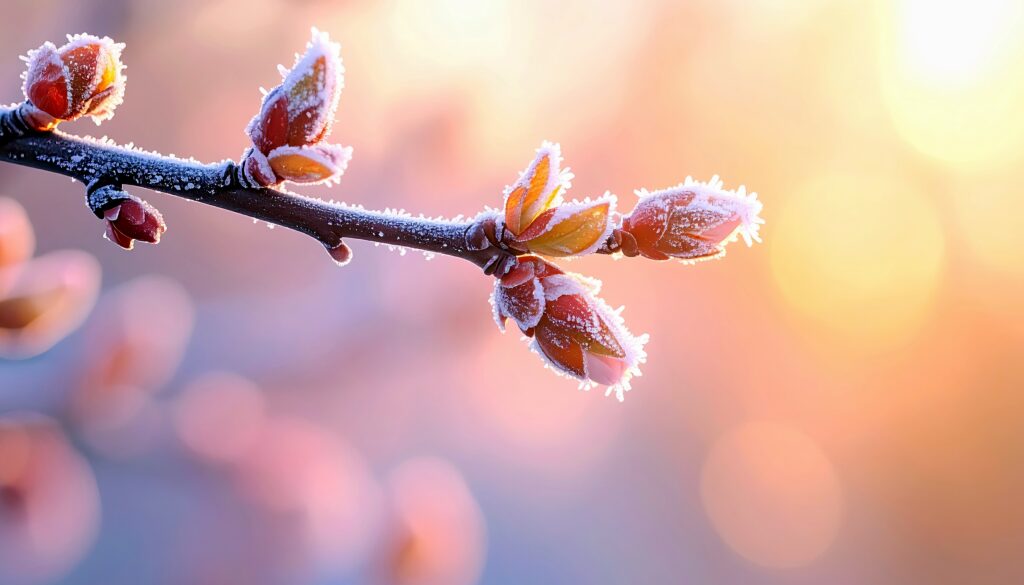
Walk past trees in late February or early March and you might notice something subtle: the branch tips look slightly different. The buds that sat tight and compact all winter have begun to swell and change color. They’re not opening yet—not producing leaves or flowers—but they’re visibly preparing for something. This bud swelling is one of the first signs of spring, often appearing weeks before any actual green growth or blooms emerge.
Understanding why buds swell when they do reveals the sophisticated systems plants use to track seasons and time their growth. Trees don’t have eyes or brains, yet they somehow “know” when winter is ending and spring is approaching. The mechanisms involve temperature tracking, light detection, and internal biochemical changes that rival any weather forecasting system humans have developed.
Trees Track Accumulated Cold
Most temperate-climate trees require a period of dormancy during winter—they can’t just keep growing year-round. To ensure they don’t start growing during brief warm spells in November or December (which would be disastrous when cold returns), trees have evolved a requirement for winter chilling.
This process, called vernalization or chilling requirement, means that buds must accumulate a certain number of hours at cold temperatures (typically between 32°F and 45°F) before they can respond to warm conditions and begin growing. Think of it like a counter that increments during cold weather—only when the counter reaches a specific threshold can the tree respond to warmth by swelling its buds.
Different tree species have different chilling requirements. Some need 1,000 hours of cold temperatures; others need only 300-400 hours. This variation explains why different trees break dormancy at different times in spring, and why some species can grow in mild climates while others require harsh winters.
By late winter, most trees in temperate regions have satisfied their chilling requirement. The counter has reached its threshold, and the buds are now permitted to respond to other signals—specifically, warmth and increasing day length.
Warming Temperatures Trigger Activity
Once the chilling requirement is met, warming temperatures become the primary trigger for bud swelling. As late winter days grow milder and the sun climbs higher, branch temperatures increase. Trees detect this warming through temperature-sensitive proteins in their cells.
When temperatures consistently reach into the 40s or 50s during the day, even if nights remain below freezing, the accumulated warmth activates growth hormones within the buds. These hormones—particularly gibberellins and auxins—signal cells to begin dividing and expanding.
The bud scales (the protective outer layers) start to separate slightly. The immature leaves or flowers packed inside begin to grow and push outward. Cells absorb water and swell. The entire bud becomes larger and softer as growth preparations intensify.
This swelling happens before actual leaf emergence because the tree is mobilizing resources—moving stored sugars from roots and trunk to the buds, producing the proteins and cellular machinery needed for rapid growth, and preparing for the massive energy investment that full leaf-out requires.
Day Length Provides Confirmation
Temperature alone isn’t always a reliable spring indicator—warm spells can occur in midwinter and then give way to severe cold. Many plants also track day length (photoperiod) as a secondary confirmation that spring has truly arrived.
Specialized proteins in plant cells detect light duration and quality. As days lengthen in late winter, approaching 12 hours of light at the spring equinox, these proteins signal that the season is genuinely changing, not just experiencing a temporary warm spell.
The combination of satisfied chilling requirement, warming temperatures, and lengthening days provides multiple layers of confirmation that spring is arriving. This redundant signaling system reduces the risk of premature bud break during false spring conditions.
Sugar Mobilization Fuels Growth
Bud swelling requires energy. Trees store carbohydrates in their roots, trunk, and branches during the previous growing season. As buds prepare to swell, these stored sugars must be mobilized and transported to the growing tissues.
Rising sap flow in late winter is part of this process. Warming temperatures and root activity create pressure that pushes water and dissolved sugars upward through the tree. This is why maple syrup producers tap trees in late winter—the sap flow is most active during the transition period when temperatures alternate between freezing nights and warm days.
The transported sugars fuel cell division and expansion in the swelling buds. They also serve as building blocks for producing new cell walls, proteins, and other structural materials needed for leaves or flowers.
Without adequate stored reserves, trees cannot successfully break dormancy and produce new growth. This is why trees stressed by drought, disease, or defoliation in the previous year often show delayed or weak bud break the following spring—they lack sufficient stored energy.
Different Buds Have Different Priorities
Trees typically have two types of buds: leaf buds (vegetative) and flower buds (reproductive). These often swell and open at different times because they serve different purposes and have different risk tolerances.
Flower buds often swell and open first because reproducing is the tree’s highest priority. Getting flowers pollinated early maximizes the growing season available for seeds to mature. Many trees bloom before leaves emerge, allowing pollinators to find flowers more easily and preventing leaves from shading flowers.
Leaf buds typically swell slightly later and open more gradually. Leaves are expensive to produce and vulnerable to late freezes, so trees are somewhat conservative about leaf emergence. Losing flowers to a late frost is costly but survivable; losing all newly emerged leaves can be catastrophic.
This is why you might see flowering trees like magnolias or cherry trees with swollen, colored flower buds in late winter while the leaf buds remain tight and green. The tree is prioritizing reproduction over photosynthesis in its resource allocation.
Species Variation Creates the Progression of Spring
Walk through the same woods or neighborhood in late winter and early spring and you’ll notice different trees breaking dormancy at different times. This isn’t random—each species has evolved timing adapted to its ecology and risk tolerance.
Early-blooming trees like willows, aspens, and silver maples show bud swelling first. These species tolerate risk, trading earlier start times for occasional losses to late freezes. They often inhabit riparian zones or disturbed areas where rapid growth provides competitive advantages.
Mid-season trees like oaks, hickories, and most fruit trees swell buds moderately early, balancing risk against the need for a full growing season.
Late-breaking trees like black walnut and ash wait until frost risk is minimal before swelling buds. These conservative species sacrifice early-season growth opportunities for safety.
This species variation creates the characteristic progression of spring—a gradual greening rather than everything happening at once. It also provides insurance at the ecosystem level: if a late frost kills early species’ leaves, late species remain unaffected and can still photosynthesize.
Climate Change Is Disrupting Timing
Rising temperatures are causing earlier bud swelling in many regions. Springs arrive earlier, chilling requirements are satisfied sooner, and warming temperatures occur weeks ahead of historical norms.
This creates several problems. Earlier bud break increases exposure to late-freeze damage if spring warm-ups are followed by cold snaps. The synchronization between trees breaking dormancy and their pollinators or pest insects emerging is disrupted—if trees bloom before pollinators are active, or if leaves emerge before caterpillars hatch, both trees and dependent wildlife suffer.
Different species respond differently to warming, causing mismatches. If one tree species breaks dormancy earlier but its pollinator partner doesn’t adjust similarly, reproduction fails.
Scientists are documenting these phenological shifts (changes in the timing of life cycle events) as one of the clearest biological signals of climate change. Bud swelling dates have moved earlier by 1-3 weeks in many temperate regions over the past 50 years.
Observing the Transition
Watching for bud swelling provides a way to track spring’s arrival more precisely than calendar dates. Once you know what to look for, you can detect the subtle changes:
Color shifts from dull brown or gray to brighter brown, red, or green as bud scales separate and inner tissues become visible.
Size increase as buds swell to 150-200% of their winter size.
Softening of bud texture as the tight, hard winter buds become fuller and more pliable.
Changes in bud spacing as swelling buds spread along branches.
These changes typically begin on the warmest, most sun-exposed branches first—the south side of trees, branch tips, or areas protected from wind. Observing these microclimates reveals how sensitively trees respond to local conditions.
An Annual Renewal
Bud swelling represents one of nature’s most optimistic processes—trees investing stored resources in new growth based on environmental signals that spring is coming. It’s a calculated gamble every year: break dormancy too early and risk freeze damage; wait too long and lose competitive advantage to faster-growing species.
The fact that temperate forests exist proves trees have mastered this gamble over millions of years of evolution. The swelling buds you see in late winter are the product of sophisticated environmental sensing that tracks cold exposure, monitors temperature trends, measures day length, and integrates all these signals to time growth optimally.
A Visible Sign of Invisible Processes
The next time you notice swollen buds on bare branches in late winter, remember that you’re seeing the result of months of careful environmental monitoring by the tree. Those buds satisfied their chilling requirement through January and February, began responding to warming temperatures and lengthening days, mobilized stored sugars from roots, activated growth hormones, and started the cell division that will eventually produce leaves or flowers.
All of this happens before you see a single green leaf or petal. The swollen bud is the visible sign of extensive invisible preparation—a tree getting ready to invest everything in this year’s growth, based on its best interpretation of environmental signals that spring has truly arrived and it’s safe to begin again the annual cycle of leaf emergence, photosynthesis, and growth that defines the temperate forest’s rhythm.