The Paradox of Transparent Ice
Hold a clear ice cube up to the light and you can see right through it. Ice is transparent, just like the liquid water it came from. Yet when that same frozen water falls from the sky as snow, it appears brilliant white. A blanket of fresh snow covering the ground is one of the brightest natural surfaces on Earth, reflecting up to 90% of the sunlight that hits it. How can transparent ice crystals combine to create something so intensely white?
The answer reveals fundamental principles about how light interacts with materials and why appearance depends not just on what something is made of, but on its structure at multiple scales. Snow’s whiteness comes not from the material itself but from the countless boundaries and surfaces created when millions of tiny ice crystals pack together.
Individual Snowflakes Are Transparent
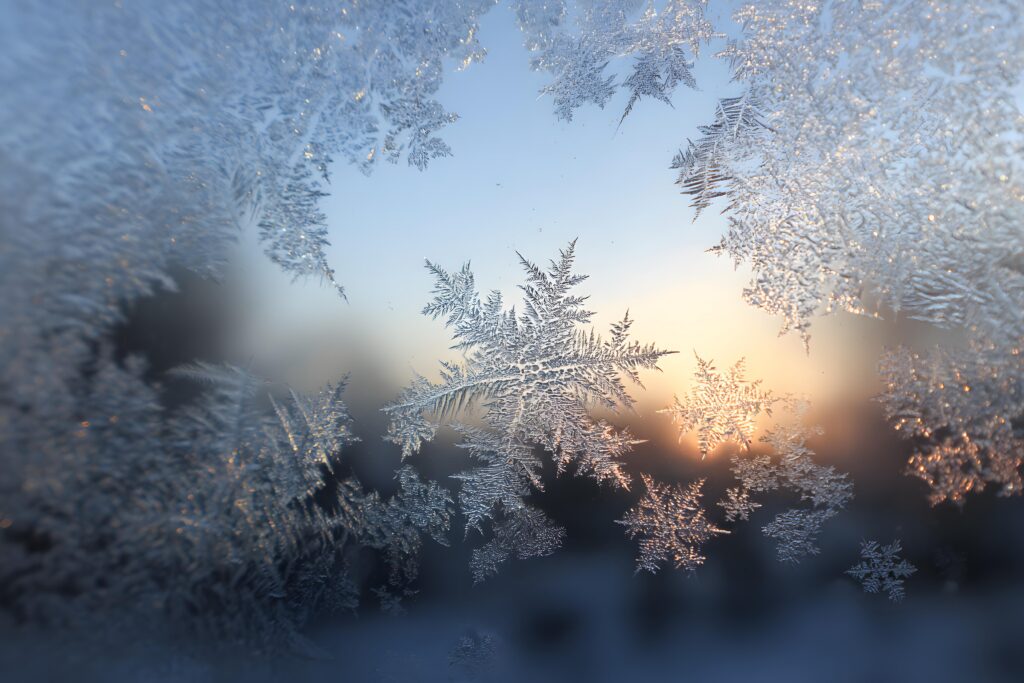
A single snowflake, examined closely, is indeed transparent or translucent ice. Light can pass through an individual ice crystal just as it passes through a piece of clear ice or a glass window. If you could somehow isolate a single snowflake and look at it without the background of millions of other snowflakes, you’d see that it’s essentially clear with perhaps a slight blue tint.
The transparency of ice comes from its molecular structure. The water molecules in ice are arranged in a regular crystalline lattice with no impurities or irregularities to scatter light. When light waves enter the ice crystal, they pass through relatively unimpeded, with only slight bending (refraction) at the entry and exit points.
So if individual snowflakes are transparent, where does the whiteness come from? The answer lies in what happens when you have billions of these transparent crystals together, each one creating surfaces and boundaries that light must navigate.
Light Bounces at Every Interface
When light travels from one medium to another—from air to ice, or from ice back to air—some of it reflects at the boundary between the two materials. This happens because light travels at different speeds in different materials, and when it encounters a boundary, some of the light bounces back rather than passing through.
For a single ice-air boundary, like the surface of an ice cube, most of the light passes through and only a small percentage reflects. But snow isn’t a single ice crystal with one or two surfaces. It’s an incredibly complex structure of countless tiny crystals with intricate shapes, all jumbled together with air spaces between them.
Every snowflake has multiple surfaces and facets. When snowflakes pile on top of each other, they create a three-dimensional maze of ice-air boundaries. A ray of light entering this structure might encounter hundreds or thousands of ice-air interfaces as it bounces and refracts through the tangle of crystals.
At each interface, a small portion of the light reflects. After passing through dozens or hundreds of these interfaces, virtually all of the light has been reflected back out of the snow rather than passing through. This multiple scattering of light at countless boundaries is what makes snow appear white.
All Colors Reflect Equally
White light from the sun contains all the colors of the visible spectrum mixed together. When an object appears colored—like a red apple or blue sky—it’s because that object is absorbing some wavelengths of light while reflecting others. The red apple absorbs blue and green light but reflects red light back to your eyes.
Snow appears white rather than colored because ice doesn’t preferentially absorb any particular color of visible light. All wavelengths—red, orange, yellow, green, blue, violet—are reflected and scattered equally by the ice-air boundaries in snow. When all colors of light are scattered back to your eyes in roughly equal proportions, you perceive white.
This equal reflection of all wavelengths is what makes snow such a brilliant white and gives it such high reflectivity (albedo). Nearly all the sunlight hitting fresh snow bounces back, which is why snow-covered landscapes are so bright and why you need sunglasses on sunny winter days—the snow is reflecting massive amounts of light into your eyes.
Structure Determines Appearance
The same material—frozen water—can appear completely different depending on its structure. Clear ice, crushed ice, and snow are all H₂O in solid form, but they look dramatically different:
A clear ice cube has smooth surfaces and a continuous structure with minimal internal boundaries. Light passes through with minimal scattering, so you can see through it.
Crushed ice has many more surfaces and boundaries where ice meets air. Light scatters more, so crushed ice appears white or translucent rather than transparent.
Snow has the most complex structure with the most ice-air boundaries. Light scatters so extensively that snow appears bright white and completely opaque—you can’t see through even a thin layer of snow.
The material hasn’t changed—only the arrangement. This demonstrates that appearance depends as much on structure as on composition.
Other Examples of the Same Principle
Snow isn’t the only transparent material that appears white when broken into small pieces or made into a complex structure:
Glass is transparent, but shattered glass or ground glass powder appears white because light scatters at the countless surfaces of the small fragments.
Salt and sugar crystals are individually transparent, but a pile of salt or sugar appears white because light bounces around among the many crystal surfaces.
Paper is made from transparent cellulose fibers, but the complex tangle of fibers with air spaces between them scatters light, making paper appear white (unless dyes are added).
Clouds consist of tiny water droplets, each of which is transparent, but the collection appears white because light scatters among countless droplet surfaces.
In every case, the whiteness comes from structure, not from the material itself being white or opaque.
Why Packed Snow and Ice Look Different
Fresh, fluffy snow appears the whitest and brightest because it has the most complex structure with the most air spaces and surfaces. The snowflakes have intricate branching patterns and rest loosely on each other, creating maximum scattering.
As snow ages and compacts, it becomes less white and more translucent. The snowflakes break down, air spaces decrease, and ice-to-ice contact increases. With fewer ice-air boundaries, light scatters less, and the snow may begin to look slightly gray or translucent rather than brilliant white.
Compress snow even further into solid ice, and you eventually get clear or slightly blue ice with relatively few internal boundaries. This is what happens in glaciers: the upper layers of newly fallen snow appear white, but deep compressed ice that’s been under pressure for years can be quite translucent or even transparent, often with a beautiful blue color.
The transformation from white snow to blue glacial ice is entirely about structure. The same water molecules are present throughout, but arranged in increasingly continuous structures with fewer scattering surfaces.
The Blue Tint in Deep Snow and Ice
While fresh snow appears white, very deep accumulations of snow or old glacial ice sometimes appear blue. This happens through a different mechanism related to how ice molecules absorb light.
Ice absorbs red light very slightly more than blue light. In a thin layer, this absorption is imperceptible and all colors are reflected equally, creating whiteness. But when light travels through many meters of snow or ice—scattering back and forth through a deep snowpack or a thick glacier—the red end of the spectrum is gradually absorbed while blue light continues to scatter.
The result is that deep crevasses in glaciers or deep holes in snowpack can appear blue. The light that eventually emerges has lost some of its red component during its long path through the ice, making the remaining light appear blue.
Snow’s High Reflectivity Affects Climate
Snow’s brilliant whiteness has important climate implications. Because snow reflects 80-90% of incoming sunlight (compared to soil or forest that might only reflect 10-30%), snow-covered regions stay colder than they would otherwise. The sun’s energy bounces back into space rather than being absorbed and converted to heat.
This creates a feedback effect: snow keeps things cold, which helps more snow persist, which keeps things cold, and so on. Conversely, when snow melts and exposes darker ground, that ground absorbs more sunlight, warms up, and accelerates further melting.
Climate scientists call this the snow-albedo feedback, and it’s one reason why Arctic regions are warming faster than the global average. As snow and ice cover decreases, less sunlight is reflected and more is absorbed, accelerating warming in a self-reinforcing cycle.
Artificial Snow and Other Materials
The principle that structure creates whiteness is used in manufacturing. Many white products don’t contain white pigments but instead rely on tiny air bubbles or structural features to scatter light:
Styrofoam appears white not because the polystyrene material is white, but because it contains countless tiny air bubbles that scatter light. Solid polystyrene is transparent.
Some white paints use hollow microspheres or other structures to scatter light rather than relying entirely on white pigments like titanium dioxide.
White paper often gets additional whiteness from mineral particles that create more light-scattering surfaces beyond the cellulose fibers themselves.
The Physics Is Universal
The physics that makes snow white is the same physics that explains why clouds are white, why foam is white, and why salt appears white. Whenever you have a transparent material structured into many small pieces with air gaps between them, you get multiple light scattering that produces whiteness.
This is called Mie scattering when the particles are similar in size to light wavelengths, and it explains a surprising number of white appearances in nature. The key requirement is that the particles or structures must not preferentially absorb any color—if they did, the reflected light would be tinted rather than white.
Structure Matters More Than You Think
The whiteness of snow is a powerful reminder that appearance depends on more than just what something is made of. Structure matters enormously. Arrange transparent ice crystals one way and you get clear ice you can see through. Arrange them another way and you get brilliant white snow that reflects nearly all light.
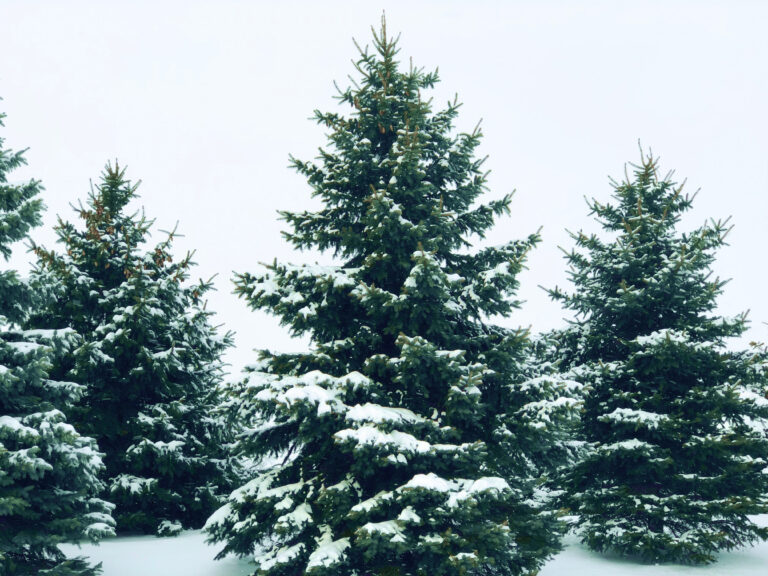
The next time you look at fresh snow sparkling in the sunlight, remember that you’re seeing the result of light bouncing through a three-dimensional maze of transparent ice crystals. Each crystal is clear, but together they create one of nature’s most perfectly white surfaces. The snow isn’t white because it contains white material—it’s white because millions of transparent surfaces are working together to scatter every color of light equally back to your eyes.
It’s a reminder that in nature, as in much of life, the way things are arranged can be just as important as what they’re made of. Snow demonstrates this principle beautifully every winter, transforming transparent ice into a brilliant white blanket through nothing more than structure and the physics of light.