The Hollow Sculptures of Late Winter
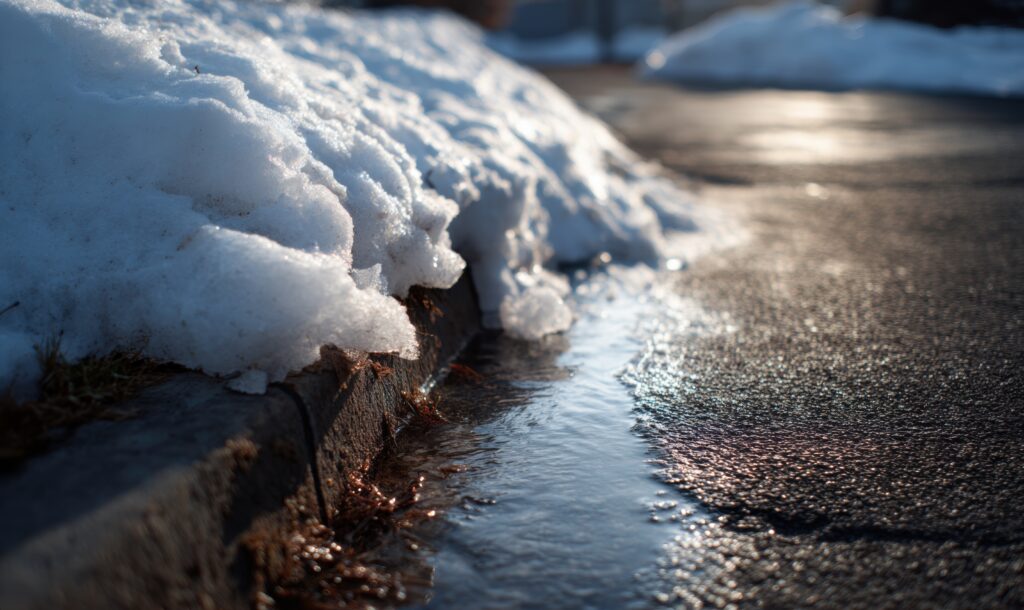
Walk past a snowbank in mid-March and notice something peculiar: while the exterior still appears solid and white, the interior has begun to hollow out. Caves and voids form inside the snow, sometimes large enough to see through. Eventually the snowbank looks solid but collapses at a touch, revealing that most of the interior has already melted away while only a shell remains.
This inside-out melting pattern seems counterintuitive—you’d expect sun and warm air to melt snow from the outside first, working progressively inward. But snowbanks actually melt primarily from the inside, and understanding why reveals fascinating physics about heat transfer, snow structure, and how solar energy penetrates materials.
Direct Sunlight Penetrates Snow
Snow appears white because it reflects most visible light—roughly 80-90% of incoming sunlight bounces off the surface rather than being absorbed. This high reflectivity (albedo) is why snow helps keep things cold; most solar energy is rejected rather than absorbed.
However, snow isn’t perfectly reflective. The 10-20% of sunlight that doesn’t reflect penetrates into the snow. Light doesn’t stop at the surface—it scatters through the ice crystals, bouncing from crystal to crystal, gradually losing energy as it travels deeper.
This penetrating light carries energy that heats the snow internally. While the surface reflects most sunlight, the layers just beneath the surface absorb some of the energy that made it through, warming the interior before warming the exterior.
Near-infrared wavelengths penetrate particularly well, traveling several inches or even feet into snow before being absorbed. This deep penetration means solar energy deposits heat throughout the snowbank’s interior, not just at the surface.
Dark Ground Beneath Absorbs Maximum Heat
The most important factor in inside-out melting is what lies beneath the snow: dark ground (soil, pavement, or dead vegetation) that absorbs solar radiation extremely efficiently.
While snow reflects 80-90% of sunlight, dark soil absorbs 80-90%. The ground beneath a snowbank becomes the most effective heat collector in the system, warming significantly as spring sunlight intensifies.
This heated ground conducts warmth upward into the overlying snow from below. The snow sitting directly on warm ground melts first, creating a gap between the ground and the overlying snowbank.
As this gap grows, it creates an air space that further enhances melting. Warm ground heats the air in the gap, and this warm air rises, melting the bottom surface of the overlying snow more effectively than direct conduction alone would.
Air Spaces Accelerate Internal Melting
Once melting begins creating voids inside the snowbank, these air spaces actually accelerate the process:
Warm air circulation develops inside the snowbank. Air heated by the ground rises through channels and cavities, melting snow from the inside as it moves.
Solar radiation enters voids and gets absorbed by dark soil visible at the bottom, heating the air in the cavity much more than it would heat solid snow.
Greenhouse effect occurs in enclosed spaces within the snowbank, where solar energy enters through snow but heat has difficulty escaping, creating warm pockets.
These cavities grow progressively larger as melting continues, eventually creating tunnel systems and hollow chambers inside snowbanks that look solid from outside.
The Snow Structure Changes
As snow ages through winter, its structure evolves. Fresh snow consists of delicate, intricate crystals with large air spaces. Over time, temperature cycling, pressure from additional snow, and vapor movement transform this into dense, granular snow with fewer and smaller air spaces.
Old spring snow has metamorphosed into rounded ice grains bonded together. This structure actually allows better light penetration than fresh snow—the rounded grains scatter light less than complex snowflake shapes, allowing more energy to penetrate deeper.
Additionally, aged snow often contains dirt, dust, and organic material—dark particles that absorb sunlight very efficiently. These contaminants collect preferentially in the interior where meltwater flows and refreezes, creating dark layers inside the snowbank that absorb heat far more effectively than the clean white surface.
Meltwater Movement Creates Channels
As snow begins melting, liquid water percolates downward through the snowbank. This flowing water transports heat very effectively—much more so than conduction through solid snow.
Meltwater follows paths of least resistance, creating channels and preferential flow paths. These channels enlarge through melting as warm water flows through them, creating internal drainage networks that hollow out the snowbank.
The water flow also transports fine particles and contaminants, concentrating them in certain areas and creating darker, more heat-absorbing zones that enhance local melting.
When meltwater reaches the ground, it spreads along the snow-ground interface (the warmest boundary), accelerating the creation of the air gap that characterizes inside-out melting.
Surface Refreezing Delays Exterior Melt
While the interior melts during daytime, the exterior surface often refreezes at night. Spring’s characteristic diurnal temperature swings—warm days, cold nights—create a freeze-thaw cycle that affects surface and interior differently.
The surface, exposed to cold night air, refreezes quickly. This creates a hard crust or shell that can be several inches thick. This crusty exterior then insulates the interior somewhat from cold night air.
The interior, protected by this insulating layer and retaining heat from the warm ground beneath, may remain near 32°F or even slightly above all night. It doesn’t refreeze as completely as the surface.
Over repeated cycles, the surface becomes a hard, icy shell while the interior remains granular and wet, or develops cavities. The snowbank appears solid but is hollow inside.
Solar Angle Makes This a Spring Phenomenon
Inside-out melting is particularly pronounced in spring because of the sun’s high angle. Winter’s low-angle sunlight doesn’t heat the ground as effectively and doesn’t penetrate snow as directly.
By March and April, the sun climbs high enough that sunlight strikes the ground and snow at steep angles. This concentrated energy heats the ground intensely and allows better penetration of the snowbank by the sunlight that does enter it.
Longer spring days also provide extended heating periods, giving ground more time to warm and maintaining elevated ground temperatures for longer each day.
Why This Doesn’t Happen to Fresh Snow
Fresh snow from winter storms melts conventionally—from the outside in—because it lacks the structure and conditions for inside-out melting:
It hasn’t aged into the rounded-grain structure that allows light penetration.
No air gaps exist yet to create circulation and absorption surfaces.
Ground beneath may still be frozen and can’t provide heat.
The snow is clean without dark contaminants that absorb heat internally.
It hasn’t consolidated through repeated melt-freeze cycles.
Only old, aged snowbanks that have endured weeks or months of temperature cycling, compaction, and contamination develop the structure necessary for dramatic inside-out melting.
The Sudden Collapse
The most dramatic manifestation of inside-out melting is sudden snowbank collapse. A snowbank that looks substantial simply falls apart when touched, revealing that it was 80% hollow with only a thin shell remaining.
This happens because the supporting interior has melted away while the surface crust maintained its appearance. The crust may be strong enough to support its own weight but not any additional load—a person stepping on it, wind pressure, or further melting of the remaining supports causes catastrophic collapse.
Children quickly learn that late-winter snowbanks are treacherous for this reason—what looks like solid snow to tunnel through or build on may collapse unexpectedly.
Differences From Iceberg Melting
Icebergs also melt in complex ways, but their melting differs from snowbank melting. Icebergs melt primarily from below due to water temperature and wave action, and from sides due to air temperature. They can flip over as their center of gravity shifts due to uneven melting.
Snowbanks on land experience much more solar heating from above and ground heating from below, creating the inside-out pattern specific to snow on terrestrial surfaces in spring conditions.
Implications for Snow Removal and Safety
Understanding inside-out melting has practical implications:
Snow removal timing: Snowbanks disappear faster from inside, so waiting a few warm days before removing pushed snow may reduce the actual volume requiring removal.
Avalanche danger: Similar internal melting processes affect mountain snowpack, creating weak layers that can fail catastrophically. Understanding this helps avalanche forecasting.
Roof snow: Snow on roofs melts similarly, creating potentially dangerous conditions where exterior snow looks substantial but has lost internal structure and could slide off suddenly.
Walking safety: Pedestrians should avoid walking on apparent snowbanks in late winter—they may be hollow and collapse.
A Visible Lesson in Heat Transfer
The next time you see a snowbank with caves or voids visible through openings, or watch one collapse into a hollow shell, remember you’re seeing a demonstration of multiple heat transfer mechanisms:
Radiative heating from the sun penetrating through translucent snow, absorption by dark ground beneath, conductive heat transfer upward from warm soil, convective circulation of air in internal cavities, latent heat transport by flowing meltwater, and the insulating effect of surface refreezing creating a protective shell.
All of these work together to melt snowbanks from the inside out, creating the counterintuitive late-winter phenomenon where solid-looking snow is actually hollow, and the interior has disappeared while the exterior maintains its appearance for a surprisingly long time before final collapse.