A Dramatic Response That’s More Common Than People Realize
As temperatures drop through fall, some people notice their fingers—and sometimes toes, ears, or nose—undergo a strikingly visible response to cold: turning white, then often blue, before eventually flushing red as they warm back up, frequently accompanied by numbness, tingling, or pain during the episode. This response, known as Raynaud’s phenomenon, affects a meaningful share of the population and represents a genuine, well-understood physiological reaction rather than simple cold sensitivity.
What’s Actually Happening in the Blood Vessels
Raynaud’s phenomenon involves an exaggerated version of a normal physiological response. When exposed to cold, blood vessels throughout the body naturally constrict somewhat, a process called vasoconstriction, which helps the body conserve core heat by reducing blood flow to the extremities in favor of protecting vital organs. In people with Raynaud’s, this normal constriction response becomes significantly more extreme in the small blood vessels of the fingers and toes specifically, sometimes constricting so completely that blood flow to the affected area is dramatically, if temporarily, reduced.
This near-complete restriction of blood flow is what produces the characteristic color changes: initial whiteness or pallor as blood flow drops dramatically, sometimes followed by a bluish tint as the reduced blood that remains in the tissue releases its oxygen, and finally a flush of red as blood vessels reopen and blood flow rushes back into the area during the recovery phase.
Why Cold Air Specifically Triggers Episodes
Cold exposure is the most common trigger for Raynaud’s episodes, and even relatively modest temperature drops—not necessarily extreme cold—can trigger a response in people with more sensitive Raynaud’s presentations. This is part of why fall’s transition into consistently cooler weather often brings a noticeable uptick in episode frequency for people who experience this condition, even before winter’s more extreme cold arrives.
Beyond ambient air temperature, contact with cold objects—reaching into a refrigerator or freezer, handling cold water, or even air conditioning in some sensitive individuals—can trigger episodes independent of overall body temperature, since the trigger relates specifically to localized cold exposure at the extremities rather than overall core body temperature dropping.
Primary Versus Secondary Raynaud’s
Raynaud’s phenomenon occurs in two distinct forms with meaningfully different implications. Primary Raynaud’s occurs on its own, without any underlying associated medical condition, and while it can be uncomfortable and disruptive, it’s generally considered a benign condition that doesn’t typically lead to more serious complications. Secondary Raynaud’s occurs in association with an underlying condition, most commonly autoimmune diseases like scleroderma or lupus, and tends to produce more severe episodes with a higher risk of complications like skin ulceration in more severe cases.
This distinction matters clinically: while many people with mild, primary Raynaud’s manage the condition successfully with cold-avoidance strategies alone, secondary Raynaud’s, particularly when episodes are severe or accompanied by other symptoms, generally warrants medical evaluation to identify and address any underlying condition.
Practical Strategies for Managing Cold-Triggered Episodes
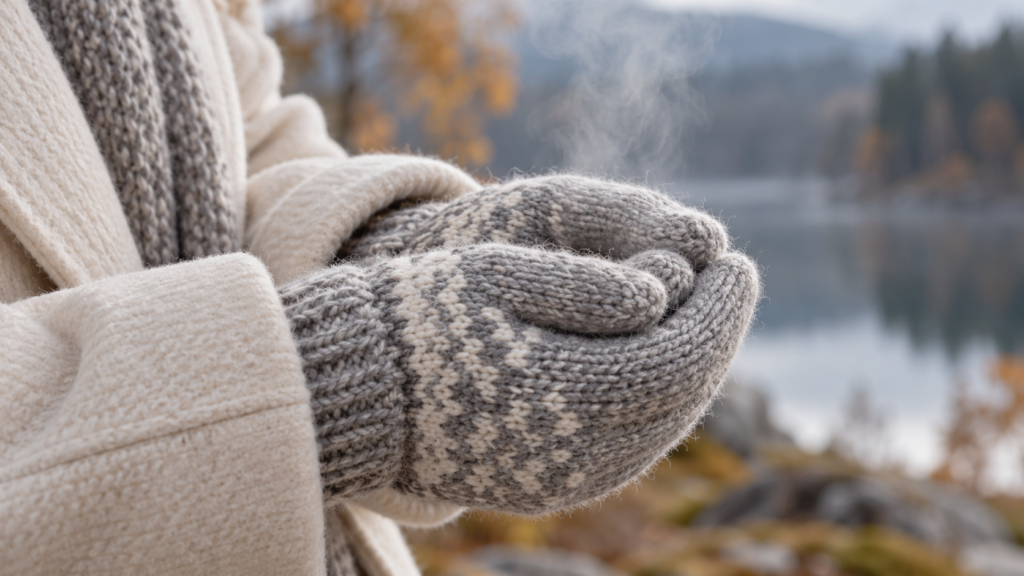
Layering clothing effectively, with particular attention to keeping hands, feet, and other commonly affected extremities warm through insulated gloves and socks, addresses the most direct and controllable trigger. Warming gloves designed specifically for Raynaud’s, some with battery-powered heating elements, provide additional protection during extended cold exposure beyond what standard gloves offer.
Avoiding sudden transitions from warm to cold environments when possible, and taking care when handling naturally cold items like frozen food or cold beverages, can reduce episode frequency for people whose Raynaud’s is triggered by these more localized cold contacts rather than general ambient temperature alone. Some people find that warming the core body—wearing a warm coat even when hands are already gloved—helps reduce the intensity of the body’s overall cold response, potentially reducing the severity of the extremity-specific vasoconstriction that produces Raynaud’s symptoms.
When to Seek Medical Evaluation
While mild, infrequent Raynaud’s episodes that resolve with basic warming measures generally don’t require medical intervention, several patterns warrant professional evaluation: episodes that are severe, frequent, or significantly disruptive to daily activities; episodes affecting only one hand or foot rather than symmetrically; skin changes like sores or ulcers developing on affected fingers or toes; or Raynaud’s symptoms appearing alongside other symptoms like joint pain, skin thickening, or unexplained fatigue, which could suggest an underlying autoimmune condition warranting further investigation.
A Genuine Physiological Response Worth Understanding
Raynaud’s phenomenon can feel alarming when experienced for the first time, given how visually dramatic the color changes can be, but understanding it as an exaggerated version of a normal cold-response mechanism—rather than something inherently dangerous—helps put the experience in context. As fall’s cooler weather continues, people who notice this pattern in themselves can take proactive steps to manage triggers, while recognizing the specific circumstances that would warrant a conversation with a healthcare provider about further evaluation.