Understanding What Really Grounds Flights During Winter Storms
When winter storms roll through, airport departure boards light up with delays and cancellations. You might wonder why flights get grounded when you see planes taking off in what looks like the same snowy conditions. The truth is, not all winter weather affects aircraft equally. Snow, freezing rain, and ice each pose different challenges—and some are far more dangerous than others.
Snow Alone Rarely Stops Planes
Modern commercial aircraft are designed to handle snow surprisingly well. Light to moderate snowfall doesn’t prevent planes from flying safely. Pilots train extensively for winter operations, and aircraft systems are built to function in cold, snowy conditions.
Planes can take off and land in snow as long as visibility meets minimum requirements and runways remain clear enough for safe operations. The bigger challenges come from snow accumulation on runways, reduced visibility during heavy snowfall, and the airport’s ability to keep operations running smoothly.
Many northern airports routinely operate in snowy conditions throughout winter. They have extensive snow removal equipment and procedures to keep runways, taxiways, and gates functional even during steady snowfall.
Ice Is a Completely Different Story
Ice is what really grounds aircraft—and for very good reason. Even a thin layer of ice on wings, control surfaces, or engines can be catastrophic.
Ice changes the shape of the wing, disrupting the smooth airflow that creates lift. This altered aerodynamic profile can reduce lift by as much as 30% and increase drag significantly. Ice adds weight to the aircraft and can interfere with control surfaces like flaps, ailerons, and rudders that pilots use to control the plane.
Perhaps most critically, ice can form unevenly, creating unpredictable handling characteristics. A plane that seems fine on the ground can become uncontrollable once airborne if ice hasn’t been properly removed.
Freezing Rain Creates the Most Dangerous Conditions
Freezing rain—when rain falls through cold air and freezes on contact with surfaces—is one of the most hazardous weather conditions for aviation. It’s worse than snow because it creates a smooth, clear coating of ice that’s hard to see and adheres strongly to aircraft surfaces.
During freezing rain, planes on the ground can accumulate ice in minutes. Even with de-icing treatment, aircraft can ice up again before they’re able to take off. This is why airports often shut down completely during freezing rain events, even if the precipitation looks light.
Freezing rain also makes taxiways and runways dangerously slick, creating hazards for aircraft trying to maneuver on the ground.
De-Icing: The Critical Pre-Flight Process
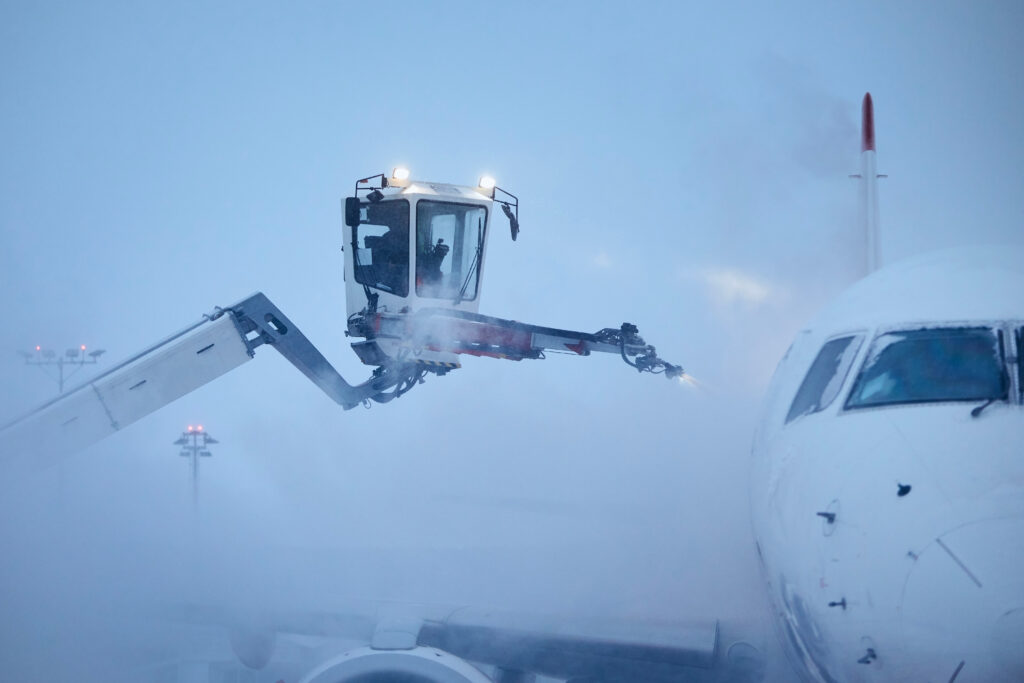
Before taking off in winter conditions, aircraft go through a de-icing process using special fluids heated to high temperatures. These fluids remove existing ice and snow from the aircraft and provide temporary protection against new accumulation.
Type I fluid removes contamination through heat and mechanical action. Type IV fluid is thicker and provides longer-lasting protection against refreezing—important when there’s a delay between de-icing and takeoff.
De-icing has strict time limits called “holdover times” that vary based on weather conditions. If a plane sits too long after de-icing, the process must be repeated. This is why you might experience delays even after your plane has been de-iced once.
Runway Conditions Matter Just as Much
Even if the plane itself is ready to fly, runway conditions must meet safety standards. Snow, ice, and slush on runways reduce tire traction, making it harder to brake safely during landing and harder to accelerate during takeoff.
Airports measure runway friction and report conditions using standardized codes. When friction drops below certain thresholds, operations may be restricted or halted entirely. Pilots receive these reports and use them to calculate whether they can safely take off or land with current aircraft weight and weather conditions.
Runway clearing is a massive operation at busy airports. Specialized equipment including snowplows, sweepers, blowers, and chemical treatments work around the clock during winter storms—but they need occasional breaks to clear runways, which causes delays.
Visibility Requirements
Winter weather often brings reduced visibility from falling snow, blowing snow, or fog. Aircraft must meet minimum visibility requirements for takeoff and landing, and these minimums vary based on the airport, runway equipment, and pilot qualifications.
During heavy snow with visibility below minimums, flights simply cannot operate safely regardless of other conditions. Even with sophisticated instrument systems, pilots need to see the runway environment at certain critical points during approach and landing.
Cold Temperature Performance Issues
Extremely cold temperatures—typically below -40°F—can affect aircraft performance and systems. Fuel can become too viscous, hydraulic fluids may not flow properly, and some materials become brittle.
Planes also require longer runways in very cold conditions because cold air is denser, affecting engine performance and lift characteristics. If available runway length is marginal, extreme cold can prevent operations even with clear skies.
It’s Not Just About the Plane
Many winter flight cancellations aren’t about whether the aircraft can physically fly, but about the entire operation. Ground crews need safe working conditions. Baggage handlers, fuelers, and other essential workers can’t do their jobs safely in extreme conditions.
Airports themselves have limitations. Gates may be inaccessible, jetways may malfunction in extreme cold, and ground service equipment may not operate properly. Sometimes the destination airport is shut down, making the flight pointless even if departure conditions are acceptable.
Safety Always Comes First
It’s frustrating when your flight is canceled on a day when you see other planes taking off, but aviation has an outstanding safety record precisely because airlines and pilots err on the side of caution. Conditions change rapidly during winter weather, and what looks manageable from the terminal may pose unacceptable risks from a flight safety perspective.
Airlines consider hundreds of factors when deciding whether to operate flights in winter weather—aircraft type, crew qualifications, runway length, available de-icing capacity, weather trends, and much more. If your flight is canceled, it’s because professionals determined the risks were too high.
Winter Flying Remains Remarkably Safe
Despite the challenges winter weather presents, flying remains extremely safe even during the coldest months. The combination of aircraft technology, pilot training, ground procedures, and conservative decision-making means that commercial aviation navigates winter conditions successfully millions of times each year.
The next time you’re delayed by winter weather, remember that those decisions—however inconvenient—are made with your safety as the absolute priority.