Outdoor Living Spaces Take a Real Beating
Decks, patios, and other outdoor structures spend an entire summer absorbing direct sun, foot traffic, and weather exposure with little complaint, but by late August, that cumulative wear is often significant enough to warrant a closer look. Late summer, while outdoor spaces are still getting regular use but before fall’s cooler, wetter weather sets in, is a practical window to catch developing problems before they worsen.
Wood Decking Loses More Than Just Its Color
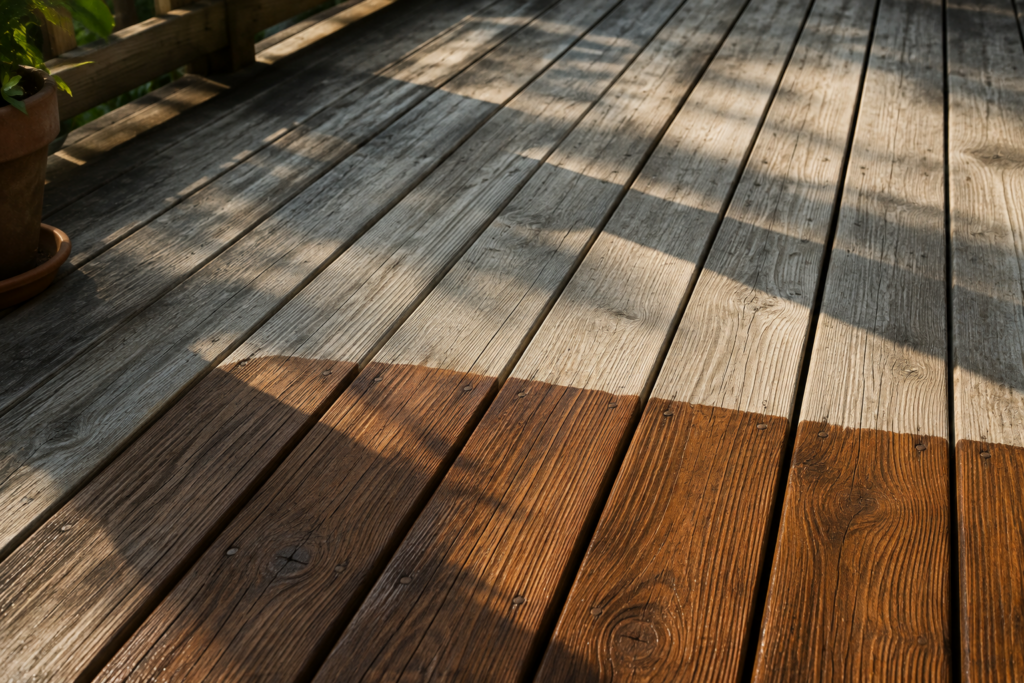
UV radiation breaks down the lignin in wood fibers over time, a process that causes the graying, fading appearance common on decks that haven’t been recently stained or sealed. This isn’t purely cosmetic: as UV exposure breaks down the wood’s surface fibers, the wood becomes more porous and more susceptible to moisture absorption, which in turn accelerates warping, splitting, and the kind of structural softening that eventually leads to rot.
Check for boards that feel soft or spongy underfoot, visible splitting or checking (the small parallel cracks that develop as wood dries and shrinks unevenly), and any areas where the wood surface has become notably rougher or more splintered than the surrounding boards. These are all signs that summer UV and moisture exposure have measurably degraded the wood’s protective surface layer.
Composite Decking Isn’t Immune Either
Composite decking materials, often chosen specifically for their resistance to the rot and splintering that affect natural wood, still experience real effects from sustained summer heat and UV exposure. Some composite materials can fade or change color slightly with prolonged sun exposure, and the material can expand and contract with temperature swings in ways that occasionally reveal themselves as slight buckling or gaps at board ends, particularly in decking installed without adequate expansion spacing.
Check board ends and any areas near fasteners for signs of unusual movement or gapping, since composite decking’s expansion and contraction pattern differs from natural wood and can create maintenance needs that aren’t always obvious from general appearance alone.
Railings and Structural Connections Deserve Real Attention
Beyond the decking surface itself, the structural elements—railings, support posts, and the connections between them—deserve genuine attention, since these are the components most directly tied to safety rather than just appearance. Give railings a firm push to check for looseness, inspect any visible fasteners for rust or corrosion that can develop after a summer of exposure to humidity and rain, and look at ledger boards (where a deck attaches to the house) for any signs of separation or water staining, which can indicate a developing moisture intrusion problem at one of a deck’s most structurally critical connection points.
Concrete and Stone Patios Face Their Own Summer Wear
Concrete and stone patios experience a different set of summer stresses. Repeated heating and cooling cycles throughout the summer can widen existing small cracks, particularly in older concrete, as thermal expansion and contraction gradually stresses weak points in the material. Check for cracks that have visibly grown since spring, and look at joints between pavers or stones for loosened or shifted material, since ground movement from a hot, potentially dry summer (particularly following the soil shrinkage that drought conditions can cause) sometimes shows up as subtle shifting in patio surfaces before it becomes obvious anywhere else.
Resealing and Restaining Before Conditions Change
If your wood deck shows signs of fading, graying, or moisture absorption, late summer is a reasonable window to plan a resealing or restaining project, ideally completed while temperatures are still warm enough for sealants and stains to cure properly but before fall rain becomes a regular occurrence. Applying a protective sealant or stain now, while the wood is dry from summer weather, gives the treatment its best opportunity to properly penetrate and protect the wood before the wetter conditions of autumn arrive.
A Space Worth the Attention It’s Earned
An outdoor living space that’s provided months of enjoyable use has also absorbed months of accumulated wear, much of it not immediately obvious without a deliberate inspection. Checking decking, railings, and patio surfaces now—while there’s still time to address minor issues before they become bigger ones—helps ensure these spaces remain both safe and enjoyable as they transition from peak summer use into the shoulder season ahead.