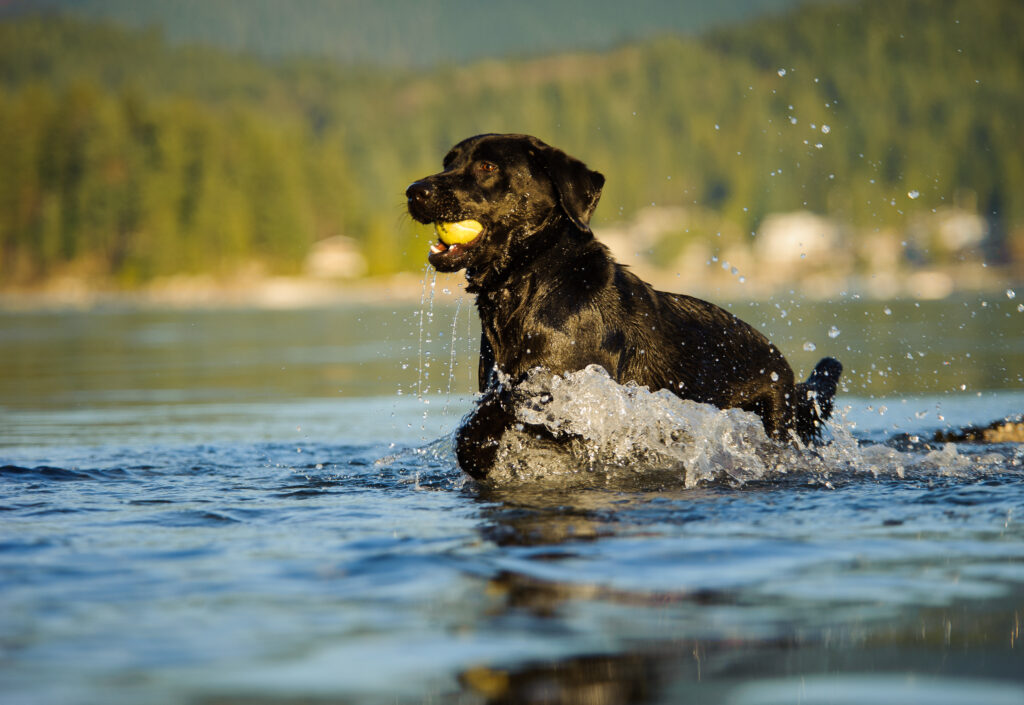
Water Season Has Arrived — and So Have Its Hazards
The first warm weekends of May bring dogs to lakes, rivers, and backyard pools across the country with enormous enthusiasm. Most dogs love water, and the combination of warm weather and available swimming looks like pure joy from the shoreline. For the most part, it is. But water introduces specific hazards for dogs that are different from the risks of dry-land outdoor activity, and they peak precisely in May and June — early in the season, before owners have their water-safety habits established and before dogs have built the swimming fitness they’ll have by August.
Drowning, toxic algae exposure, cold water shock, and exhaustion are all genuinely dangerous and genuinely preventable. Understanding what to watch for and how to respond turns a water-adjacent spring day from a potential emergency into the straightforward fun it should be.
Not All Dogs Can Swim — and Many Overestimate Themselves
The assumption that all dogs can swim is wrong in two important ways. Some breeds physically cannot swim effectively, and many dogs that can swim will swim to the point of dangerous exhaustion because they lack the judgment to stop before they’re in trouble.
Brachycephalic breeds — Bulldogs, Pugs, French Bulldogs, Boxers, Boston Terriers — have flat faces that make keeping their nose above water while swimming extremely difficult. Their body proportions, with heavy fronts and relatively small hindquarters, make them naturally poor swimmers. These breeds should not be allowed in open water without a properly fitted flotation device, and even with one they should be closely supervised at all times.
Heavily muscled breeds with deep chests and relatively small hindquarters — including some Mastiff breeds and Basset Hounds — are also poor natural swimmers. Short-legged breeds like Dachshunds tire quickly in the water. Any dog that has never swum before should be introduced carefully in shallow, calm water with close supervision before being allowed in deeper or faster-moving conditions.
Dogs that can swim enthusiastically are at risk for a different problem: swimming until they can no longer get out. Dogs are goal-oriented swimmers — they will continue swimming toward a thrown toy, following a boat, or simply exploring without registering their own exhaustion until their muscles fail. Unlike humans who naturally pace themselves based on fatigue signals, many dogs will simply stop swimming and go under when their muscles give out. Watch for signs of tiring: a lower position in the water with the hindquarters sinking, labored or frantic paddling, and a glassy or panicked expression. Call dogs out of the water regularly for rest periods before they show these signs.
Cold Water and Cold Water Shock
May water temperatures lag significantly behind air temperatures. Lake Superior averages around 38°F to 42°F in early May. Inland lakes across the Midwest and Northeast are typically in the 50s. Even rivers that run cold from snowmelt can be in the 45°F to 55°F range during the first weeks of May.
Dogs can experience cold water shock in the same way humans can — sudden immersion in cold water triggers an involuntary gasp reflex, accelerated breathing, and cardiovascular stress that can overwhelm an animal caught off guard. Cold water also causes rapid muscle fatigue: a dog swimming in 50°F water tires far more quickly than the same dog swimming in 70°F water, often before the owner has registered any concern.
Hypothermia is a real risk for dogs in cold water, particularly for small dogs, short-haired breeds, and dogs with low body fat. Signs of hypothermia include shivering, weakness, stumbling, pale gums, and in severe cases loss of consciousness. A dog showing these signs after cold water exposure needs to be dried immediately, warmed gradually with towels and body heat, and examined by a veterinarian if symptoms are severe.
The practical guidance: in early May, limit water exposure duration and watch dogs closely in cold water. A dog that seems fine after 10 minutes of swimming in 50°F water may be significantly chilled without showing obvious signs. Towel dry immediately after water exposure and watch for delayed shivering.
Toxic Algae: The Invisible Hazard
Harmful algal blooms — particularly cyanobacteria, commonly called blue-green algae — are one of the most dangerous and least understood water hazards for dogs. These blooms produce toxins that can cause rapid-onset liver failure, neurological damage, and death, sometimes within hours of exposure. Dogs are particularly vulnerable because they drink lake water while swimming and lick algae off their coats after leaving the water.
Harmful algal blooms are most commonly associated with summer heat, but they can occur as early as May in shallow, nutrient-rich water bodies, particularly after periods of warm weather and low rainfall. They appear as green, blue-green, or reddish-brown surface scums, sometimes described as looking like spilled paint, pea soup, or thick green foam. The water may smell musty or like rotting vegetation.
The critical safety rule is absolute: if you see any surface scum, unusual discoloration, or foam accumulation on a water body, keep your dog out of the water and away from the shoreline. There is no safe level of cyanobacteria exposure for dogs, and the toxins are not neutralized by rinsing. If your dog has been in water that you subsequently suspect contained harmful algae, rinse them immediately with clean water, preventing them from licking their coat, and contact a veterinarian urgently.
Symptoms of algal toxin exposure include vomiting, diarrhea, weakness, muscle tremors, seizures, and collapse. These can develop within 15 minutes to several hours of exposure. Speed of veterinary treatment is directly related to survival outcome — this is not a wait-and-see situation.
Check local water quality advisories before bringing dogs to any lake or river. Many states maintain real-time harmful algal bloom monitoring websites that flag affected water bodies.
Pool Hazards: Not Just for Small Dogs
Backyard swimming pools become active in May, and they introduce specific hazards for dogs that differ from natural water bodies.
The most significant is entrapment. Dogs that fall into pools — or that jump in enthusiastically — may not be able to find the steps or ramp to exit. Pool walls are vertical and offer no exit point except the designated entry. A dog that swims in circles looking for a way out will eventually exhaust itself and drown. This is not a rare event: drowning in backyard pools is one of the more common accidental pet deaths each year.
If your pool is accessible to your dog, install a pet-specific pool ramp or exit system and train your dog to use it. Practice the exit route consistently when the dog is calm and not fatigued, so the behavior is automatic rather than something they need to figure out in a panicked state. A pool alarm that activates when something falls in provides an additional layer of detection.
Pool chemicals are the other concern. While properly maintained pool water at correct chlorine levels is not significantly harmful if dogs drink small amounts, heavily chlorinated water can cause gastrointestinal upset, and pool chemicals in concentrated form are genuinely toxic. Keep chemical storage away from dogs, rinse dogs after pool sessions to remove chlorine from their coats, and discourage drinking pool water by providing fresh water nearby.
Life Jackets: Worth Using More Than You Think
Canine life jackets — properly fitted flotation devices designed for dogs — are appropriate in more situations than most owners use them. Any open water situation with currents, any boat trip, any water activity where the dog might swim farther than expected or in colder than expected conditions, and any brachycephalic or poor-swimming breed in any water context are all situations where a life jacket provides meaningful protection.
A properly fitted canine life jacket provides buoyancy that keeps the dog’s head above water with minimal effort, has a handle on the back that allows the owner to lift the dog out of the water quickly, and is brightly colored for visibility. Fit matters: a jacket that is too loose will shift and restrict movement or ride up over the head; one that is too tight restricts breathing. Introduce the jacket on dry land first and allow the dog to wear it for short periods before adding water.
The Season Ahead
May marks the beginning of months of water-adjacent outdoor activity for dogs and their owners. The hazards above — cold water exhaustion, toxic algae, pool entrapment, and breed-specific swimming limitations — are all most dangerous early in the season, before the habits and awareness that summer builds are yet established.
A few minutes of preparation now — checking water quality before outings, confirming your pool exit plan, fitting the life jacket, knowing the signs of cold water stress — makes every water day between now and September straightforwardly safe. The enthusiasm your dog brings to any body of water is one of the genuinely joyful things about summer. It deserves a little planning to protect.