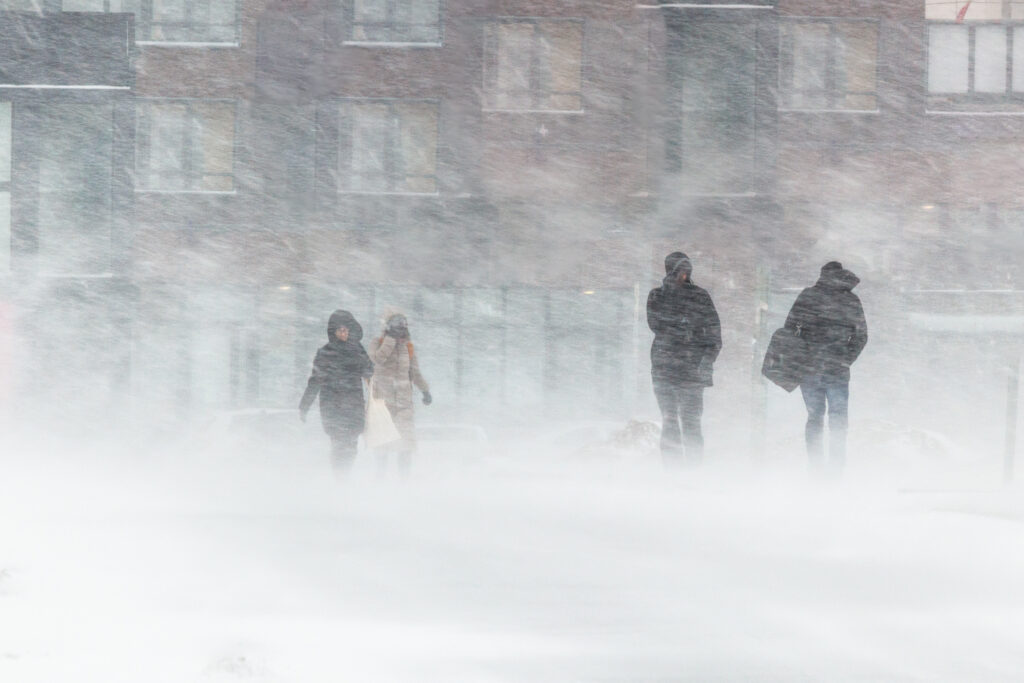
The Blizzard That Redefined What a Winter Storm Could Do
Most major snowstorms affect a city, a region, maybe a few states. They close schools, strand drivers, and make the news for a day or two before life resumes. The storm that struck the eastern United States in March 1993 was something else entirely. In a single weekend, it paralyzed every major city from Alabama to Maine, closed every airport on the East Coast simultaneously, and set records that still stand more than thirty years later. Meteorologists had a name for it before it even made landfall: the Storm of the Century.
Understanding what made this storm so extraordinary—and so different from ordinary winter weather—reveals just how rare the conditions were that allowed one system to cause catastrophic impacts across more than a million square miles at once.
It Arrived at the Wrong Time of Year
March 12–15, 1993 felt like a cruel joke. By mid-March, most of the country had mentally moved on from winter. Crocuses were blooming in Georgia. Spring training was underway in Florida. People had put away their heaviest coats and begun thinking about Easter.
Then a storm system developing in the Gulf of Mexico began pulling in cold Arctic air from Canada while simultaneously drawing enormous moisture from the Gulf. The collision of these two air masses created something meteorologists rarely see: a true extratropical cyclone of near-hurricane intensity, with a central pressure that dropped as low as 960 millibars—comparable to a Category 2 hurricane.
The storm’s track took it directly up the spine of the Appalachians and then northeast along the coast, a path that maximized snowfall across the most densely populated corridor in the country.
The Numbers Were Staggering
The statistics from the Storm of the Century are difficult to fully comprehend. Snow fell in all 26 states east of the Mississippi River. Birmingham, Alabama—a city that averages about two inches of snow per year—received 13 inches, with drifts reaching rooftops. Atlanta recorded 4 inches but was effectively paralyzed. The Tennessee mountains saw accumulations topping 50 inches.
Along the Appalachians and into the mid-Atlantic, snowfall records fell in city after city. Mount LeConte in Tennessee recorded 56 inches. Syracuse, New York, received 43 inches in 24 hours. The entire I-95 corridor from Georgia to New England was closed simultaneously—something that had never happened before and hasn’t happened since.
Wind gusts reached 80 to 100 miles per hour along the coast, and the storm produced tornadoes in Florida while simultaneously burying Georgia in snow. The combination of blizzard conditions in the north and severe thunderstorm activity in the south was a testament to how much energy the storm had generated.
The death toll reached 318 people, making it one of the deadliest weather events in American history. An estimated 10 million people lost power. Economic losses exceeded $6 billion—roughly $13 billion in today’s dollars.
Every East Coast Airport Closed at the Same Time
Perhaps the single most remarkable logistical fact about the storm was what happened to aviation. For the first time in history, every major airport on the Eastern Seaboard shut down simultaneously. Boston’s Logan, New York’s JFK and LaGuardia and Newark, Philadelphia, Baltimore, Washington Dulles and Reagan, Charlotte, Atlanta—all closed within the same weather window.
More than half of all airline traffic in the United States was grounded at once. Over 48 hours, an estimated 100 million Americans—roughly 40 percent of the country’s population at the time—were directly affected by the storm’s impacts.
Forecasters Saw It Coming—and Were Believed
One of the remarkable and underappreciated stories of the Storm of the Century is that the National Weather Service forecast it accurately several days in advance. By March 11th, forecasters were issuing urgent warnings that something historically significant was developing.
What’s notable is that in 1993, the tools available to meteorologists were far less sophisticated than today. Numerical weather prediction models were less powerful, satellite imagery was less detailed, and real-time data sharing across agencies was more limited. Yet forecasters correctly identified the storm’s intensity, track, and timing—and critically, the public and emergency managers listened.
Governors declared states of emergency before the first flake fell. Cities pre-positioned salt trucks and emergency personnel. The decisions made in response to those early warnings almost certainly saved hundreds of lives that might otherwise have been lost.
The Storm of the Century became a landmark case study in meteorological forecasting—an example of what was possible even with 1993-era technology, and a demonstration of how advance warning translates into lives saved when emergency systems respond appropriately.
Why March Made It Worse
The storm’s March timing wasn’t just ironic—it was physically significant. March’s position in the seasonal transition meant the atmosphere held more energy and moisture than a midwinter storm would have encountered. The same temperature contrasts that make March so volatile and stormy in ordinary years provided the raw material for an extraordinary event when the right ingredients aligned.
The Gulf of Mexico was warmer than it would have been in January, supplying more moisture to the storm. The jet stream was still powerful and positioned to drive the system rapidly northward. And the contrast between Arctic air pushing down from Canada and warm, moist air from the Gulf was at its seasonal maximum—creating the enormous pressure gradient that gave the storm its hurricane-like intensity.
A storm with exactly these characteristics arriving in December or January would have been powerful but would have encountered less instability. In mid-March, it found the atmosphere primed and ready.
A Storm That Raised the Bar
The Storm of the Century changed how meteorologists, emergency managers, and the public think about winter weather. It demonstrated that a single system could cause catastrophic, simultaneous impacts across a continent-spanning area—that regional thinking about storm preparedness had limits when the right conditions aligned.
It also accelerated investment in weather forecasting infrastructure. The success of the advance forecast made a compelling case for expanded computer modeling capabilities, better observational networks, and improved coordination between the National Weather Service and local emergency management agencies. Much of the forecasting infrastructure that allows today’s highly accurate predictions to be issued days in advance was expanded and improved in the years following the 1993 storm.
March has always been the month when winter occasionally lands its last punch. In 1993, that punch knocked out the entire Eastern Seaboard.