The Week Ahead Has Outdoor Events Written All Over It
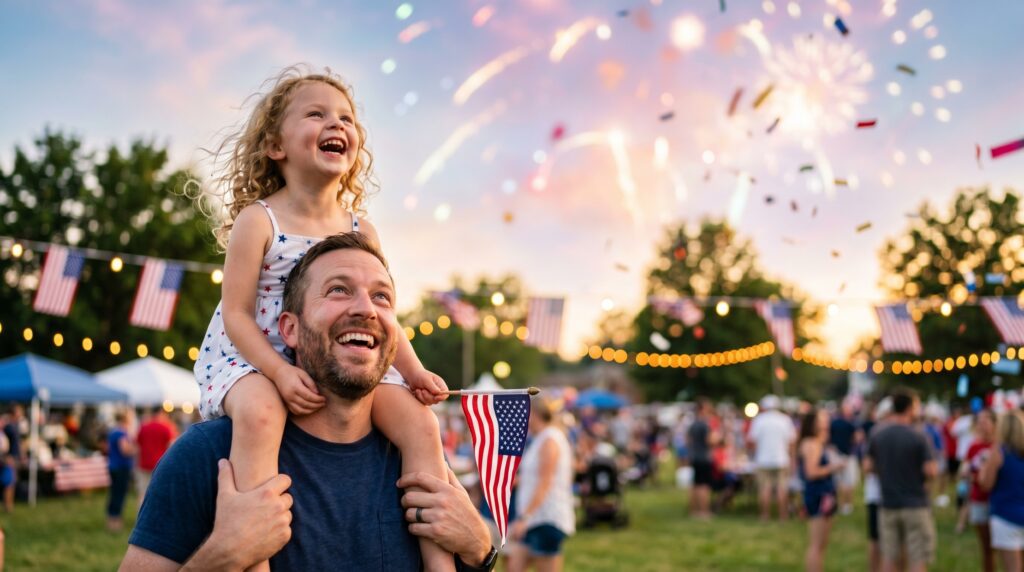
The Fourth of July week produces more extended outdoor gatherings than almost any other time of year: afternoon cookouts that run into evening, parades in full summer heat, fireworks displays that require arriving hours early to secure a spot, and festivals that combine direct sun, crowds, alcohol, and limited shade into a combination that is genuinely physiologically demanding.
Heat illness at outdoor events is extremely common and vastly underreported. Most cases resolve without medical attention — the person who sits down, drinks water, moves to shade, and feels better within 30 minutes rarely ends up in a statistic. But heat exhaustion progressing to heat stroke at outdoor events kills people every summer, and the conditions that produce it are predictable enough that prevention is straightforward when people know what to do.
This isn’t about avoiding outdoor gatherings in summer. It’s about going to them prepared.
Why Outdoor Events Are Higher Heat Risk Than Ordinary Days
The heat risk of an outdoor summer event exceeds the risk of the same temperature experienced at home in several specific ways.
Duration. A parade, festival, or fireworks display requires hours of continuous outdoor exposure rather than the brief outdoor exposures of a typical summer day. Cumulative heat burden builds over hours in ways it doesn’t over 20-minute intervals. A person who feels fine at the start of a three-hour outdoor event in 90°F heat may be significantly heat-stressed by the end, even if they felt no acute distress at any individual moment.
Limited shade and cooling access. Most outdoor event spaces have inadequate shade for the number of people attending. The person who arrived early and secured a spot under a tree is in a fundamentally different physiological situation than the person who is standing in direct sun on asphalt for two hours waiting for a parade. Direct sun exposure on hot pavement — with radiant heat from above and below simultaneously, as covered in the outdoor heat science piece — is far more demanding than the shade temperature suggests.
Crowd density. Dense crowds reduce airflow around individuals, limiting the convective cooling that moving air provides. A person standing in a crowd has less air movement across their skin than a person standing in the open, which reduces evaporative cooling efficiency. Crowd density also generates significant body heat — a large crowd in a confined space creates a local heat island effect that raises temperatures above the surrounding ambient level.
Alcohol. Summer outdoor events frequently involve alcohol consumption, which impairs thermoregulation through several mechanisms. Alcohol is a vasodilator — it increases blood flow to the skin surface, which can feel cooling but actually accelerates heat loss regulation in counterproductive ways during heat stress. More significantly, alcohol is a diuretic that promotes dehydration while simultaneously impairing the thirst response and the judgment needed to recognize and respond to dehydration. Alcohol also impairs the perception of heat stress — people who have been drinking may not recognize warning signs that would be obvious when sober.
Children and elderly attendees. Holiday outdoor events frequently include the populations most vulnerable to heat: young children who cannot regulate their own thermal environment and cannot communicate heat distress clearly, and older adults whose thermoregulatory reserve has diminished. Both populations require more active monitoring and more proactive cooling management than healthy adults.
Preparing Before You Leave the House
The most effective heat safety interventions at outdoor events happen before the event begins — preparation that takes five minutes at home but makes a significant physiological difference over three hours outside.
Hydrate before you go. Arriving at an outdoor event already well-hydrated gives your body a buffer before the heat-related fluid losses of the event begin depleting it. Drink 16 to 24 ounces of water in the hour or two before departing for an outdoor event. This is especially important for children, who have less fluid reserve than adults and dehydrate faster.
Apply sunscreen before leaving, not at the event. Sunscreen applied 15 to 30 minutes before sun exposure has had time to absorb into the skin and is more effective than sunscreen applied after arrival. Applying it at home also ensures complete, unhurried coverage — sunscreen applied hastily in a crowd with limited space and distractions typically misses areas.
Dress strategically. Lightweight, light-colored, loose-fitting clothing reflects solar radiation and allows airflow around the body. A broad-brimmed hat reduces direct sun exposure to the face, ears, and neck — areas that are both high-risk for sunburn and significant heat absorption surfaces. UPF-rated clothing, covered in the 6/1 sun protection piece, provides consistent UV protection without the reapplication requirements of sunscreen.
Bring water, not just what you expect to drink. Carry more water than you think you’ll need. At outdoor events in summer heat, the actual fluid needs over three to four hours substantially exceed what most people estimate in advance. A reusable insulated bottle that keeps water cool is significantly better than a warm plastic bottle — cooler water is more palatable and more readily consumed, which matters because voluntary dehydration (not drinking enough despite having water available) is extremely common at outdoor events.
Managing Heat at the Event
Find and use shade actively. This seems obvious but requires intentionality at crowded events where prime shaded spots are limited. Arriving early enough to position yourself near shade, identifying cooling stations and tent structures at the event, and moving to shade during breaks in the event are all worth the effort. Even brief periods in shade — five minutes out of every 30 — can meaningfully reduce cumulative heat burden.
Wet cooling is highly effective. Applying cool water to the wrists, neck, and face provides immediate and meaningful cooling through evaporation. Spray bottles filled with water are one of the most practical heat management tools at outdoor events — small, inexpensive, and highly effective for maintaining comfort in high-heat conditions. Many major outdoor events provide misting stations for exactly this reason.
Eat something with salt. Sweating depletes sodium as well as water, and sodium loss contributes to heat exhaustion symptoms even when water intake is adequate. Eating salty foods — pretzels, chips, sandwiches — alongside fluid intake at outdoor events helps replace electrolytes and improves the retention of the water you’re drinking.
Pace alcohol consumption and pair it with water. If you’re drinking at an outdoor event, matching each alcoholic drink with a glass of water reduces the net dehydrating effect of the alcohol while maintaining the social experience. This is not a complete offset — alcohol still impairs thermoregulation at any consumption level — but it substantially reduces the dehydration risk that makes alcohol particularly dangerous in heat.
Check on children and elderly companions more frequently than feels necessary. Children who are engaged in play or watching a performance may not stop to report heat discomfort until they are significantly stressed. Proactively offering water every 20 to 30 minutes rather than waiting for children to ask is the appropriate approach in summer heat. For elderly companions, the same proactive approach — periodic check-ins about comfort, water intake, and the option to move to a cooler location — catches early heat stress before it advances.
Recognizing Heat Illness in a Crowd
The heat stroke recognition information in the 6/2 piece applies fully in the event setting, but crowd contexts add specific challenges: it can be harder to notice when someone nearby is in distress, harder to get medical help quickly through a dense crowd, and the noise and stimulation of the event can mask early warning signs.
Signs that someone in your group needs attention: sitting or lying down suddenly when they had been standing, complaints of headache or nausea, skin that is flushed and hot or, conversely, pale and cool and clammy, stopping drinking despite still being at a hot outdoor event, and confusion or altered behavior — particularly important because the altered behavior of heat stroke can be misattributed to alcohol at drinking events.
If someone shows signs of heat exhaustion — heavy sweating, weakness, dizziness, nausea, rapid pulse — move them out of the sun immediately, apply cool water to their skin, and have them drink cool fluids if conscious. Most cases of heat exhaustion resolve within 30 minutes with appropriate first aid.
If someone shows confusion, stops sweating despite intense heat, loses consciousness, or has a seizure — call 911 immediately and begin active cooling. These are heat stroke signs. At large outdoor events, locate the event’s medical station as part of your arrival routine — knowing where it is before anyone needs it reduces the response time when you do.
The Fireworks Wait
A specific Fourth of July heat risk that doesn’t receive enough attention: the hours of outdoor waiting that fireworks displays require. The fireworks themselves happen at dark — 9 or 9:30 p.m. — but arriving early enough to secure a good viewing position means many people spend two to four hours in late afternoon and evening heat before the display begins.
Late afternoon is the hottest part of the day. For people who arrive at 5 or 6 p.m. for a 9:30 fireworks display, the first two to three hours of their outdoor time occur during the highest heat index period of the day. This window — combined with the crowd density of a popular fireworks venue, limited shade, and the festive context that discourages people from treating it as a physiological challenge — produces the heat illness cases that emergency departments see every July 5th.
Arriving closer to dark, accepting a less optimal viewing position in exchange for less cumulative heat exposure, and positioning near a park edge or other area with some air movement rather than the densest part of the crowd all reduce the heat burden of the fireworks wait without sacrificing the experience of seeing the display.
The Best Summer Outdoor Event Is One Everyone Feels Good at the End Of
The goal of all of the above is not to make summer outdoor gatherings stressful or medical — it’s to make them genuinely enjoyable by preventing the heat exhaustion and dehydration that turns a good afternoon into a bad night. Most heat illness at outdoor events is preventable. Most prevention requires nothing more than water, shade, sunscreen, and attention to the people you’re with.
The Fourth of July week is worth celebrating outside. The preparation that makes it comfortable is worth five minutes before you leave.