The Best Weekend of the Year to Head Outside With a Purpose
Late March brings the first weekends that genuinely feel like working outside is a pleasure rather than a cold-weather chore. The temperatures are mild, the days are long enough to get things done, and the urge to be out in the yard after months of dormancy is hard to resist. It’s also the right time — waiting until April or May to tackle outdoor prep means losing weeks of usable outdoor living and giving weeds, pests, and deterioration a head start.
This weekend checklist focuses on getting your outdoor spaces — deck or patio, garden beds, lawn, and outdoor furniture — ready to be used and enjoyed through spring and into summer. Most of these tasks take an hour or two at most and will pay dividends every time you step outside for the next six months.
Deck and Patio: Assess, Clean, and Seal
Your deck has been through a winter of freeze-thaw cycles, snow, ice, and moisture. Before you put furniture on it and start using it, take 20 minutes to assess its condition.
Walk the deck slowly and look for boards that have cupped, warped, or cracked. Press down on boards near posts and railings to check for soft spots, which indicate rot. Check that railing posts are solid and don’t wobble — this is a safety issue, not just cosmetic. Look at the ledger board where the deck attaches to your house and check for any gaps or deterioration in the flashing.
Minor issues like a raised nail or a cracked board can be fixed easily. Soft, rotted wood requires replacement before the deck is safe to use regularly. If you find significant rot or structural movement in the railing, it’s worth having a contractor assess before the season begins.
Once you’ve confirmed the structure is sound, clean the surface. A season’s worth of mildew, dirt, algae, and debris accumulates over winter, and it should come off before furniture goes down. A deck brush and a diluted oxygen bleach solution (not chlorine bleach, which damages wood fibers) work well for most wood decks. Composite decking manufacturers typically recommend warm soapy water and a soft brush. Let the deck dry completely — at least 48 hours of dry weather — before applying any stain or sealant.
If your wood deck’s finish is more than two to three years old, peeling, or showing gray weathering, this is the right time to re-stain or reseal. A fresh coat now protects the wood through the wettest months of the year and extends the deck’s lifespan significantly.
Garden Beds: Clear, Edge, and Amend
Late March is the ideal window to prepare garden beds before active planting begins. The soil is thawed and workable in most regions, but hasn’t yet warmed to the point where weed seeds are germinating in earnest — giving you a clean slate if you act now.
Start by clearing out the debris of last season. Dead plant stalks, fallen leaves matted into beds, and any mulch that has broken down into a sodden layer should all come out. This debris harbors overwintering pests and fungal spores that will activate as temperatures warm. Bag it or compost it, but get it out of the bed.
Once the bed is cleared, take a look at the soil. Winter compacts soil, especially in beds that received foot traffic or heavy snowfall. A garden fork worked gently through the top few inches loosens compaction and improves drainage and aeration without destroying soil structure the way deep tilling does.
This is also the right moment to add organic matter. A two to three inch layer of compost worked into the top layer of soil dramatically improves its structure, water retention, and nutrient content. Spring is when your garden will need these resources most, and adding them now gives them time to begin integrating before your first plants go in.
Hold off on mulching beds until the soil has had a chance to warm. Applying mulch too early insulates the cold soil and delays warming, which slows root development in early-season plants. Wait until consistent daytime temperatures are in the 60s before laying down a fresh mulch layer.
Lawn: First Steps Before First Mow
Your lawn has been dormant and compressed under months of cold, foot traffic, and possibly snow. The first lawn care steps of spring aren’t about mowing — they’re about giving the grass room to breathe and come back strong.
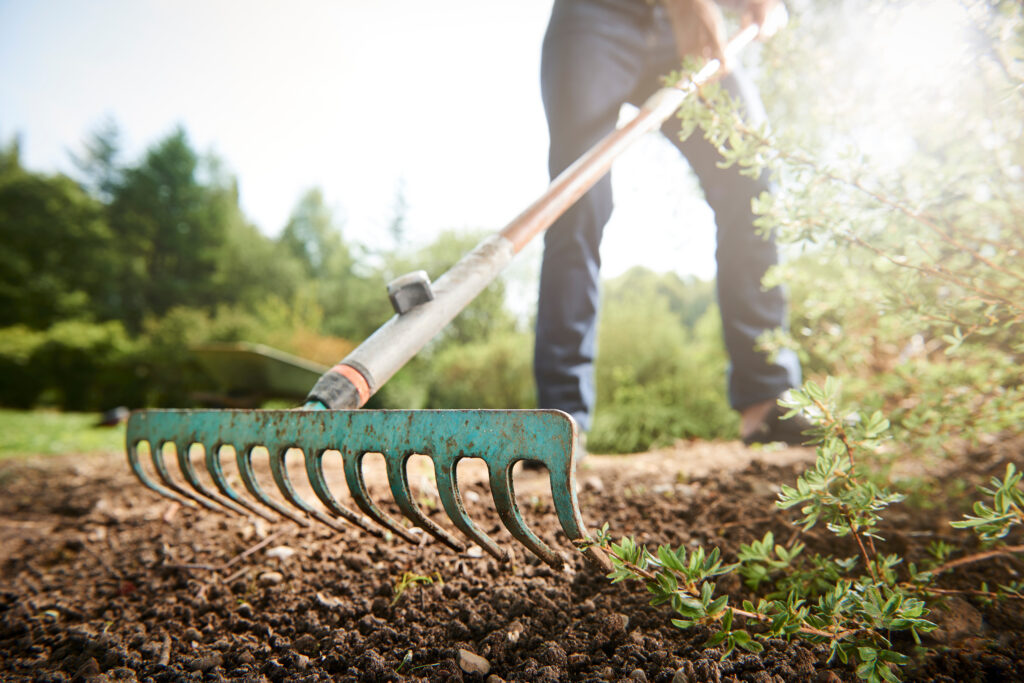
Rake the entire lawn lightly to remove dead grass, matted leaves, and thatch — the layer of decomposing organic material that builds up between the grass blades and the soil surface. Moderate thatch is normal and beneficial, but a heavy thatch layer prevents water and nutrients from reaching roots. A light spring raking removes winter debris and breaks up the surface without damaging emerging grass.
Look for areas of compaction, particularly along pathways, near gates, and in spots where people tend to congregate. Compacted soil prevents root growth and causes water to run off rather than soak in. A manual core aerator or a rented powered aerator pulled through these areas opens the soil and makes a significant difference in lawn health over the season.
If you have bare patches from winter damage, salt exposure, or heavy use, now is an excellent time to overseed them. Soil temperatures in late March are approaching the threshold for grass seed germination in many regions — roughly 50°F — and early seeding gives new grass time to establish before summer heat stress arrives. Press seed into good contact with the soil and keep it consistently moist until germination.
Hold off on fertilizing until you see active green growth. Applying nitrogen to dormant or barely-emerging grass pushes top growth at the expense of root development, leaving you with a lawn that looks green but is structurally weak heading into summer.
Outdoor Furniture: Clean, Inspect, and Protect
Whether your outdoor furniture spent the winter in storage or weathered the cold outside, it needs attention before the season begins.
Furniture that was stored should be unwrapped, wiped down, and inspected for any damage that may have occurred in storage — mice sometimes nest in or chew through stored cushion covers, and metal frames can develop rust spots even indoors if moisture was present.
Furniture left outside should be thoroughly cleaned before use. Aluminum frames hold up well but benefit from a wipe-down with soapy water and a coat of automotive wax to protect against oxidation. Steel frames should be checked carefully for rust; light surface rust can be addressed with a wire brush and rust-inhibiting paint, but deep pitting rust on structural parts means the piece should be replaced. Teak and other hardwood furniture can be cleaned with a wood cleaner and treated with teak oil or sealant to restore its color and weather resistance.
Wicker and resin furniture comes clean quickly with warm soapy water and a soft brush. Check wicker carefully for broken strands that can snag clothing and will worsen throughout the season if not repaired.
Cushions and fabric covers that spent the winter in storage should be aired out before use. If they smell musty, wash them according to fabric care instructions before putting them out — mildew that isn’t addressed at the start of the season tends to get worse, not better, in spring humidity.
Outdoor Lighting and Irrigation: Check Before You Need Them
Two outdoor systems that are easy to overlook until they fail at inconvenient moments: lighting and irrigation.
Walk your outdoor lighting at dusk and identify any fixtures that aren’t working. Winter moisture gets into connections and corrodes contacts, and bulbs that were working in October may not be when you flip the switch in April. Replacing bulbs and cleaning corroded contacts now is a quick fix — calling an electrician in a hurry in May because your patio lighting failed during a party is not.
If you have an in-ground irrigation system, have it inspected and turned on by a professional before you start planting. Winter can crack pipes and damage heads, and running the system without checking it first can mean watering your driveway while your garden beds go dry. Most irrigation companies offer spring startup services specifically for this purpose.
One Good Weekend, Months of Reward
The work involved in getting outdoor spaces ready for spring is genuinely modest compared to the return. A few hours spread across a weekend morning or two — deck assessment, bed prep, a light lawn raking, furniture cleaning — sets up every outdoor hour between now and October. The first time you sit outside on a clean, well-maintained deck surrounded by a garden that’s off to a strong start, you’ll remember why it was worth doing now rather than waiting.
Spring is brief and moves quickly. The time to get ready for it is right before it peaks — which is exactly where we are.