Late-Summer Gatherings Still Carry Real Risk
With warm weather still very much underway, outdoor cookouts, picnics, and gatherings remain a regular feature of the season—and so does the risk of foodborne illness that comes with serving food in the heat for extended periods. A number of widely believed food safety myths continue to circulate at these events, and several of them can lead directly to the kind of mistakes that cause genuine illness.
Myth: You Can Tell Food Has Gone Bad by Smell or Taste
This is one of the most dangerous food safety myths in circulation, because it’s simply not reliable for the specific pathogens most responsible for foodborne illness at outdoor events. Bacteria like Salmonella, E. coli, and Listeria typically don’t produce noticeable changes in smell, taste, or appearance even at concentrations high enough to cause serious illness. Food can look, smell, and taste completely normal while harboring enough bacteria to make someone seriously sick.
The organisms that do cause obvious spoilage—the ones responsible for the sour smell or slimy texture that make food obviously unappetizing—are often different from the specific pathogens that cause the most severe foodborne illness. Relying on sensory checks alone provides a false sense of security rather than genuine safety information.
Myth: Mayonnaise Is the Main Culprit Behind Picnic Food Poisoning
Mayonnaise has an unfair reputation as uniquely dangerous at outdoor gatherings, but commercially produced mayonnaise is actually acidic enough that it inhibits bacterial growth fairly effectively on its own. The foods genuinely most associated with foodborne illness at gatherings tend to be protein-based dishes—chicken, ground beef, egg dishes, and dairy-based salads—left in what food safety officials call the “temperature danger zone,” roughly between 40 and 140 degrees Fahrenheit, for extended periods, regardless of whether mayonnaise happens to be an ingredient.
The mayonnaise myth persists partly because it’s an easy scapegoat and partly because mayonnaise-based salads (potato salad, macaroni salad) often do contain other ingredients—eggs, dairy, cooked pasta—that are genuinely more susceptible to bacterial growth, meaning the mayonnaise gets blamed for a problem caused by the broader dish rather than the mayonnaise itself.
Myth: The Two-Hour Rule Is a Strict, Universal Cutoff
Food safety guidance commonly cites a two-hour limit for perishable food left at room temperature before it should be discarded, and while this guideline is broadly useful, it’s not a fixed, universal number that applies identically in every situation. When ambient temperature exceeds 90 degrees Fahrenheit—a common condition at outdoor summer gatherings—that safe window shrinks to just one hour, since bacterial growth accelerates significantly at higher temperatures.
Treating the two-hour figure as an unconditional rule, without accounting for how hot the actual outdoor conditions are, leads people to leave food out longer than is genuinely safe on the hottest days of the year, precisely when the shortened one-hour window actually applies.
Myth: Marinade Used on Raw Meat Is Safe to Reuse as a Sauce
Marinade that has been in contact with raw meat, poultry, or seafood carries whatever bacteria was present on that raw food, and reusing it directly as a serving sauce without additional treatment creates a direct pathway for cross-contamination. If you want to use marinade as a sauce, it needs to be brought to a boil first, which is sufficient to kill the bacteria that transferred into it during the marinating process. Simply pouring the same marinade over cooked meat, without boiling it first, defeats the purpose of cooking the meat safely in the first place.
Myth: Coolers Keep Food Cold Indefinitely Once Packed
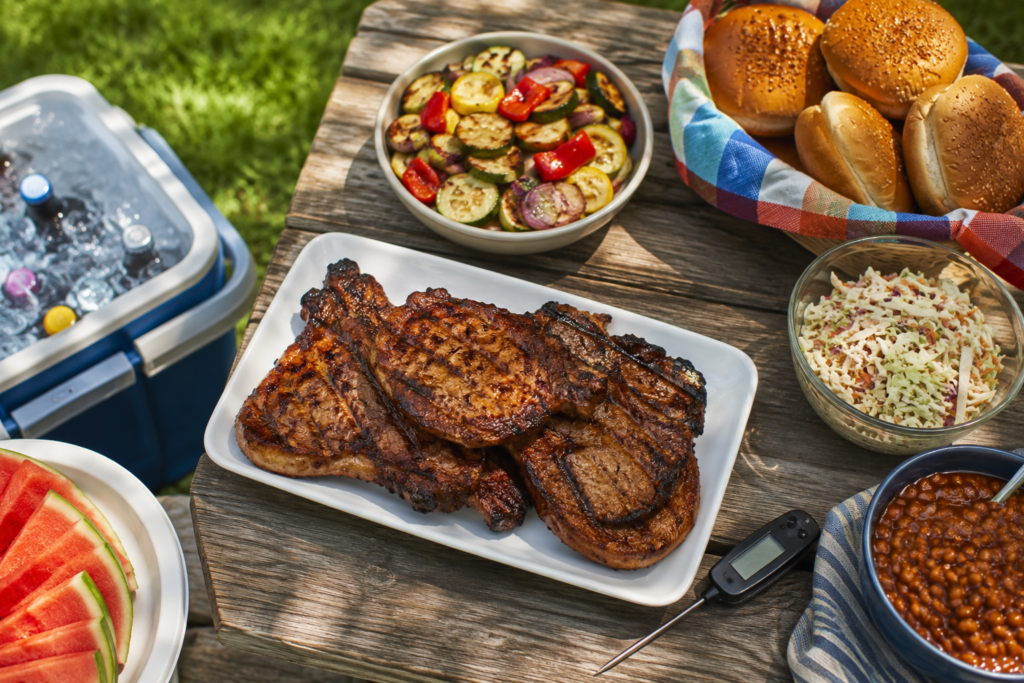
Packing a cooler with ice in the morning doesn’t guarantee food safety for the rest of the day, particularly during a long outdoor event in direct sun. Ice melts, cooler temperatures rise gradually throughout the day, and a cooler that started at a safe temperature in the morning can drift into the danger zone by mid-afternoon if it isn’t managed actively. Keeping coolers in shade, minimizing how often they’re opened, using enough ice to maintain cold temperatures throughout the event’s full duration, and using a thermometer to periodically check internal temperature are all more reliable than assuming the initial ice pack will maintain safety all day on its own.
What Actually Keeps Outdoor Food Safe
The reliable practices are straightforward: use a food thermometer to confirm meat has reached safe internal temperatures rather than judging by appearance, keep perishable food refrigerated or in a well-maintained cooler until just before serving, respect the shortened one-hour window on very hot days, and boil any marinade before reusing it as a sauce. None of these require special equipment—just an awareness that appearance and smell aren’t reliable safety indicators, and that summer heat actively shortens the margin for error at every outdoor gathering.