Spring Flood Season Is Here—Don’t Trust What You Think You Know
As rivers rise and flood watches fill the spring forecast, most people feel like they have a basic grasp of flood safety. Stay out of the water. Don’t drive through flooded roads. Move to higher ground. This general awareness is real and valuable — but it coexists with a set of persistent myths about floods that lead people into fatal decisions every year. Spring flood season is the deadliest weather season in the United States, and a disproportionate number of those deaths are preventable. They happen not because people were reckless, but because they believed something about flood behavior that turned out to be wrong.
Myth: If the Water Looks Calm, It’s Safe to Cross
Moving floodwater is deceptive in ways that are almost impossible to judge by appearance. The surface of a flooded road or stream crossing can look placid — a shallow, slow-moving sheet of water — while concealing powerful currents just beneath. Floodwaters often run faster at the bottom than at the surface, and the turbulence is invisible from above.
The physics are unforgiving. Moving water exerts force proportional to the square of its velocity — meaning water moving twice as fast pushes four times as hard. At six inches deep, fast-moving water can knock a standing adult off their feet. At two feet, the buoyancy and current force combined can sweep away most passenger vehicles, including trucks and SUVs. The appearance of the water surface tells you almost nothing about the force it’s capable of exerting.
Most drowning deaths in floods occur in water that bystanders later describe as looking passable. The calm surface was real. The danger beneath it was also real.
Myth: You Can Judge the Depth of Flooded Roads From Your Car
Roads flood unevenly. The pavement you can see at the edge of a flooded section may be four inches underwater while the lowest point of the same road — perhaps a dip in the center or a low spot ahead — is four feet deep. There is no way to assess the deepest point of a flooded road from a vehicle without wading it first, which introduces its own risks.
Additionally, floodwater frequently undermines road surfaces without any visible indication. The asphalt above may look intact while the base beneath has been completely eroded away, leaving a surface that will collapse under the weight of a vehicle. Roads that have been underwater for hours are particularly vulnerable to this kind of hidden structural failure.
The rule practiced by emergency managers is simple: if you can’t see the road surface, you don’t know what’s there. That applies to depth, structural integrity, and current. No destination is worth the risk of a flooded road crossing.
Myth: A High-Clearance Vehicle Protects You from Flood Risk
Trucks, SUVs, and other high-clearance vehicles do provide a margin of safety in very shallow flooding — a few inches of standing water that a low-riding sedan would struggle with. This genuine advantage leads many drivers to dramatically overestimate their protection in deeper or moving water.
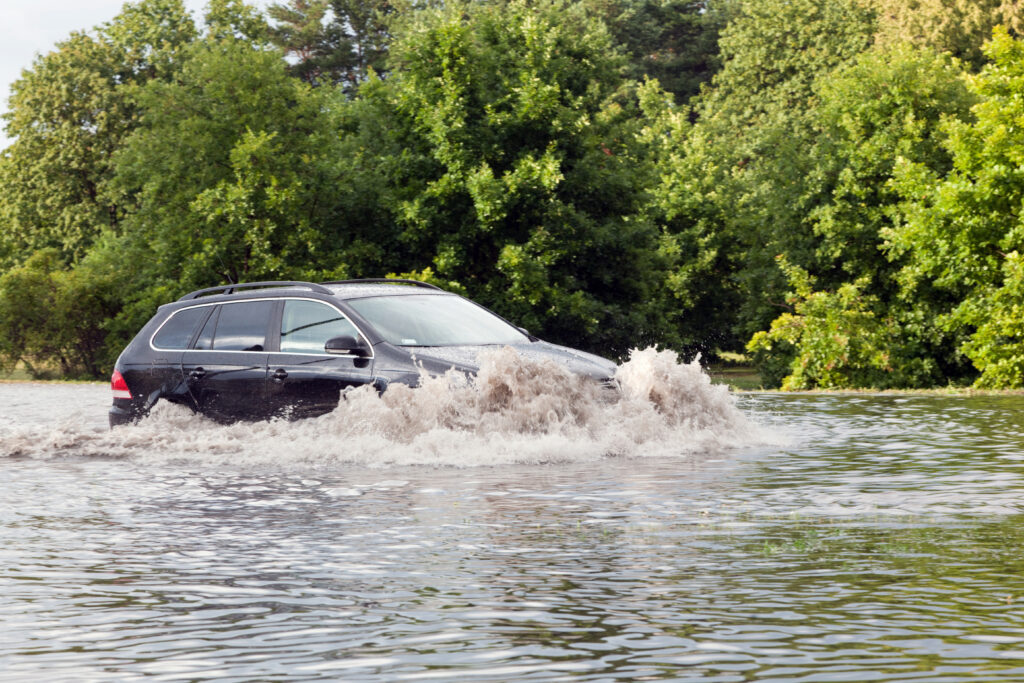
The buoyancy that makes vehicles float — and become uncontrollable — isn’t related to their height or weight class in the way people assume. A large SUV floating in two feet of moving water behaves the same way a small sedan does: it becomes a boat with no steering, pushed by current toward whatever obstacles lie downstream. Once a vehicle floats, the driver has no meaningful control over its direction. The outcome depends entirely on what the current carries the vehicle into.
Emergency responders conduct most flood water rescues from vehicles — and a disproportionate share of those vehicles are trucks and SUVs whose drivers believed their vehicle provided protection it couldn’t deliver.
Myth: Floodwater Is Just Water
Floodwater is one of the most contaminated substances most people will ever come into contact with. As it moves across the landscape, it picks up everything in its path: sewage from overwhelmed wastewater systems, agricultural chemicals and fertilizers, fuel and oil from submerged vehicles and storage tanks, industrial runoff, animal waste, and the contents of flooded basements and structures.
Skin contact with floodwater is a genuine health risk, particularly through any cuts, abrasions, or open wounds. The bacterial load in floodwater — including potentially dangerous organisms like E. coli, Leptospira, and others — is typically orders of magnitude higher than any water a person would voluntarily enter. People who wade through floodwater during evacuations or cleanup operations should wash thoroughly with clean water and soap as soon as possible and monitor any wound exposure carefully.
Never drink floodwater or use it for cooking or washing food, and treat any well that has been inundated as contaminated until it has been professionally tested and cleared.
Myth: Once the Rain Stops, the Flood Danger Is Over
River flooding operates on a completely different timeline than the rain that causes it. A major river in flood can continue rising for days after precipitation has ended, as water from upstream portions of the watershed slowly makes its way downstream. Communities along large rivers like the Mississippi, Ohio, or Missouri may not experience their flood crest until a week or more after the storm system that triggered the flooding has passed entirely.
This lag means that clear skies and dry weather are not indicators of flood safety along river corridors. The water that fell 200 miles upstream three days ago is still coming, and it may produce the highest flood stage of the entire event even as local conditions seem to be improving.
Downstream communities sometimes see their neighbors upstream flood, assume the danger has passed when rain ends, and then face their own worst flooding days later. Following river stage forecasts — not just precipitation forecasts — is the only reliable way to track flood risk along river systems.
Myth: Flood Insurance Isn’t Worth It If You’re Not in a High-Risk Zone
Roughly 40 percent of all flood insurance claims in the United States come from properties outside designated high-risk flood zones. Flood risk maps, while useful, are updated infrequently, don’t account for changing land use and development patterns, and are based on historical data that may not reflect current conditions. Properties classified as moderate or low risk still flood — they simply flood less frequently than high-risk properties.
Standard homeowner’s and renter’s insurance policies do not cover flood damage. This surprises many people who file claims after a flood event and discover that the damage to their home or belongings is entirely uninsured. Flood insurance through the National Flood Insurance Program or private carriers must be purchased separately, and it typically takes 30 days to go into effect — meaning it cannot be purchased when a flood is already forecast.
The time to think about flood insurance is now, before flood season peaks and before any specific flood is in the forecast.
What to Actually Do When Flooding Threatens
The most important flood safety actions are also the simplest: monitor official forecasts and warnings from the National Weather Service, follow evacuation orders when they are issued without delay, and never attempt to drive or walk through floodwater of unknown depth or current.
If your area is under a flood watch, begin preparing: know your evacuation route, gather essential documents and medications, and move valuables to upper floors. If a flood warning is issued — meaning flooding is occurring or imminent — act immediately. Do not wait to see how bad it gets before deciding to leave. The time to evacuate is before roads flood, not after.
Flood deaths are nearly always preventable. They happen when people make decisions based on how floodwater looks rather than how it behaves — a distinction these myths have obscured for too long.