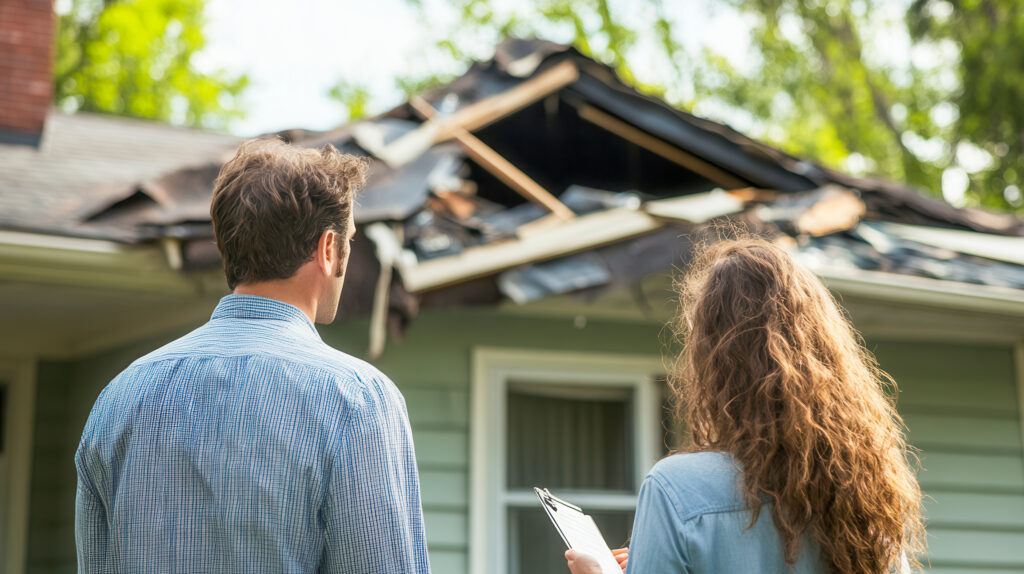
The Hours After a Storm Are Consequential
A severe thunderstorm passes through at 9 p.m. on a Tuesday. By morning, you can see damaged shingles from the driveway, the fence is down, and there are dents across the hood of the car that wasn’t in the garage. The storm is over. The process of recovering from it is just beginning — and how you handle the next 48 to 72 hours will significantly affect what your insurance company pays and how quickly repairs happen.
Most homeowners have limited experience filing storm damage claims and make mistakes in the immediate aftermath that complicate or reduce their settlements. The most common mistakes are not malicious or unreasonable — they’re the natural responses of people focused on cleaning up and getting back to normal rather than on documentation and process. Understanding what insurance companies need, what adjusters look for, and what mistakes to avoid turns a stressful situation into a more manageable one.
Safety First: Before Any Assessment
Before anything else, assess the immediate safety of the structure. If a tree has fallen on the roof, if there is visible structural damage to load-bearing walls, or if you can smell gas or see downed power lines near the house, do not enter or remain in the structure and call the appropriate emergency services. Storm-damaged structures can be unstable in ways that aren’t immediately visible, and the documentation and insurance process is secondary to not being injured.
If the structure appears sound, do a careful walk-through looking for water infiltration — a damaged roof can allow significant water intrusion that causes rapid damage to interior walls, flooring, and belongings. If water is actively entering through a damaged roof or broken windows, taking reasonable emergency measures to prevent further damage — covering the opening with a tarp, placing buckets — is both appropriate and generally required by homeowner’s insurance policies. Most policies include a provision requiring policyholders to take reasonable steps to prevent additional damage after a covered loss. Failing to do so can reduce a claim.
Document Everything Before Any Cleanup
The single most important action after a storm is thorough photographic and video documentation of all damage — before any cleanup, before any repairs, before removing debris, and before anything is touched or altered from its post-storm state.
Insurance adjusters assess claims based on the damage that existed at the time of the event, and documentation created immediately after the storm is the most powerful evidence of that damage. Photos taken three days later, after some cleanup has occurred and tarps have been applied, are less compelling than photos taken in the immediate aftermath.
Document systematically rather than randomly. Photograph the exterior of the house from all four sides, then work section by section: roof (from the ground with a telephoto or using a drone if available, not by climbing on a potentially unstable damaged roof), gutters, siding, windows, doors, decks and outbuildings. Photograph dents, cracks, missing shingles, broken glass, and damaged vegetation in close-up with a reference object (a coin, a ruler) for scale alongside each damage area.
Document the interior as well — any water infiltration, ceiling staining, damaged belongings, and the condition of the attic immediately after the storm if safely accessible. Timestamp is important: most smartphone cameras embed timestamp data in photos automatically, but confirm this before relying on it.
Video walkthroughs that capture the full context of each damage area — the relationship between the damage and the overall structure — supplement still photos effectively and are increasingly standard in insurance documentation.
Hail Documentation: The Special Challenge
Hail damage requires specific documentation attention because — as covered in the hail myths piece — it is frequently invisible to untrained inspection and because insurance policies in hail-prone regions typically have specific provisions, deductibles, and timelines that differ from other storm damage.
After a hail event, document evidence of hail at the location: photographs of hail on the ground (with a ruler for size reference), any hail that landed in gutters or on flat surfaces, and the distinctive circular dents that hail leaves on soft metal surfaces — air conditioning units, gutters, vents, flashing, and vehicles. These soft metal surfaces show hail impact clearly and provide irrefutable evidence of hail size and intensity at your specific location.
The roof itself often shows hail damage that requires professional assessment to identify. Asphalt shingles struck by hail show granule displacement — the loss of the protective granule layer — at impact points that appear as dark spots or craters. These may be visible from the ground with binoculars on a bright day or may require a roofing professional to identify from the roof surface. Do not attempt to document roof hail damage by climbing on a wet or damaged roof.
Many hail-prone regions require insurance claims to be filed within a specific period after the event — sometimes as short as one year in some states. Documenting hail events as they occur, even before obvious damage is apparent, creates a record that supports a claim filed later when roof damage becomes evident through leaking.
Contacting Your Insurance Company
Notify your insurance company of a potential claim as soon as reasonably possible after the storm — typically within 24 to 48 hours. Most policies require prompt notification, and delay can complicate claims. The initial notification establishes a claim number and begins the process, but it does not commit you to filing a complete claim or accepting any specific settlement.
When making the initial contact, have your policy number available and be prepared to describe the type of damage, the date and nature of the storm, and the property address. You do not need to have a complete damage assessment at this point — you are opening a claim, not settling one.
Ask specifically about your policy’s provisions for: the storm damage deductible (which may differ from your standard deductible, particularly for wind and hail), coverage for temporary repairs and additional living expenses if the home is uninhabitable, timelines for claim filing and adjuster inspection, and the process for disputing an adjuster’s assessment.
Working With the Insurance Adjuster
Your insurance company will send an adjuster to inspect the damage. The adjuster works for the insurance company and their assessment determines the initial settlement offer — which may or may not fully capture the actual damage to your property.
Several practices improve outcomes in adjuster interactions.
Be present during the inspection. An adjuster who inspects without you present may miss damage areas you would have pointed out. Walk the adjuster through every damage area you documented, showing them your photographs and pointing out specific damage points.
Bring your contractor’s assessment if you have one. Getting an independent estimate from a roofing contractor, general contractor, or public adjuster before the insurance adjuster visits gives you a baseline against which to evaluate the insurance company’s assessment. A significant discrepancy between the contractor’s assessment and the adjuster’s can be the basis for dispute.
Do not feel pressured to accept the initial offer. Insurance adjusters’ initial assessments are not final. If you believe the assessment underestimates the damage, you have the right to request a re-inspection, bring in additional contractor documentation, or hire a public adjuster — a licensed professional who represents policyholders rather than insurance companies — to negotiate on your behalf.
Document the adjuster’s visit. Note what areas they inspected, what they photographed, and what they said about specific damage points. This creates a record of the inspection that is useful if disputes arise about what was or wasn’t assessed.
Common Mistakes That Reduce Claims
Several common post-storm mistakes complicate or reduce insurance claims.
Making permanent repairs before the adjuster inspects. Emergency temporary repairs — tarping, boarding broken windows — are appropriate and generally required. Permanent repairs made before the adjuster sees the damage effectively eliminate the insurance company’s ability to assess the pre-repair condition. If permanent repairs are necessary before the adjuster can arrive, document the pre-repair damage exhaustively with photos and video, and retain all damaged materials removed during repair rather than discarding them.
Using the insurance company’s preferred contractor without comparison. Insurance companies often provide lists of preferred contractors and may offer expedited claims processing through these contractors. These arrangements are not necessarily bad, but the preferred contractor is also working within a relationship with the insurance company. Getting an independent estimate provides a comparison baseline.
Accepting the first settlement offer without review. The initial settlement is an offer, not a final determination. Reviewing it carefully against your own documentation and any independent contractor estimates, and disputing specific line items you believe are undervalued, is legitimate and common.
Missing the claim filing deadline. Most policies have specific deadlines for filing storm damage claims — ranging from one to several years depending on the state and policy. Missing this deadline can void coverage entirely. If you suspect storm damage that isn’t immediately obvious — particularly roof damage that may take months to manifest as leaks — file a protective claim while investigating further rather than waiting until damage becomes undeniable.
After the Claim: Working Toward Repair
Once a settlement is reached, prioritize repairs in order of urgency: anything that prevents further water infiltration or structural deterioration first, cosmetic repairs last. In the aftermath of widespread storm events — when a hail or tornado outbreak has affected thousands of homes simultaneously — roofing and repair contractors are typically overwhelmed with work. Getting on contractor schedules early reduces the time your home spends in a compromised state.
Keep all receipts and documentation for repairs and expenses related to the storm event, including temporary repairs, debris removal, and any additional living expenses if you had to leave the home. These may be claimable under your policy and create a complete paper trail for the claim.
Storm damage is stressful and disruptive. A well-documented, well-managed claim doesn’t eliminate the disruption, but it meaningfully reduces the financial impact and the duration of the recovery process. The difference between a homeowner who documents thoroughly and engages the insurance process proactively and one who cleans up and hopes for the best can be measured in thousands of dollars and months of repair timelines.