A Timing Question That Actually Matters
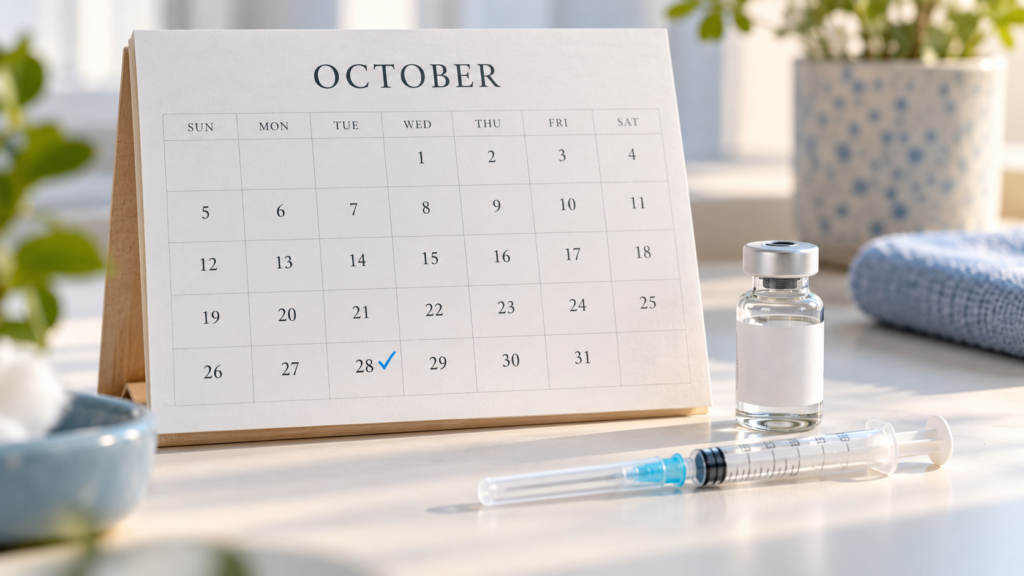
As flu season approaches alongside the cooling weather and increased indoor crowding that favor respiratory virus spread, a genuine question worth understanding is timing: when exactly should you get a flu vaccine to provide the best protection through the season’s peak months? The answer involves a balance between two competing considerations, and late October tends to represent the sweet spot for most people in most regions.
Why Earlier Isn’t Automatically Better
It might seem logical to get vaccinated as early as flu shots become available, often in late summer, but vaccine-induced immunity doesn’t last indefinitely at full strength. Research has found that flu vaccine protection can begin waning somewhat within a few months of vaccination, particularly in older adults, whose immune response to vaccination tends to be less robust and potentially less durable than in younger, healthier individuals.
Given that flu activity in most of the United States typically peaks between December and February, getting vaccinated too early—in July or August, for instance—risks having protection levels beginning to decline right as the season’s actual peak transmission period arrives, potentially leaving some vaccinated individuals with less robust protection exactly when they need it most.
Why Too Late Also Creates Risk
On the other end, waiting too long to get vaccinated creates a different problem: the immune system requires approximately two weeks after vaccination to develop full antibody protection, meaning a flu shot received just before or during an active local flu outbreak doesn’t provide meaningful protection during that crucial window. Flu activity can begin appearing in a community before most people expect it, sometimes as early as October or November in certain regions and seasons, meaning waiting until December or later to get vaccinated risks missing the two-week development window before the virus is already actively circulating.
Why September Through October Generally Hits the Balance
Health officials generally recommend getting vaccinated by the end of October for most people, a timing window chosen specifically to balance these two competing considerations: vaccinating early enough to have full immune protection established well before flu activity typically becomes widespread, while not vaccinating so early that protection has meaningfully waned by the time the season’s peak transmission period arrives in the following winter months.
This recommendation isn’t a hard, absolute deadline—vaccination later than October still provides meaningful protection and remains worthwhile throughout the flu season, since flu activity can continue well into spring in some years. But for optimal timing relative to typical seasonal patterns, the September through October window generally represents the best balance for most people in most regions.
Why Certain Groups Might Consider Different Timing
Some groups face specific timing considerations that can shift the ideal window somewhat. Young children receiving their first-ever flu vaccination require two doses spaced at least four weeks apart to achieve full protection, meaning starting the vaccination process earlier than the general October recommendation allows time to complete both doses before flu season’s typical onset. Pregnant women, who can pass some vaccine-derived immunity to their infants, sometimes receive specific timing guidance from their healthcare provider based on their pregnancy timeline relative to flu season, since this maternal antibody transfer provides some protection for infants too young to be vaccinated themselves.
Older adults, given the somewhat faster waning of vaccine protection in this population, may benefit from timing vaccination closer to the October end of the recommended window rather than earlier, to maximize protection coverage through the season’s actual peak months.
What About People Who Already Got Vaccinated Earlier This Season
For anyone who received a flu vaccine earlier in the fall, before this recommended window, the vaccine still provides meaningful protection—the waning effect discussed above is a gradual decline rather than protection disappearing abruptly, and most people who received an early vaccination will still have useful, if somewhat reduced, protection through the season’s peak months. There’s generally no recommendation to get an additional flu shot within the same season simply because the initial vaccination occurred earlier than the ideal window, since current vaccine guidance is based on a single annual dose for most adults regardless of exact timing within the recommended fall window.
A Timing Window Worth Understanding, Not Obsessing Over
While late October represents a genuinely well-reasoned sweet spot based on typical flu season timing and vaccine protection duration, the most important overall message remains simply getting vaccinated at some point during the fall rather than skipping it entirely or delaying so long that the season’s peak arrives before protection has developed. For anyone who hasn’t yet gotten this season’s flu vaccine, the coming days represent a reasonable, evidence-based window to do so.