A Technique More Than a Single Recipe
Root vegetables are genuinely abundant this time of year, and roasting remains the simplest, most reliably delicious way to prepare nearly any combination of them. Rather than a single fixed recipe, this is really a technique worth understanding, since it adapts easily to whatever root vegetables you have on hand while consistently producing caramelized, deeply flavorful results.
The Basic Method That Works for Almost Anything
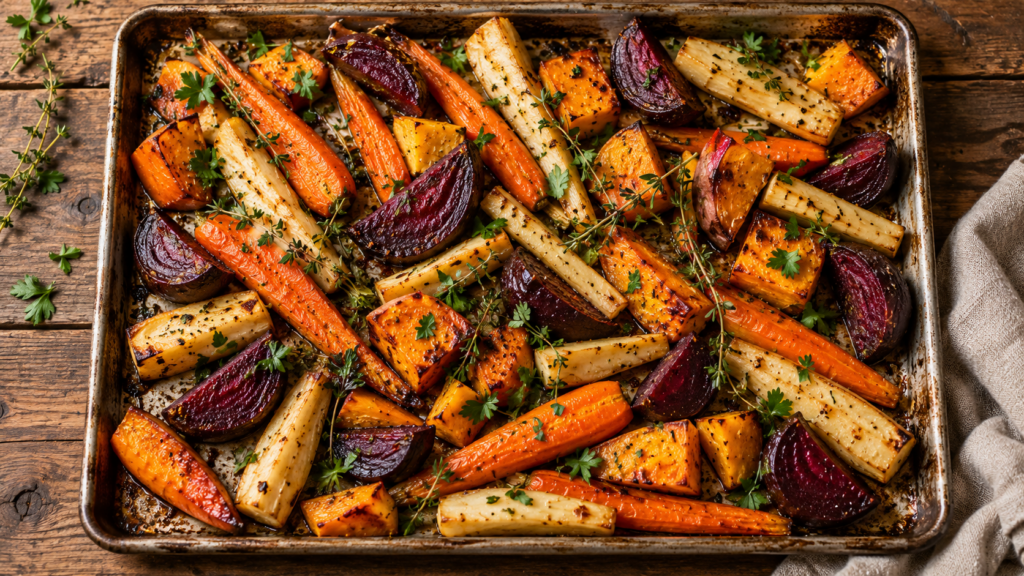
Cut vegetables into roughly uniform pieces, toss generously with olive oil, salt, and pepper, and spread in a single layer on a baking sheet—overcrowding is the most common mistake, since vegetables piled too closely together steam rather than roast, producing a softer, less caramelized result than properly spaced vegetables achieve. Roast at 425 degrees, flipping once about halfway through, until the vegetables are tender inside and deeply browned on their cut surfaces, typically 25 to 40 minutes depending on the specific vegetable and how large the pieces are cut.
Denser root vegetables like carrots, parsnips, and potatoes generally take longer than quicker-cooking options, so if combining several vegetable types with notably different cooking times, cutting the denser ones smaller or starting them a few minutes before adding faster-cooking vegetables helps everything finish roughly together.
Carrots and Parsnips With Honey and Thyme
This classic pairing balances parsnip’s slightly peppery, earthy flavor against carrot’s reliable sweetness, enhanced further by a light honey glaze. Toss sliced carrots and parsnips with olive oil, a drizzle of honey, fresh thyme leaves, salt, and pepper before roasting. The honey caramelizes during roasting, deepening the vegetables’ natural sweetness into something considerably more complex than either vegetable achieves on its own.
Beets With Balsamic and Goat Cheese
Beets roast beautifully but take longer than many other root vegetables due to their density—wrapping them individually in foil before roasting, then peeling once cooked, produces a more evenly tender result than roasting them unwrapped alongside faster-cooking vegetables. Once roasted and peeled, slice and toss with a balsamic reduction, then top with crumbled goat cheese and toasted walnuts for a side dish substantial enough to work as a light salad course on its own.
Sweet Potatoes With Cinnamon and Pecans
This combination leans into warm, slightly sweet flavors that pair naturally with sweet potato’s inherent character. Toss cubed sweet potato with olive oil, a sprinkle of cinnamon, and a touch of brown sugar before roasting, then scatter toasted pecans over the finished dish. This preparation works equally well as a savory side dish alongside a roasted main or as a lighter alternative to a traditional sweet potato casserole for a holiday table.
Turnips and Rutabagas With Garlic and Rosemary
These often-overlooked root vegetables deserve more attention than they typically get—properly roasted, they develop a genuinely pleasant, slightly sweet flavor that their raw, sometimes bitter reputation doesn’t suggest. Toss cubed turnips and rutabaga with olive oil, minced garlic, fresh rosemary, salt, and pepper, roasting until deeply caramelized at the edges. The caramelization process specifically mellows much of the bitterness these vegetables can display when prepared other ways, making roasting an especially effective technique for winning over skeptics of these less popular root vegetables.
A Mixed Root Vegetable Medley
For a genuinely versatile side that uses whatever root vegetables happen to be on hand, combining several varieties—carrots, parsnips, potatoes, turnips, and red onion wedges—with olive oil, fresh or dried herbs, salt, and pepper creates a colorful, varied dish that works alongside almost any main course. This approach is particularly practical for using up a varied vegetable delivery or farmers market haul without needing to plan separate dishes for each individual vegetable.
A Technique Worth Having in Regular Rotation
Roasting root vegetables requires minimal active effort once they’re in the oven, produces consistently excellent results across a wide range of specific vegetables and flavor combinations, and makes efficient use of exactly the produce most abundant during this stretch of fall. Once the basic technique feels comfortable, it becomes less a recipe to follow precisely and more a reliable method to apply to whatever root vegetables are on hand on any given week.