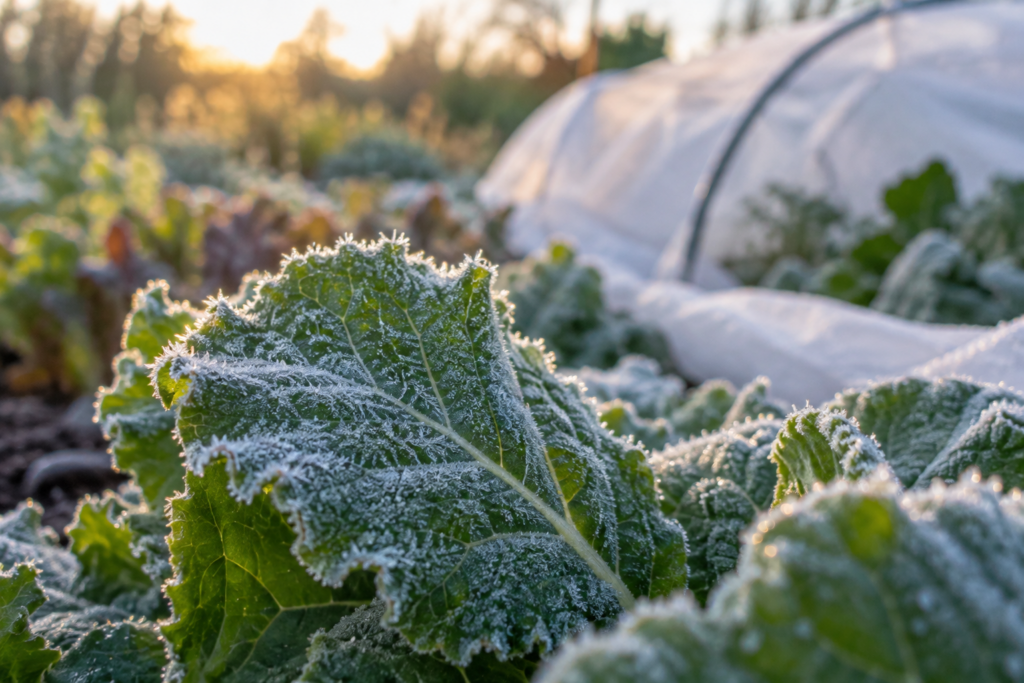
Getting Ahead of the Season’s First Frost
As overnight temperatures continue dropping in many regions, gardeners start paying closer attention to frost forecasts, and along with that attention comes a handful of persistent myths about what frost actually is and how to protect plants from it. Several of these misconceptions can lead to genuinely ineffective protection efforts, right when getting it right actually matters for salvaging a garden’s last weeks of the season.
Myth: Frost Only Occurs When the Air Temperature Hits Exactly 32°F
This is one of the most common misunderstandings about frost, and it can lead gardeners to feel falsely reassured by a forecast showing air temperatures staying just above freezing. Frost forms on surfaces—leaves, grass, car windshields—due to radiational cooling, a process where these surfaces lose heat directly to the clear night sky faster than the surrounding air cools. This means a plant’s leaf surface can drop below freezing and develop frost even when the official air temperature reading, typically measured several feet above ground, remains a few degrees above 32°F.
This is why forecasts often distinguish between air temperature and what’s sometimes called “ground frost” or note frost potential even when the forecasted low sits at 34 or 35 degrees—the actual surface temperature experienced by low-lying plants can be meaningfully colder than the official air temperature reading suggests.
Myth: Any Covering Material Provides Equal Frost Protection
Not all plant coverings perform equally, and the material’s specific properties matter considerably. Effective frost protection typically involves materials that trap a layer of warmer air near the plant while allowing some heat to escape upward rather than accumulating condensation directly against leaf surfaces. Breathable fabric row covers or old bedsheets generally outperform plastic sheeting for this purpose, since plastic in direct contact with leaves can actually conduct cold more readily at contact points and trap condensation that itself contributes to frost damage at those specific touch points.
If plastic covering is used, ensuring it doesn’t directly touch plant foliage—supported instead by stakes or a frame that creates an air gap—produces meaningfully better protection than plastic draped directly over the plant.
Myth: Watering Plants Before a Frost Always Helps
This one contains a genuine kernel of truth that gets oversimplified into a blanket recommendation. Moist soil does retain heat better than dry soil and releases that stored heat more effectively overnight, which can provide modest frost protection benefit in some situations. However, watering foliage directly, rather than just the soil, doesn’t provide the same benefit and can occasionally make frost damage worse, since water on leaf surfaces can itself freeze, and the process of that water freezing on the leaf surface doesn’t release enough heat to meaningfully offset the additional cold stress the ice formation itself places on plant tissue.
The more accurate version of this practice involves watering soil (not foliage) in the days before an anticipated frost, allowing that added soil moisture to provide a modest thermal buffering effect overnight, rather than a last-minute foliage watering immediately before a frost event.
Myth: A Light Frost Kills All Garden Plants Equally
Plant frost tolerance varies dramatically by species, and treating “frost” as a uniform threat that equally endangers everything in a garden overlooks this significant variation. Tender warm-season plants like tomatoes, peppers, and basil are typically damaged or killed by even a light frost. Many cool-season vegetables—kale, spinach, carrots, and brussels sprouts among them—not only tolerate light frost but in some cases develop improved flavor afterward, as cold exposure triggers the plant to convert stored starches into sugars as a natural antifreeze response.
Understanding which plants in your garden actually need protection, rather than assuming a blanket frost threat to everything, allows for more efficient and targeted protection efforts rather than unnecessary covering of plants that would tolerate the frost perfectly well on their own.
Myth: Frost Protection Covers Should Stay On Until Well After Sunrise
Leaving frost protection covers on too long into the morning, particularly on a sunny day, can actually cause heat damage as trapped air beneath the covering warms rapidly once the sun rises. Removing covers relatively promptly after temperatures rise above freezing, particularly once direct sun exposure begins, prevents this secondary heat-related plant stress that timing mistakes with cover removal can inadvertently cause.
Understanding the Actual Mechanism Improves Protection
Frost protection works considerably better when it’s based on the actual physics of radiational cooling and surface heat loss, rather than on the various oversimplified rules that circulate without much scrutiny. As the season’s first frost approaches, applying these more accurate principles—appropriate covering material, proper timing for both covering and uncovering, and recognizing which specific plants genuinely need protection—makes for meaningfully more effective results than following the common but imprecise conventional wisdom.